Hosts with rapid changeovers
If T-shirts must be washed between guest stays, compare the duration and permitted load of the programme you would actually use. Also check that the machine can be installed in the available space.


Choose a washing machine that can accommodate the holiday let’s busiest realistic T-shirt batch and fit its laundry space. A 9 kg front-loader is a starting point for larger, variable loads, but compare each model’s programme load limits, Eco 40-60 label data, installed depth and spin noise before deciding; a short-cycle name does not establish how quickly it will wash your full batch.
If T-shirts must be washed between guest stays, compare the duration and permitted load of the programme you would actually use. Also check that the machine can be installed in the available space.
When some washes contain only a few T-shirts and others follow a busy checkout, compare peak capacity alongside the load-responsive features specified for the exact model.
If washes are frequent or the machine is close to guest rooms, compare like-for-like energy-label information and published spin noise. The load still needs room to move in the drum.
Start with the busiest T-shirt batch and the space available, then check cycle conditions, energy-label figures and noise for the models that could fit.
| Concern | What to check | Who this matters to |
|---|---|---|
| Changeover time | Check the intended programme’s duration and permitted T-shirt load, not just its shortest advertised cycle. | If I have only a short gap before the next arrival, I need a cycle that can take the batch waiting to be washed. Around 36% of consumers would put turnaround time first. |
| Variable batch size | Compare rated capacity with your peak batch, installed depth and any model-specific load adjustment. | Some changeovers leave me a few T-shirts and others a much larger load, so I need capacity that suits the busy days without choosing on drum size alone. Variable loads would be the primary concern for around 29% of consumers. |
| Running costs | Compare like-for-like A-to-G energy labels, stated energy and water use, and Eco 40-60 duration. | With repeated washes, I want to understand what the labelled cycle uses and avoid packing the drum too tightly. Around 21% of consumers would make running costs their main concern. |
| Disturbance and upkeep | Check published spin noise, installation requirements and maintenance instructions; confirm rules applicable to the property. | When the laundry area is near guests, I need to consider spin noise as well as how the appliance will be kept in safe working order. This would come first for around 14% of consumers. |
A larger drum may accommodate a busy changeover, but it also needs to fit the laundry space. Energy Saving Trust advises that larger appliances often use more energy even when they share an efficiency rating.
Estimate the largest realistic load, measure the installation area and compare each candidate’s label data and programme duration.
AEG specifies its LFR62944B 20-minute programme for 3 kg, while its listed Eco 40-60 cycle takes 3 hours 40 minutes. A quick-cycle time should not be used to plan a full-load turnaround without checking its conditions.
Check the exact model’s programme instructions for the permitted load and suitability for the T-shirts’ care labels.
Clothes need space to move. Energy Saving Trust advises leaving a hand’s span at the top of the drum rather than overloading it.
Use a load appropriate to the selected programme and leave room for water and detergent to circulate.
A poorly cleaned batch may need washing again, using additional time, water, detergent and electricity.
GOV.UK guidance for self-catering holiday homes in England directs operators to HSE electrical-safety guidance. Glasgow City Council’s short-term-let conditions separately address the safe working order of electrical items; one location’s requirements should not be applied to every property.
Check the nation, local authority and conditions relevant to the property before installing the machine or making it available to guests.
The WGG24400GB is a full-sized front-loader to consider when recurring changeovers call for a 9 kg machine and there is room for it.
The LFR62944B is a 9 kg example for comparing load-responsive operation with the time needed for different wash sizes.
The WED385 is another 9 kg, 1400 rpm front-loader to assess if its named wash and steam-refresh options match the property’s routine.
These front-loading machines offer capacities from 6 kg to 11 kg for comparing smaller T-shirt washes with busier changeover loads. Match the capacity and installed dimensions to your property, and check a short programme’s load conditions before relying on it for turnaround.
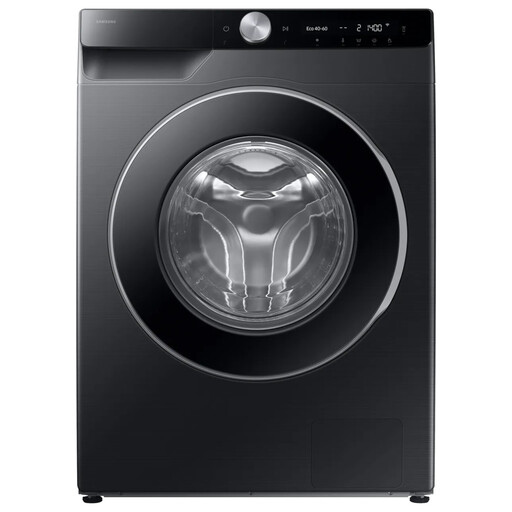 No image available
Consider its 11 kg capacity if the property regularly produces larger changeover loads; check whether that size suits your usual batches. The listing states a 1400 rpm maximum spin speed, 72 dB spin noise and dimensions of 85.0 × 60.0 × 60.0 cm. Its 39-minute full-load Super Speed description is a product claim: confirm the programme and fabric conditions before planning a T-shirt turnaround around it.
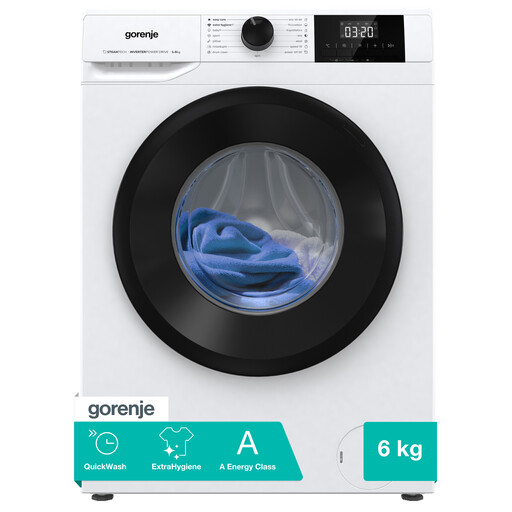 No image available
Its 6 kg capacity and listed Cotton programme make it worth considering for modest T-shirt batches; compare the capacity with the property’s busiest day. The listing gives a 1200 rpm spin speed, 415 mm depth and 72 dB spin noise. Check the permitted load for QuickWash 15' and allow for the clearance needed to install and use the machine.
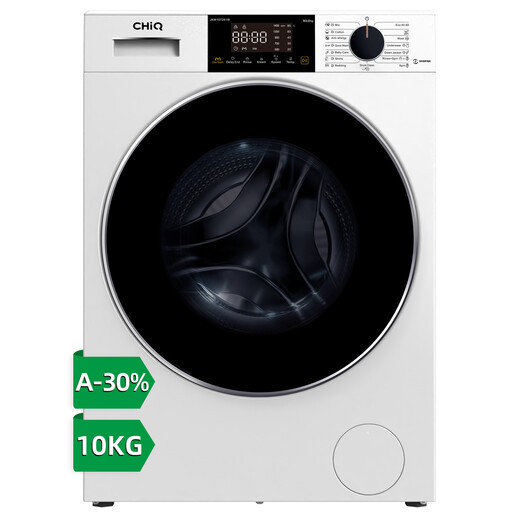 No image available
The listed 10 kg capacity may suit larger changeover batches, while the described One-Touch Smart Wash load sensing is relevant when batch sizes vary. The listing states 1400 rpm and dimensions of 600 × 580 × 850 mm. Check the 15-minute Quick Wash load limit, comparable energy-label figures and spin-noise information before deciding whether it meets the property’s needs.
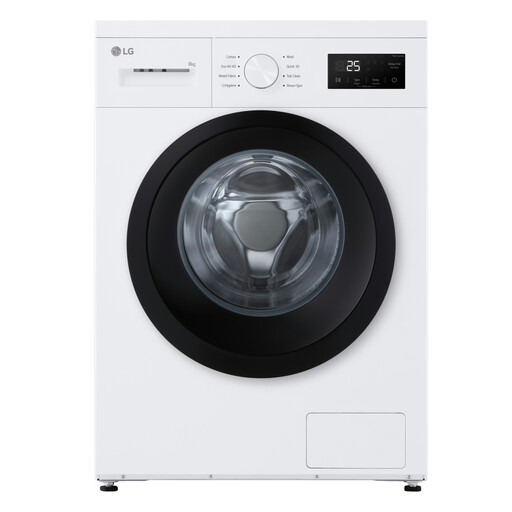 No image available
Its 8 kg capacity is a comparison point for moderate batches, subject to the property’s peak load. The listing states 1400 rpm, 74 dB spin noise, a Quick 30 cycle and a 470 mm cabinet depth that excludes the door. Check the cycle’s load limit and the total depth needed for installation and use.
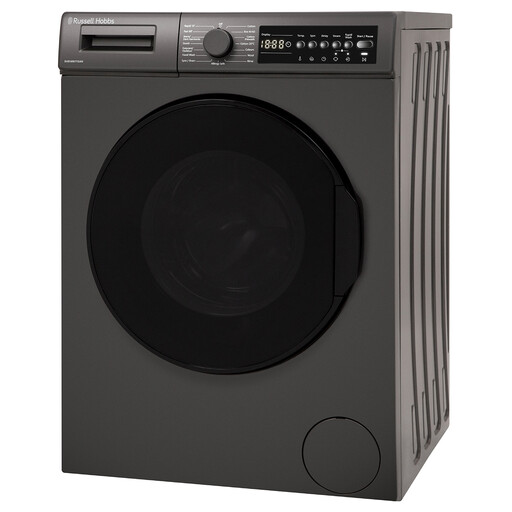 No image available
Its listed 9 kg capacity may suit a property with larger T-shirt batches if the machine fits the laundry area. The listing states 1400 rpm, 60.9 cm depth, 77 dB noise and a Rapid 15 option. Check that option’s permitted load and fabric conditions before treating it as a changeover cycle.
Follow each T-shirt’s care label and choose a programme and temperature suited to its colour and soil level; no single setting suits every garment. Energy Saving Trust notes that a lower temperature can use less energy and that 20°C may suit clothing that is not heavily soiled, but the garment instructions still matter.
Not necessarily: a 9 kg machine is a starting point if peak changeovers produce larger loads, but the busiest realistic batch and available space should determine capacity. Compare the exact model’s installed depth as well as its kilogram rating.
Compare like-for-like models using their A-to-G rating and model-specific labelled figures, rather than rating class alone. Energy Saving Trust describes the rating scale; for a concrete comparison point, AEG lists 49 kWh per 100 wash cycles and a 3-hour-40-minute Eco 40-60 duration for LFR62944B. Compare such figures only on the same labelled basis.
Avoid overloading the drum and follow the selected programme’s load limit. Energy Saving Trust advises leaving a hand’s span at the top so the clothes can move and water and detergent can circulate.