
24/7 Customer Support

Free returns

Same-day & Next-day Delivery

Quality Guaranteed

Unlock Your Welcome Offers: FREE Delivery | Up to 80% OFF | Free 30-day JoyPlus trial
Download the APP
Buying a washing machine involves more than comparing prices. A model that looks suitable online may be too deep for your kitchen, too small for your household or expensive to run once frequent drying cycles are included.
UK shoppers should also look beyond phrases such as “smart wash” or “powerful performance”. The useful questions are practical: how much laundry can the drum handle, how much water remains after spinning, what energy rating does it have and will it fit through the door and into the intended space?
An 8kg washing machine is often suitable for a couple or medium-sized household, but capacity also depends on how often you wash and the items you clean. Bedding, towels and winter clothing take up more room than everyday shirts.
A 6kg model may suit a single person, a couple with limited laundry or a smaller flat. Larger households may prefer 9kg or 10kg washing machines to reduce the number of weekly cycles. Avoid paying for a larger drum if you rarely fill it, as the appliance may occupy more space without providing a practical benefit.
A 1400 rpm washing machine does not necessarily clean better than a 1000 or 1200 rpm model. Spin speed mainly affects how much water is extracted at the end of the cycle. A higher spin speed can help reduce drying time, especially when using tumble dryers or drying laundry indoors.
Check the spin-drying efficiency class and noise level as well as the headline rpm figure. A machine rated at up to 1400 rpm may still have different performance across individual programmes.
The UK and EU-style energy label uses an A to G scale, with A at the more efficient end of the scale. However, running costs also depend on the programme selected, load size, water consumption and how often the machine is used.
For washer dryers, check both ratings. A model may be rated A for washing and D for combined washing and drying, because heating air to dry clothes requires more energy than washing alone. Compare the stated kWh per 100 cycles where available rather than relying only on promotional wording.
Measure the available space, including clearance for hoses, ventilation and opening the door. Many freestanding washing machines are approximately 85cm high and 60cm wide, but depth varies significantly.
A slim washing machine can be useful in a flat, utility cupboard or narrow kitchen. For example, the Midea MF100W60 measures 40cm deep and has a 6kg capacity. A machine described as “slim” may still need extra rear clearance, so check the installation instructions and product dimensions before ordering.
Choose a spin speed based on your laundry routine:
Noise is measured in decibels, usually during the spin cycle. A stated level around 76–80 dB may be noticeable in an open-plan room, while lower figures can be more comfortable for flats or appliances used at night. Correct levelling on a firm floor is also important because installation can affect vibration.
Prioritise programmes you will actually use. Helpful options may include 15-minute or 30-minute quick washes, cotton and synthetic cycles, delicates, extra rinse, drum clean, steam or a delay timer.
Load-sensing technology can adjust water and cycle settings according to the load, but it does not remove the need to sort fabrics and avoid overfilling. Smart connectivity is convenient for some households, although standard controls may be preferable for renters or users who want straightforward operation without an app.
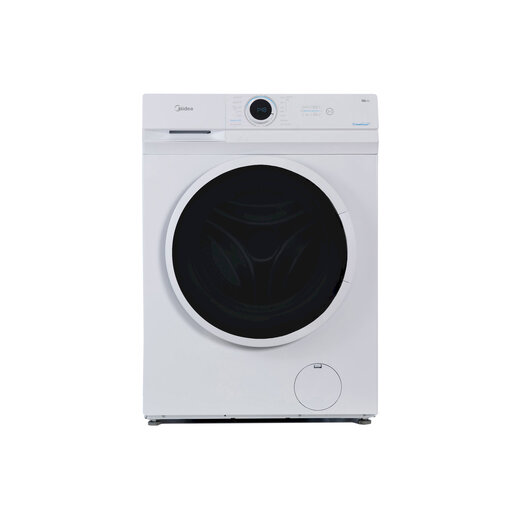
Why This Fits Their Persona: Its 40cm slim depth suits smaller flats, rented accommodation and utility spaces where standard-depth appliances may be difficult to install.
The compact dimensions are specified clearly, while 15-minute and 45-minute rapid wash options provide flexibility without relying on app features.
6kg capacity, 40cm depth, four temperature settings and a D energy rating on the A–G scale.
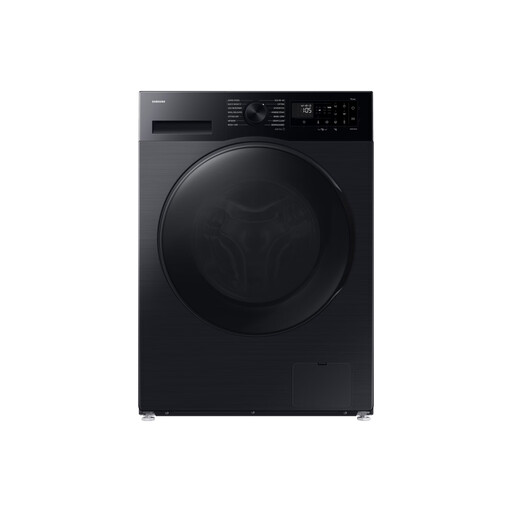
Why This Fits Their Persona: This 2-in-1 appliance is suited to homeowners who want a larger washing capacity, integrated drying and connected controls in one standard-width machine.
The wash and dry capacities are listed separately, helping prevent confusion about how much laundry can be dried in one continuous cycle.
9kg wash and 6kg dry capacities, 1400 rpm spin speed, Wi-Fi connectivity and A/D energy ratings.
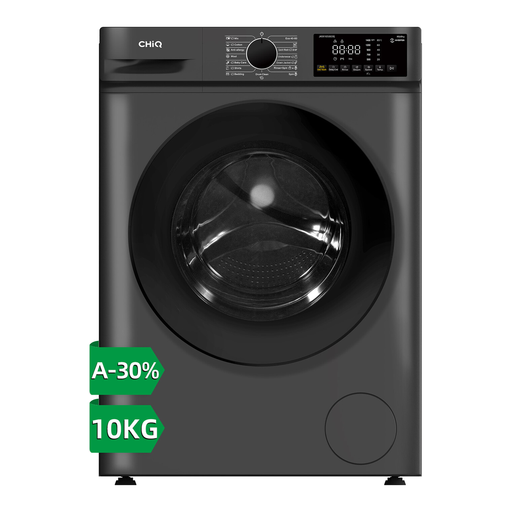
Why This Fits Their Persona: A 10kg drum is suitable for large households, frequent washing and bulky items such as towels, bedding and larger duvets.
Its 577mm depth is stated alongside the capacity, so shoppers can compare drum size with available floor space before purchase.
10kg capacity, 1400 rpm maximum spin speed, 16 programmes and a stated A-30% energy classification.
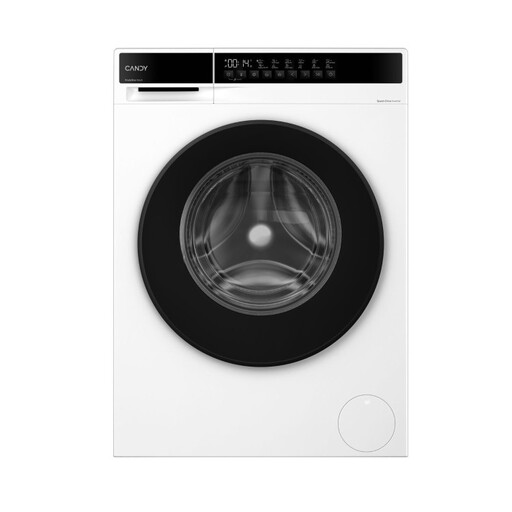
Why This Fits Their Persona: Its 9kg capacity provides extra room for family clothing, towels and bedding without moving to a 10kg cabinet.
The listed 54.8cm depth helps buyers assess fit, while the quick wash, steam function and load-sensing features cover common laundry routines.
9kg capacity, 1400 rpm spin speed, multiple programmes and a stated 10-year manufacturer’s warranty.
If you already own a washing machine, a separate dryer may provide more flexibility than a washer dryer. Heat pump tumble dryers dry at lower temperatures and are generally designed with energy efficiency in mind; the Sharp KD-NHA0S6GM1D-EN has a 10kg capacity and A++ rating. Condenser tumble dryers do not require an external vent, which can simplify installation. Options include 8kg, 9kg and 10kg models, depending on household laundry volume.
Check that the dryer’s capacity matches your washing machine. A 9kg washer paired with a 6kg dryer will require smaller drying loads unless you are prepared to split the wash.
An 8kg washing machine can suit a medium household, while 9kg or 10kg models provide more room for frequent laundry and bulky items. Consider your weekly washing habits rather than household size alone.
It can be useful if you use tumble dryers or need laundry to dry quickly indoors. It extracts more water than lower spin speeds, but check noise levels and spin-drying efficiency as well.
Lifespan varies according to usage, installation, maintenance and model. To support reliable operation, remove transit bolts correctly, level the appliance, clean the detergent drawer and door seal and follow the manufacturer’s servicing and safety instructions. Check the warranty terms carefully, particularly where motor cover differs from full parts and labour protection.