People with a tight appliance space
If the laundry space is restricted, check where the pipes and socket sit and whether the door can open fully. The cabinet gap alone does not establish that a machine will fit.


Measure the space needed for the machine, its connections and its open door before choosing a capacity or programme. A 7–8 kg freestanding washing machine is a useful starting point for a small household’s regular laundry, including cotton pyjamas; consider an integrated model only for a compatible cabinet, or a washer-dryer if drying space is the greater constraint. Check the exact model’s installed dimensions and the pyjamas’ care labels before deciding.
If the laundry space is restricted, check where the pipes and socket sit and whether the door can open fully. The cabinet gap alone does not establish that a machine will fit.
If pyjamas are part of your everyday laundry, compare capacity against all the clothes you normally wash, then check the garments’ care labels and the machine’s programme conditions.
If air-drying space is limited, a washer-dryer may be worth considering. Its drying capacity and installation requirements need separate checks; a combined appliance does not remove either constraint.
Start with fit, then match the machine to your usual laundry and the way its noise and programme times will affect life in the flat. An integrated machine needs a compatible cabinet; a washer-dryer becomes relevant when drying space is the more pressing problem.
| Concern | What to check | Who this matters to |
|---|---|---|
| Installed space and access | Measure the gap in front of pipes and plugs; compare the exact model’s installation instructions, including ventilation and door-opening space. Plan for around 25 mm at each side and 50–150 mm behind a freestanding machine, subject to the model’s requirements. | If the machine blocks a cupboard or leaves no room for its hoses, I cannot use that spot even if its width fits. Around 42% of consumers put installed fit and access first. |
| Cotton loads and programmes | Read the pyjamas’ care labels, then compare your usual load with the machine’s stated capacity and the conditions for its Cotton, Eco 40–60 and quick programmes. | I want a cycle suited to my pyjamas and the rest of my regular wash, rather than choosing a drum by counting pyjama sets. For around 33% of consumers, garment care and routine load size are the main concern. |
| Noise and energy information | Compare each model’s declared noise, energy and water information alongside programme duration; an energy-class letter alone does not describe every wash. | With laundry close to where I live or sleep, I need to weigh spin noise and cycle timing alongside energy use. Running comfort and operating information come first for around 25% of consumers. |
A machine can fit between cabinets yet leave too little space for connections, ventilation or an open door.
Measure around existing pipes and plug points, allow room in front for loading, and check the exact model’s full dimensions and installation instructions.
A quick programme may have different load and fabric conditions from a Cotton programme. The pyjamas’ care label still governs how the garments should be washed.
Check the garment label first, then consult the machine manual for the quick programme’s permitted load and settings.
Which? notes that a good energy rating does not, by itself, establish how much a machine will use in everyday operation.
Compare the exact model’s energy label and product sheet with its programme duration, water information and any relevant independent test results.
Electrical Safety First warns that a washing machine can overload an extension lead and create a fire risk.
Plan for a suitable fixed socket and competent installation rather than using an extension lead to reach a distant socket.
These brands offer relevant formats to compare; the examples below describe particular ranges or models, not every machine bearing the brand name.
Beko positions its 7 kg washing-machine range towards smaller households and compact spaces.
Bosch has freestanding and built-in examples with different installation dimensions.
AEG offers freestanding and integrated options to compare where the installation format is already clear.
Miele’s UK washing-machine range includes freestanding models with several stated capacities.
These models cover freestanding washing machines, an integrated washing machine and an integrated washer-dryer. Compare each one with your measured space and laundry routine; a listed appliance dimension is not the same as the space required for installation.
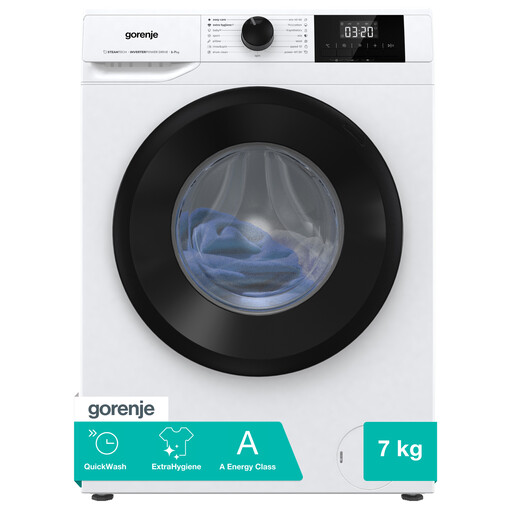 No image available
A freestanding option to assess if depth is the main restriction. The named variant is 7 kg, with a 1200 rpm spin rating and energy class A; confirm its full installed depth and the programme conditions against your space and pyjama care labels.
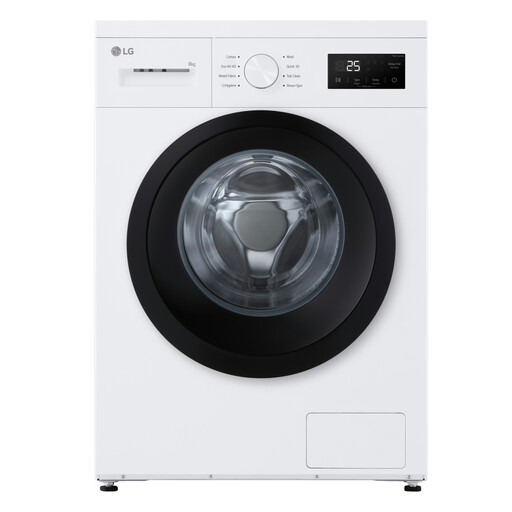 No image available
Consider this freestanding model if an 8 kg drum suits the household’s wider laundry routine. Its name specifies 1400 rpm and an A energy rating; check depth with the door and connections included, as well as the programmes and their load conditions.
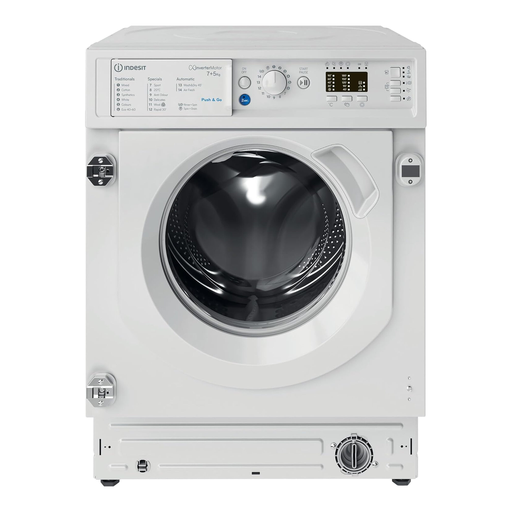 No image available
This format is relevant if drying space is limited and a compatible built-in cabinet is available. The named variant has a 7 kg wash capacity and a 5 kg dry capacity, so a full wash load exceeds its stated drying capacity. Check cabinet and furniture-door fit, programme details and drying performance before choosing it.
 No image available
Another freestanding 7 kg option to compare with a restricted laundry space. Its name states a 1200 rpm spin rating and energy class A; check the complete installed depth and whether the available programmes suit your garments and usual load.
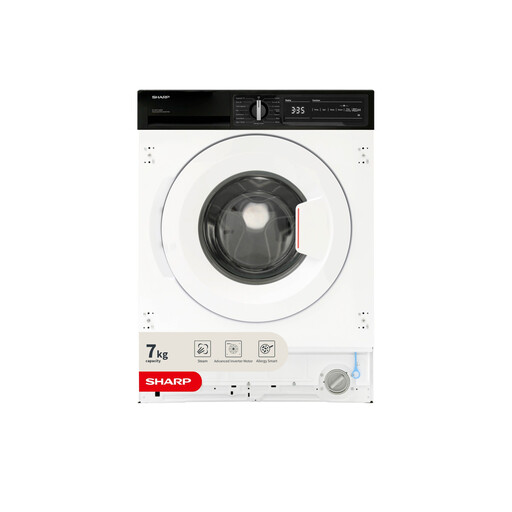 No image available
Consider this 7 kg integrated model only if the flat has a suitable appliance cabinet and furniture-door arrangement. Its name states 1400 rpm and an A energy rating; check the installation requirements and programme manual before matching it to cotton-pyjama loads.
Either capacity can be a useful starting point for a small household, but choose for your whole laundry routine rather than pyjamas alone. Beko positions its 7 kg range towards smaller households, while AEG describes an 8 kg example as suitable for couples or flatmates; neither capacity tells you whether the machine will fit your space.
Allow for connections, ventilation and the open door as well as the appliance itself. Allow around 25 mm at each side and roughly 50–150 mm behind; use the exact model’s installation instructions to establish the space it requires.
Not automatically: follow the care label on the particular pyjamas, then check the machine programme’s temperature, fabric and load conditions. Miele’s garment-care guidance likewise directs users to the clothing manufacturer’s care label.
Do not plan an installation around an extension lead. Electrical Safety First warns that washing machines are high-power appliances and that an overloaded extension lead can create a fire risk; arrange a suitable fixed connection and competent fitting.
Yes, if drying space is the more important constraint and the combined appliance fits the installation space. Compare wash and dry capacities separately and look at model-specific drying information: Which? assesses washer-dryers across washing and drying measures rather than treating all combined machines alike.