
24/7 Customer Support

Free returns

Same-day & Next-day Delivery

Quality Guaranteed

Unlock Your Welcome Offers: FREE Delivery | Up to 80% OFF | Free 30-day JoyPlus trial
Download the APP
Buying a washing machine involves more than comparing prices and drum sizes. A model that looks suitable online may not fit beneath your worktop, handle your household’s laundry pattern or deliver the running costs you expected.
Before choosing, look beyond promotional wording and check the measurable details. Capacity, cabinet depth, energy consumption, spin performance, programme options and warranty coverage all affect how useful the appliance will be over time.
An 8kg washing machine may suit a couple or medium-sized household, while a 10kg washing machine can reduce the number of cycles needed by a larger family. However, a larger drum usually means a deeper cabinet and a heavier appliance.
Also check whether the stated capacity applies to the main cotton programme and whether you regularly wash enough laundry to use it. A large drum is less useful if most loads are only partially filled.
A quick wash washing machine can be convenient for lightly soiled clothes or a small refresh load. It is not necessarily intended for heavily stained laundry, towels or a full drum. Check the maximum load permitted on the rapid programme and its stated duration.
A short programme may also use different temperature, water and spin settings from a standard cycle. Use it as a time-saving option rather than the default for every wash.
A washing machine with steam function may offer steam on selected programmes, but this does not automatically mean that every cycle includes steam. Similarly, an inverter washing machine can be a useful design choice for efficient, controlled motor operation, but noise also depends on spin speed, installation and load balance.
Check the specification sheet for the precise number of programmes, noise level, available steam cycles and motor type. A long motor warranty may not cover the entire appliance, so read the warranty terms before purchase.
Use your household size and laundry habits as a starting point:
Capacity should be considered alongside the drum opening. A wider door can make towels, bedding and larger garments easier to load.
Most freestanding front-load washing machines are approximately 850mm high and 600mm wide, but depth varies considerably. A slim washing machine may measure around 400–415mm deep, while larger family models can exceed 570mm.
Measure:
Do not rely solely on the cabinet depth. Connections and door clearance may require additional space behind or in front of the appliance.
The UK energy label uses an A–G scale. An A-rated washing machine is placed in the highest efficiency class under the applicable label system, but compare the actual figures too. Energy consumption is commonly listed in kWh per 100 Eco cycles, while water consumption is shown in litres per cycle.
A 1400rpm washing machine generally removes more moisture during the final spin than a 1000rpm or 1200rpm model. This may reduce drying time, particularly useful in UK homes without outdoor drying space. Check the spin-drying efficiency class and the stated spin noise level as well.
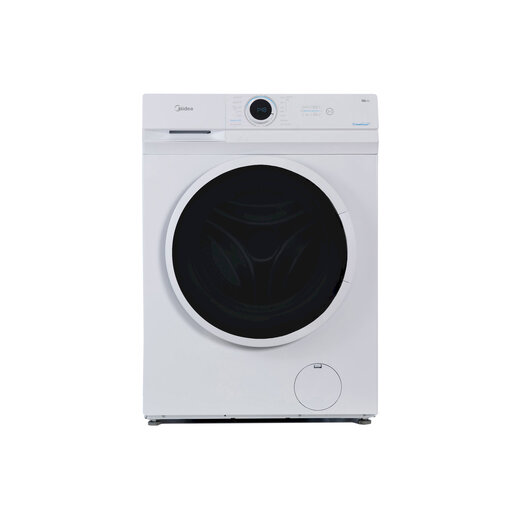
Why This Fits Their Persona: Its 40cm slim depth suits flats, compact utility rooms and first homes where floor space matters.
The specification clearly states a 6kg capacity, 40cm depth and separate 15- and 45-minute rapid programmes, helping buyers set realistic expectations.
Compact 850 × 595 × 400mm dimensions; cold to 60°C temperature options; UK Type G plug.
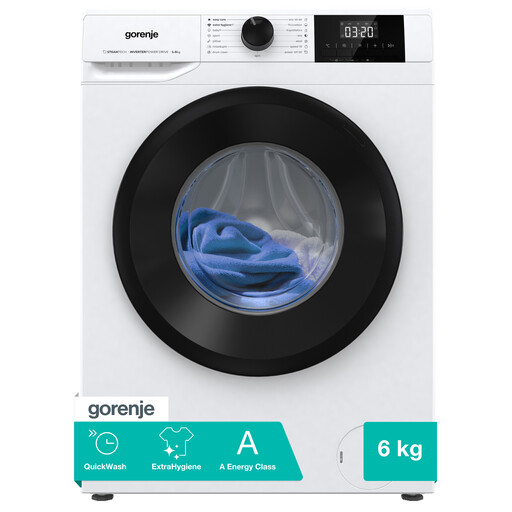
Why This Fits Their Persona: It combines a slim 41.5cm body with flexible programmes and controls for households that value careful selection over unnecessary bulk.
Steam is specified as an add-on for compatible programmes, while the product page also lists the 15-minute cycle, Eco 40–60 and programme controls separately.
An A energy rating; Inverter PowerDrive motor; 15 programmes; 72dB spin noise specification.
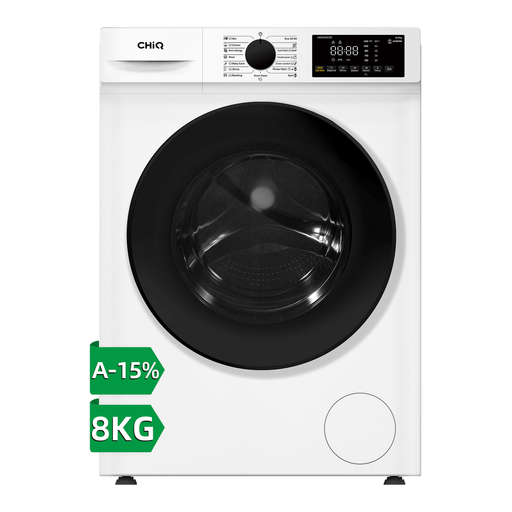
Why This Fits Their Persona: The 8kg drum and 52cm slim depth offer a practical balance for regular family laundry in a standard UK utility space.
Its listing identifies 16 programmes, 40kWh per 100 cycles, 47 litres per wash and a 76dBA spin noise level rather than relying only on feature-led wording.
1400rpm spin; A-15% energy classification as listed; steam programme; interior drum lighting; two-year appliance warranty.
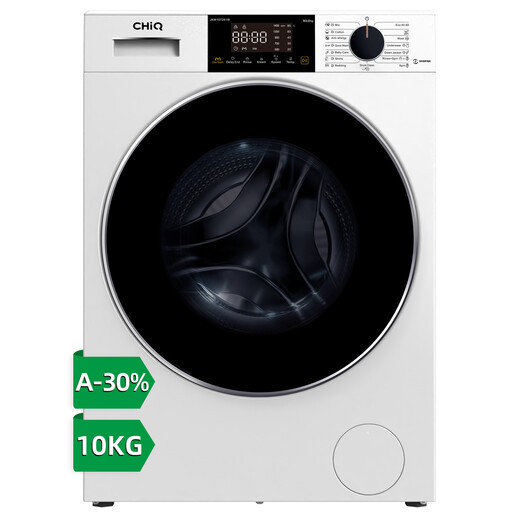
Why This Fits Their Persona: Its 10kg drum is suited to households washing bedding, towels and larger weekly loads, while the 580mm depth remains manageable beneath many worktops.
The listing separates its 15-minute quick wash and steam care functions from the 16-programme range, making it easier to select the correct cycle for each load.
10kg capacity; 1400rpm spin; BLDC inverter motor; 16 programmes; 24-hour Delay End; Drum Clean function.
We have compiled a complete, real-time list of products that fully satisfy these strict selection criteria and UK safety regulations.
Running cost depends on the appliance’s kWh consumption, cycle choice, electricity tariff, load size and washing frequency. Use the energy-label figure as a comparison guide, but remember that Eco cycles may take longer. Washing full loads where appropriate and using lower-temperature cycles can help avoid unnecessary consumption.
It can be useful if you regularly line-dry indoors or use a tumble dryer, as a higher spin speed may leave less moisture in clothes. However, delicate fabrics may require a lower setting, and higher spin speeds can produce more noise if the machine is not level or the load is uneven.
Lifespan varies with construction, usage, installation and maintenance. Avoid overloading the drum, use suitable detergent, clean the filter and seal, and address leaks or unusual noises promptly. Always check the manufacturer’s warranty separately for the appliance, motor and individual parts.