Choose by installed fit before drum capacity: a slim-depth washer is worth considering when depth restricts the space, while a standard-depth washer remains an option if it fits without obstructing access. Consider a washer-dryer if drying space is limited too, and check the exact machine’s cotton programmes, load capacity and installation requirements before deciding.
Who needs to consider what?
Households with a shallow utility space
If the machine must sit beneath a counter or beside a narrow walkway, measure the installed depth rather than the cabinet alone. Beko advises allowing space behind a washing machine for hoses and ventilation; check the requirements for the model you choose.
Households washing tea towels frequently
Check that the available cotton programmes, temperature settings and drum capacity suit your towels and wash routine. A higher-temperature setting is not a blanket requirement for ordinary tea towels: Royal United Hospitals Bath NHS Foundation Trust’s 60°C instruction concerns laundry from a person with a known infection.
Households short of drying space too
A washer-dryer puts washing and drying in one appliance, but the exact model still needs to fit. Which? assesses washer-dryers on factors including washing, drying, water use and running costs, so compare the functions you expect to use rather than choosing by format alone.
What matters when choosing?
The limiting dimension determines which machine formats are practical; programme and capacity checks then help narrow the models that fit.
Slim-depth washer
Consider when: Depth is the restriction, but there is room for the door, connections and required installation clearance.
Trade-off: A reduced cabinet depth does not necessarily mean a narrower machine; Beko’s compact range includes models that are 60 cm wide.
Standard-depth washer
Consider when: A deeper appliance fits without projecting into the space you need to use.
Trade-off: Check the full installed depth carefully: Hotpoint lists one 8 kg freestanding model at 60.5 cm deep before installation allowances.
Washer-dryer
Consider when: You need both washing and machine drying but have space for only one appliance.
Trade-off: Compare washing and drying capacities separately, alongside the exact model’s drying performance and water use.
| Concern | What to check | Who this matters to |
|---|
| Installed fit and access |
Measure width, height and installed depth, including connections and door-opening room; follow the exact model’s installation instructions. |
If a machine blocks the walkway or cannot be connected in the recess, I cannot use that space as planned. Around 42% of consumers put workable installed fit first. |
| Tea-towel programmes |
Compare cotton and temperature settings with the towels’ care labels; check the manual for programme conditions. |
When I wash kitchen textiles regularly, I want settings that suit the load rather than relying on a programme name alone. For around 33% of consumers, wash options are the primary concern. |
| Capacity and routine |
Check rated capacity and the load limits and duration of programmes you would use; compare energy and water information for the exact model. |
If I combine tea towels with other laundry, the load size and cycle routine need to work together. Capacity and routine are the main priority for around 25% of consumers. |
Common buying mistakes
-
Buying to cabinet depth alone
A machine can fit the measured gap yet leave too little room for hoses, ventilation or the door, or project into a walkway.
Measure the complete space and compare it with the exact model’s installation instructions. Beko recommends allowing 15 cm behind a washing machine; use the requirements applicable to your chosen model.
-
Assuming all slim machines have the same features
Depth, rated load and programmes vary between models. Beko describes 50 cm-deep, 7 kg machines in its compact range, while another Beko model is listed at 44 cm deep with a 6 kg load.
Check the current model’s dimensions, capacity, cotton temperature choices and maintenance instructions individually.
-
Using an extension lead to reach the socket
Electrical Safety First warns that an extension lead used with large appliances can be overloaded, creating a fire risk.
Plan a suitable socket and competent installation rather than treating an extension lead as the installation solution.
-
Judging the whole wash by its energy class
Which? notes that a good energy rating does not necessarily mean low running costs; cleaning and rinsing also matter to the choice.
Compare the exact model’s energy information, relevant programme conditions and independent test results where available.
Brands to consider for different machine formats
Beko
Beko’s compact range is relevant when a shallower appliance is the starting point: its range information describes 7 kg models measuring 85 cm high, 60 cm wide and 50 cm deep.
- Published compact-range dimensions provide a starting point for checking a shallow space.
- Dimensions and programmes vary by model; check the current machine rather than assuming an older, shallower example is available.
Bosch
Bosch lists freestanding, built-in, built-under and compact washing machines, as well as washer-dryers, for households comparing installation formats.
- Its range covers several installation types.
- Compact dimensions and individual features depend on the model; do not assume they apply across the range.
Hotpoint
Hotpoint’s freestanding range offers a standard-depth route to compare when a shallow cabinet is not essential; one listed 8 kg model measures 60.5 cm deep.
- The stated capacity and depth of that model allow a direct check against the planned space.
- Its depth may not suit a shallow recess, and model-specific programmes should be checked separately.
Miele
Miele’s WCA132 WCS illustrates an 8 kg front-loader with a stated 1400 rpm maximum spin and AddLoad feature.
- Its published product information gives specific features to compare if this format fits.
- Miele marks this particular model permanently out of stock; its specifications do not establish the dimensions, features or availability of another model.
Slim-depth washing machines on Joybuy
These freestanding washers are options to assess when appliance depth is the main space constraint. Check each model’s installed clearance and cotton temperature settings before deciding whether it suits your tea-towel routine.
 No image available
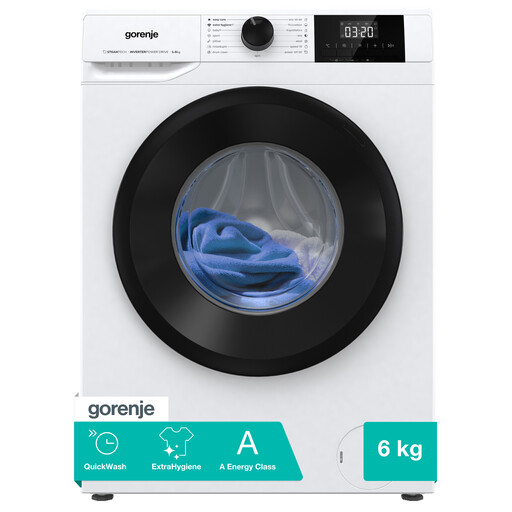
Gorenje G100 Series WG1PS62A1/UK, 6 kg
Consider this model if you need a freestanding washer for a depth-restricted space; confirm its installed depth and door clearance against your measurements.
The product name states a 6 kg capacity, 1200 spin and A energy rating. Check the exact cotton programme temperature if your towels or wash routine require a particular setting.
View on Joybuy
 No image available
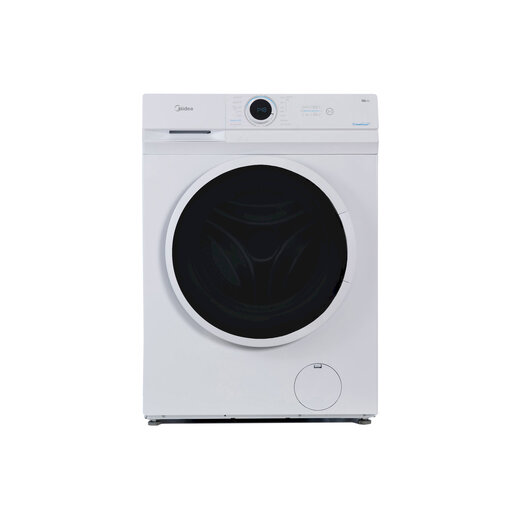
Midea MF100W60 freestanding washing machine, white, 6 kg
Consider this model for a restricted-depth installation, subject to checking the full space needed for hoses and door access.
The product name states a 6 kg capacity, 1000 rpm spin and D energy rating. If a 60°C cotton wash or dedicated drum-clean cycle matters to you, confirm those options for this exact model.
View on Joybuy
Questions about fit and tea-towel washing
How much space should I leave around a washing machine?
Follow the exact model’s installation manual, allowing for its door and connections as well as its cabinet. Beko advises 15 cm behind a machine for hoses and ventilation, but that figure should not replace another model’s instructions.
Do tea towels need a special wash programme?
Choose a programme that suits the towels’ care labels and the circumstances in which they were used. Royal United Hospitals Bath NHS Foundation Trust’s 60°C instruction concerns laundry from a person with a known infection; it is not a universal rule for ordinary household tea towels.
What energy information should I check online?
For products within the relevant UK energy-labelling requirements, government guidance says the energy label must be displayed at the point of sale, including on a website. Compare the exact machine’s information and the programmes you expect to use rather than relying on a headline energy class alone.
Can I use an extension lead for a washing machine?
Do not use an extension lead as a workaround for an inconvenient socket. Electrical Safety First warns that it can be overloaded when used with large appliances and advises competent installation.


