
24/7 Customer Support

Free returns

Same-day & Next-day Delivery

Quality Guaranteed

Unlock Your Welcome Offers: FREE Delivery | Up to 80% OFF | Free 30-day JoyPlus trial
Download the APP
Discovering a wasp nest on your property can be unsettling. Whether it’s tucked under the eaves, in the garden shed or a loft, the constant buzzing and threat of stings can disrupt your peace of mind. While professional pest control is an option, many common nest problems can be managed safely and effectively with the right do-it-yourself product.
As the Joybuy Product Recommendation Officer, my role is to help you navigate the options available. This guide is designed to provide clear, practical advice on selecting a suitable wasp nest killer, helping you tackle the problem with confidence and restore safety to your home and garden.
Before you purchase, it’s important to assess your specific needs. The effectiveness of a DIY wasp nest removal often comes down to choosing a product that matches the nest's location and size. Here are a few key factors to consider.
The two most common types of wasp nest killer are foams and sprays, each suited for different scenarios.
wasp nest treatment for lofts, wall cavities or nests located in bird boxes or compost bins where the structure is contained. The foam traps the wasps inside while the insecticide takes effect.Your safety is the top priority. Wasps can become aggressive when their nest is threatened, so maintaining a safe distance is crucial.
fast acting wasp killer to work with maximum safety, apply it either very early in the morning or late in the evening. During these cooler times, the wasps are typically inside the nest and are far less active. Always spray with the wind at your back to avoid blowback.While most products are formulated for common wasps, some are also effective against hornets.
Based on their features and suitability for common UK household situations, here are some recommended products to consider.
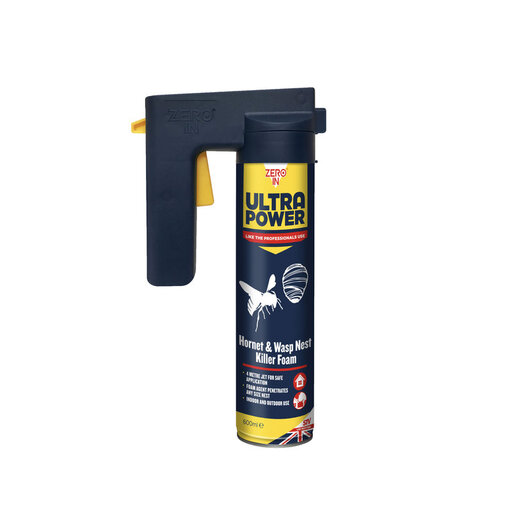
Why It Stands Out This product combines the penetrating power of foam with an impressive application distance. The large 600ml can and ergonomic trigger handle provide excellent control and value, making it a solid choice for tackling larger or multiple nests.
Pros
Who is it for? This is a practical option for individuals dealing with larger, hard-to-reach nests or those who have discovered multiple nests on their property and need a solution with ample coverage.
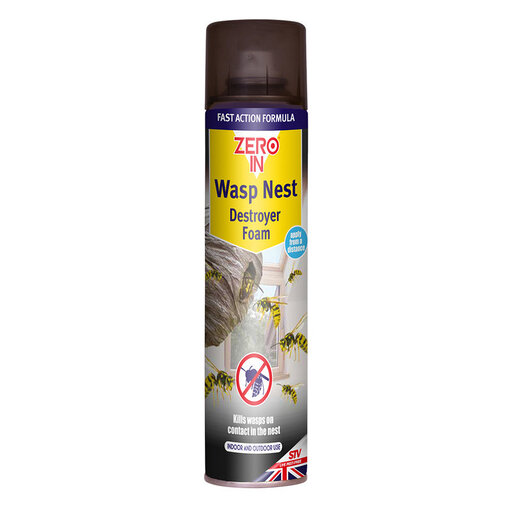
Why It Stands Out A more compact but equally effective foaming solution, this destroyer foam is a straightforward tool for smaller infestations. Its fast-acting formula is suitable for both indoor and outdoor use, offering versatility for common household pest problems.
Pros
Who is it for? Ideal for homeowners or gardeners who need to treat a single, smaller wasp nest in an accessible location like a shed, bin or low-hanging eave.
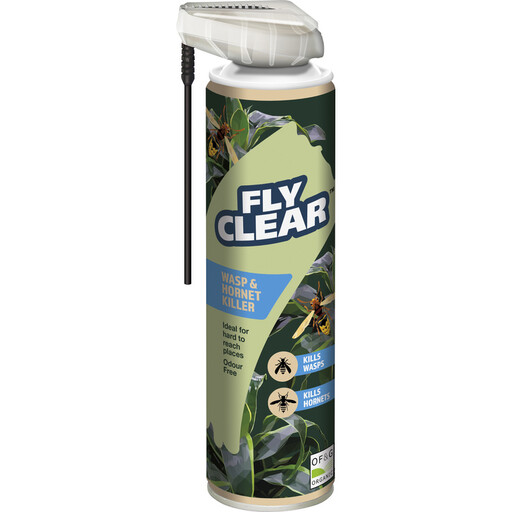
Why It Stands Out This product is engineered for challenging situations. Its standout feature is the exceptionally long-range spray, which can reach up to 20 feet (approximately 6 metres). Furthermore, its non-conductive formulation adds a layer of safety when treating nests near electrical equipment.
Pros
Who is it for? This is the go-to choice for treating nests located high up on a building, deep in a tree or situated uncomfortably close to outdoor electrical fittings where maximum distance and electrical safety are paramount.
Every pest problem is unique, and the products above represent just a few of the effective solutions available. If your situation requires a different approach or if you are dealing with other common household pests, it may be helpful to explore a wider selection.
Browse our complete collection of Pest Spray products to find the right tool for your specific needs.
The most effective and safest time to treat a wasp nest is either very early in the morning or late in the evening. During these times, the wasps are less active and the majority of the colony will be inside the nest. This maximises the product's effectiveness and significantly lowers your risk of being stung.
After applying a wasp nest killer, observe the nest from a safe distance for at least 24 to 48 hours. If you see no wasps flying in or out of the entrance, it is a strong sign that the colony has been eliminated. Do not attempt to remove the physical nest until you are completely certain there is no more activity.
Many products are formulated to be effective against both wasps and hornets. Products like the hornet killer spray mentioned above are specifically designed for this purpose. However, you should always read the product label carefully to confirm which insects it targets. Hornet nests can house a more aggressive colony, so exercising extreme caution is vital.