
24/7 Customer Support

Free returns

Same-day & Next-day Delivery

Quality Guaranteed

Unlock Your Welcome Offers: FREE Delivery | Up to 80% OFF | Free 30-day JoyPlus trial
Download the APP
A water dispenser can make drinking water more convenient, but the wrong appliance may occupy valuable worktop space, create unnecessary maintenance or fail to suit your household’s daily routine. UK shoppers are often comparing an instant hot water dispenser, countertop water dispenser, filtered water dispenser or fridge freezer with water dispenser without first checking how each system works.
The product description is only part of the decision. You also need to consider installation, tank size, filtration, temperature control, cleaning requirements, noise and running costs.
An instant hot water dispenser heats water when needed, but the speed and temperature range vary between models. Some units only provide one or two preset temperatures, while others allow more precise control. A small tank may also require frequent refilling in a busy household or office.
Check the temperature settings, dispensing volume and water tank capacity rather than relying on phrases such as “rapid” or “instant”. For example, the Tefal BR3508G0 offers temperatures from 70–95°C, volumes from 150–500ml and a removable 2-litre tank.
A standard hot or cold water dispenser may simply heat or chill mains or tank water. A water purifier dispenser, filtered water dispenser or reverse osmosis water dispenser has additional filtration components that need regular replacement.
Before buying, confirm:
Filtration can affect taste and water composition, but product descriptions should not be treated as medical or health endorsements. Always follow the manufacturer’s maintenance instructions.
A non-plumbed water dispenser can be suitable for rented homes, offices or kitchens where connecting a water line is impractical. However, its internal tank still needs filling. A plumbed model may offer a continuous supply but requires suitable pipework and professional installation where necessary.
Measure the available space carefully, including clearance above the appliance, door opening angles and access to a plug socket. For a fridge freezer with water dispenser, also check whether the water supply is an internal tank or an external connection. These are not interchangeable systems.
For occasional hot drinks, a compact 2-litre tank may be adequate. Families, shared workplaces and frequent users may prefer a 3-litre or 4-litre hot water dispenser. A larger capacity reduces refill frequency but usually increases the appliance’s footprint and filled weight.
For chilled water, compare the water tank or reservoir capacity with the number of people using it. Pet owners should choose a pet water fountain according to the number and size of animals, while remembering that filtration does not remove the need for regular cleaning.
Temperature selection matters if the appliance will be used for tea, coffee, instant meals or warm drinks. Some hot water dispensers offer fixed settings, while others provide a wider range. Adjustable volume can help reduce spills and avoid dispensing more water than required.
For households wanting both chilled and heated water, a hot and cold water dispenser or countertop RO system may be practical. Confirm the lowest and highest temperatures listed, as “cold” does not necessarily mean refrigerated water and “hot” does not always mean boiling water.
Look for a removable tank, accessible filter compartment and clear cleaning instructions. Useful safety features may include automatic shut-off, low-water detection, child locks and dry-boil protection.
Electrical appliances sold for UK use should have suitable safety information, a compatible plug or approved electrical arrangement and instructions for indoor operation. Keep cables and electrical components away from water, unplug the appliance before cleaning and never operate a damaged unit.
For a reverse osmosis water dispenser, also consider its purified-water tank, drain ratio, filter cost and countertop weight. RO systems can require more maintenance than a basic water purifier dispenser, even when installation is not required.
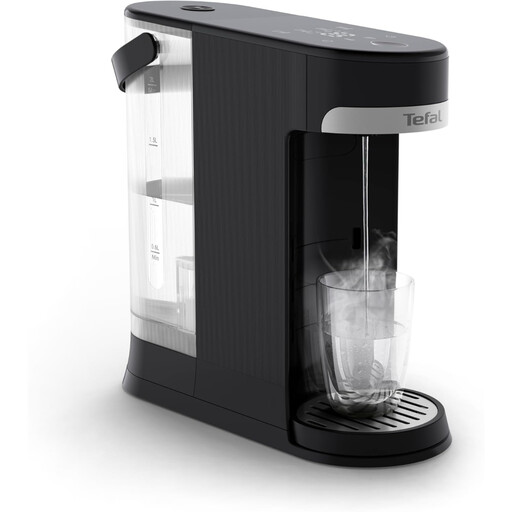
Why This Fits Their Persona: A compact option for renters, professionals or small kitchens needing hot water without a full-size kettle routine.
Its listed 2-litre removable tank, low-water sensor and automatic shut-off make key capacity and safety details clear.
70–95°C temperature control, 150–500ml volume selection, four cup-height positions and an automatic clean cycle.
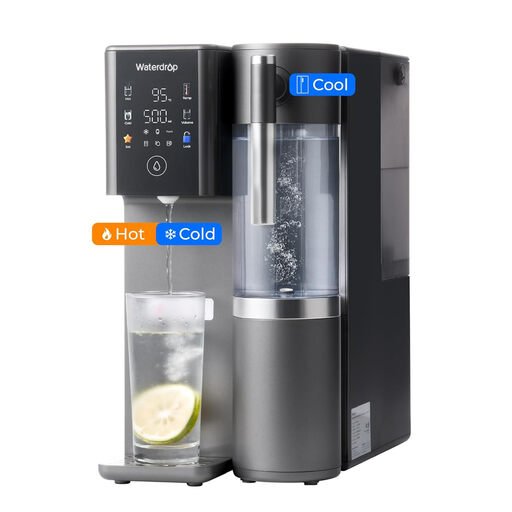
Why This Fits Their Persona: Suits households and offices wanting countertop filtration with hot and chilled dispensing without fixed plumbing.
The listing identifies five-stage RO filtration, filter reminders, a 1.1-litre pure-water pitcher and a 3:1 pure-to-drain ratio.
Six temperature settings, five volume settings, real-time TDS display and no-installation countertop design.
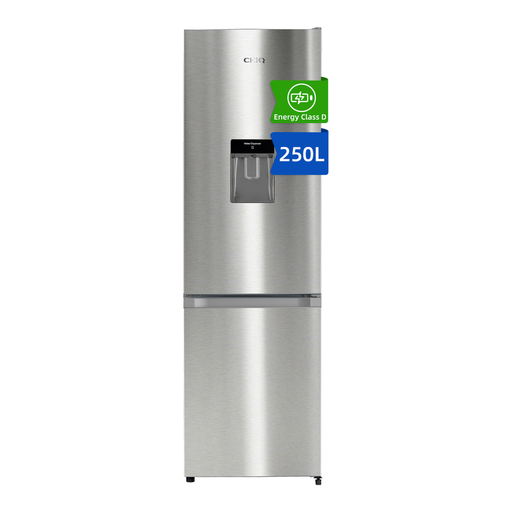
Why This Fits Their Persona: A practical match for medium-sized UK kitchens needing food storage and chilled water from one freestanding appliance.
Its water dispenser is non-plumbed, so buyers can avoid assuming that a dedicated water connection is required.
250-litre total capacity, 54cm width, Total No Frost, D energy rating and a listed 39dB noise level.

Why This Fits Their Persona: Designed for cats and dogs, it suits owners seeking circulating water and a cordless pump for easier cleaning.
The instructions specify regular cleaning, filter replacement and unplugging before filling or maintenance.
2-litre capacity, three-stage filtration, two operating modes and listed operation below 20dB.
We have compiled a complete, real-time list of products that fully satisfy these strict selection criteria and UK safety regulations.
The answer depends on the appliance, usage pattern, standby function and energy tariff. A unit that heats a measured volume may avoid reheating excess water, but a larger appliance with constant chilling or heating can use electricity throughout the day. Compare the wattage, standby guidance and energy information rather than assuming a lower running cost.
Follow the product manual. In general, clean removable tanks, drip trays and dispensing areas regularly and replace filters at the stated interval. Pet fountains need particularly consistent cleaning because hair, food particles and saliva can enter the water system.
Usually, no fixed water connection is needed. You normally place the appliance on a stable surface, fill its tank and connect it to a suitable socket. Always check the dimensions, ventilation space and electrical instructions before setup. For plumbed models, use the specified water connection and qualified assistance where required.