
24/7 Customer Support

Free returns

Same-day & Next-day Delivery

Quality Guaranteed

Unlock Your Welcome Offers: FREE Delivery | Up to 80% OFF | Free 30-day JoyPlus trial
Download the APP
As a Joybuy Product Recommendation Officer, my role is to help you navigate the crowded market of household goods. When it comes to water filters, the choices can feel overwhelming. Many of us in the UK are looking for simple ways to improve the taste of our tap water, reduce limescale in our appliances or gain peace of mind about what's in our glass. However, marketing hype and confusing specifications can easily lead to a purchase that doesn't meet your needs.
Before you buy, let's look at a few common pitfalls that can lead to disappointment and wasted money.
To make a confident choice, focus on a few core parameters that determine a filter's performance and suitability for your home.
The heart of any system is its filter media. Different materials target different things:
Look for products that reference certifications like NSF/ANSI 42 (confirming claims about reducing aesthetic impurities like chlorine and improving taste/odour) and NSF/ANSI 53 (for reducing health-related contaminants like lead and mercury). These standards provide independent verification of a filter's performance.
The right format depends entirely on your living situation and how you plan to use the filtered water.
To help you match a product to your lifestyle, here are a few options that align with common UK household needs, based on their objective features.
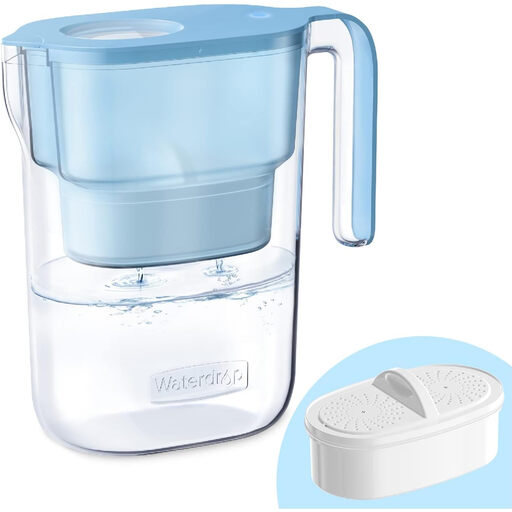
Why This Fits Their Persona: Perfect for individuals or couples in smaller homes or shared flats. Its slim, fridge-friendly design doesn't take up precious space, and the low initial cost makes it an accessible way to start filtering water without any installation or commitment.
It avoids vague claims by holding NSF 42 and 372 certifications, verifying its effectiveness in reducing chlorine and its use of lead-free materials. The filter life is also clearly stated in litres (757L), giving a more accurate measure than just "months".
Its key advantage is certified performance in a compact, affordable package. It features a gravity induction indicator to show filter status and uses multi-stage filtration to reduce lead and fluoride while retaining beneficial minerals.
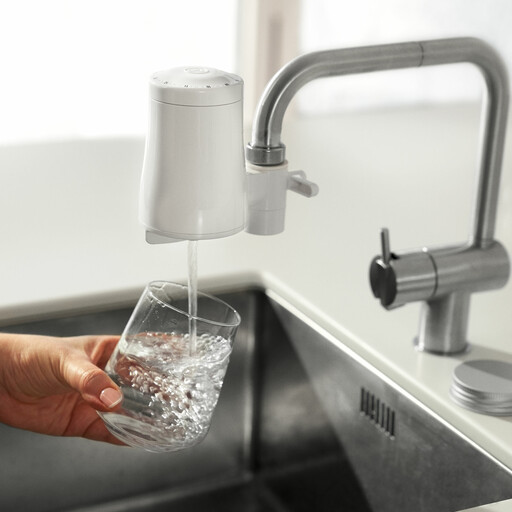
Why This Fits Their Persona: Ideal for busy households aiming to reduce single-use plastic waste. It provides a high flow of filtered water instantly for drinking and cooking, eliminating the need for a jug. The biodegradable cartridge materials appeal to environmentally aware consumers.
This system avoids the hidden cost trap by offering a clear capacity of 1,200 litres per cartridge. This provides a transparent way to calculate the long-term cost per litre, which is often more economical than jug filters or bottled water.
Its main advantage is convenience and comprehensive filtration. The 5-stage system reduces over 100 substances including microplastics and limescale, while the tool-free installation and simple switch make it exceptionally user-friendly for daily kitchen tasks.
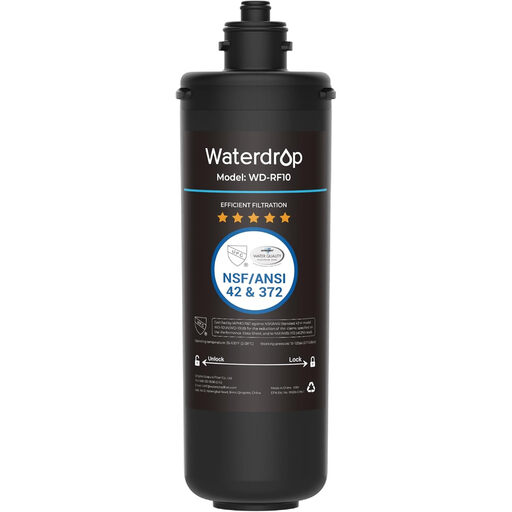
Why This Fits Their Persona: This is for the homeowner who wants a 'set and forget' solution. As a replacement for an under-sink system, it stays out of sight and provides high-volume filtration for the whole family. It's an investment in convenience and long-term water quality.
It directly counters the filter lifespan illusion. With an ultra-long service life of up to 30,000 litres (or 1 year), it provides exceptional clarity on long-term running costs and minimises the hassle of frequent cartridge changes.
The standout advantage is its massive capacity and certified performance. It is IAPMO certified against NSF/ANSI 42 & 372 standards and uses multi-stage filtration to reduce a wide array of contaminants, including heavy metals and chemical impurities.
We have compiled a complete, real-time list of products that fully satisfy these strict selection criteria and UK safety regulations.
While most manufacturers provide a time-based estimate (e.g., 2-3 months), the most accurate guide is the filter's rated capacity in litres. A household of four will use significantly more water than a single person, exhausting the filter faster. If your filter has a capacity of 750 litres and you use about 8 litres a day, you should plan to replace it around every 3 months. Hard water can also clog filters more quickly, so you may need to replace them more often than recommended.
Yes, but you must choose a filter specifically designed for this purpose. To combat limescale, look for a replacement water filter cartridge that explicitly states it contains ion-exchange resin. Standard activated carbon filters are primarily for improving taste and odour by reducing chlorine and will have a minimal effect on the minerals that cause hard water build-up.
Most modern tap water filter models are designed for simple, tool-free installation that takes only a few minutes. They typically screw directly onto the end of your existing tap, often with adapters included to ensure a fit. An under sink water filter is more involved and requires connecting the system to your cold water pipe. While many are designed for DIY installation by someone with basic plumbing confidence, you may prefer to hire a professional for a seamless setup.