What matters when choosing?
For a bedtime routine, decide whether your main obstacle is aiming at the back teeth, fitting the device beside the sink or cleaning around an appliance or restoration.
Cordless water flosser
Choose it when: You need a device you can store away and manoeuvre around rear molars; confirm nozzle movement on the exact model.
Trade-off: Waterpik says its cordless formats generally have smaller reservoirs and lower overall pressure than its countertop units.
Countertop water flosser
Choose it when: You use the same sink each night and would rather have a longer run between refills; Waterpik lists a 90-second reservoir for its Ultra Professional.
Trade-off: It needs space beside the sink and mains power, so consider whether leaving it accessible fits your routine.
Interdental brush or floss
Choose it when: A brush fits the space between your teeth, floss suits a tighter contact, or your dental professional has recommended either method. The NHS advises cleaning between teeth daily with floss or an interdental brush.
Trade-off: Working around back teeth may require more careful positioning and technique.
| Concern | What to check | Who this matters to |
|---|
| Back-tooth control |
Check whether the exact nozzle rotates or adjusts, and whether a low pressure setting feels comfortable. |
If I struggle to aim behind my last molars, I want to direct the stream without repeatedly changing my grip. Around 42% of consumers put back-tooth control first. |
| Bedtime convenience |
Compare the stated run time per fill, then consider where the device will be stored or charged. |
When bedtime is rushed, I need a device that is easy to put away without an inconvenient refill. For around 33% of consumers, routine convenience is the primary concern. |
| Appliances and restorations |
Confirm the included nozzle type and a comfortable pressure range; seek personalised dental advice where needed. |
With braces or bridges, I want a tip suited to the contours I need to clean. Cleaning around appliances or restorations comes first for around 25% of consumers. |
Cordless water flossers on Joybuy
These cordless models suit shoppers considering a device they can put away after a bedtime routine. Compare their stated nozzle features with the way you need to reach your back teeth; the countertop and interdental-tool routes remain separate choices.
 No image available
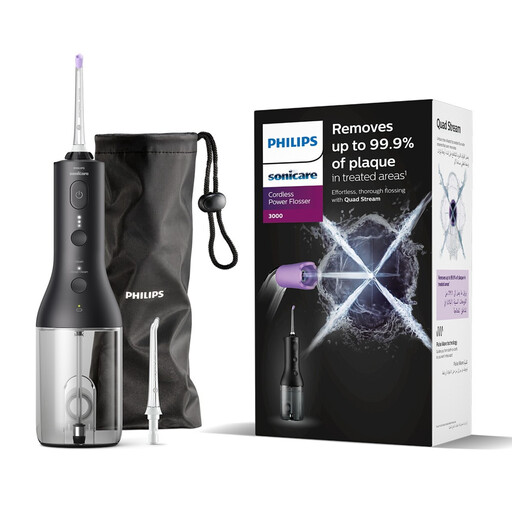
Philips Sonicare Cordless Power Flosser 3000 HX3826/33, black
A cordless option if you want to put the device away after your bedtime routine. Its title specifies two flossing modes and three intensities; confirm the included nozzle and how it moves before relying on it for back-tooth aiming.
View on Joybuy
 No image available
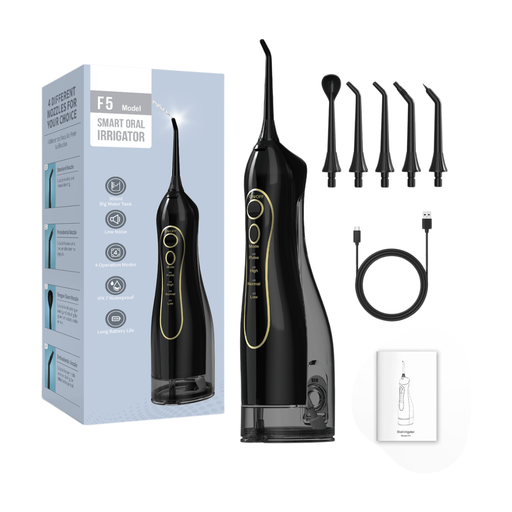
Sunluxy F5 cordless water flosser, black, 300 ml
Consider this cordless model if turning the nozzle towards rear molars is a priority. Its title specifies a 360° rotatable nozzle, five modes and a 300 ml tank; check whether one fill lasts for your intended routine.
View on Joybuy
Frequently asked questions
Can I use a water flosser instead of brushing before bed?
No. The NHS advises brushing twice a day with fluoride toothpaste for about two minutes, including last thing before bed. It also advises daily cleaning between teeth with floss or an interdental brush, so choose a water flosser as part of a wider routine rather than a replacement for brushing.
How can I aim a water flosser at my back teeth?
Start at a comfortable low pressure and work systematically from the back of the mouth towards the front, directing the nozzle along the gumline and between teeth. A rotating or adjustable tip may make aiming easier, but check that the exact model includes one.
How should I maintain a water flosser?
Follow the exact model’s instructions for rinsing the reservoir and cleaning its tips, handle and tank. Waterpik also provides guidance on removing mineral build-up from its devices; check that you can obtain tips compatible with your model.
When should I see a dentist instead of relying on a new device?
See a dentist if your gums bleed when you brush or eat hard foods, are painful and swollen, or you have bad breath, as the NHS advises. A new water flosser should not delay an assessment of those symptoms.


