People cleaning back teeth before work
If mornings are short and rear teeth are awkward to reach, a compact device, adjustable pressure and a manoeuvrable nozzle are useful features to compare.


For a short routine before work, start by considering a cordless water flosser with adjustable pressure and a nozzle you can angle towards the back teeth; Waterpik lists a rotating tip on its Cordless Advanced. A countertop model makes more sense if you have sink space and mains access and value longer reservoir time and more settings over portability. Keep brushing twice daily: NHS guidance calls for it, and the American Dental Association describes water flossing as an addition to conventional brushing.
If mornings are short and rear teeth are awkward to reach, a compact device, adjustable pressure and a manoeuvrable nozzle are useful features to compare.
A lower or sensitive setting lets you begin gently and adjust the stream to a comfortable level. Waterpik and Oral-B list pressure choices on the models and ranges discussed below.
If you have braces, implants or other dental work, check which tips fit the exact model and ask your dental professional which interdental method suits your needs.
For a pre-work routine, consider nozzle access and a comfortable starting setting before choosing extra pressure or reservoir capacity.
| Concern | What to check | Who this matters to |
|---|---|---|
| Back-tooth access and time | Check nozzle movement and reservoir capacity on the exact model; assess any stated routine time as a manufacturer claim. | I need to direct the stream towards rear teeth and finish before leaving for work, without a routine that feels awkward to complete. Around 50% of consumers put quick back-tooth access first. |
| Pressure comfort | Look for a lower starting setting and check how the exact model adjusts pressure or intensity. | If a strong stream feels uncomfortable, I want to start gently rather than use the highest setting. For around 30% of consumers, adjustable comfort is the primary concern. |
| Specialist tips | Confirm included tips, compatibility with your dental appliances and any advice from your dental professional. | With braces, implants or other dental work, I need to know whether the available tips suit my circumstances. Specialist cleaning options come first for around 20% of consumers. |
More settings and longer reservoir time may be useful, but a countertop device also needs mains access and sink space. Waterpik describes that portability trade-off for its countertop range.
Check whether you can angle the nozzle towards your back teeth and start at a comfortable setting before prioritising higher pressure.
Water flossing is not a replacement for brushing. NHS guidance says to brush twice daily, while the American Dental Association discusses water flossers as an addition to conventional brushing.
Keep brushing in your routine, and seek individual advice on interdental cleaning if you have difficult spaces or periodontal concerns.
Bleeding, swollen or painful gums call for dental attention rather than relying on a different device or pressure setting. NHS guidance advises having possible gum disease checked by a dentist.
Arrange a dental assessment if symptoms persist; a water flosser is not a treatment for gum disease.
Waterpik lists both cordless and countertop options. Its Cordless Advanced is relevant to portable back-tooth access; its Ultra Professional suits a fixed sink setup.
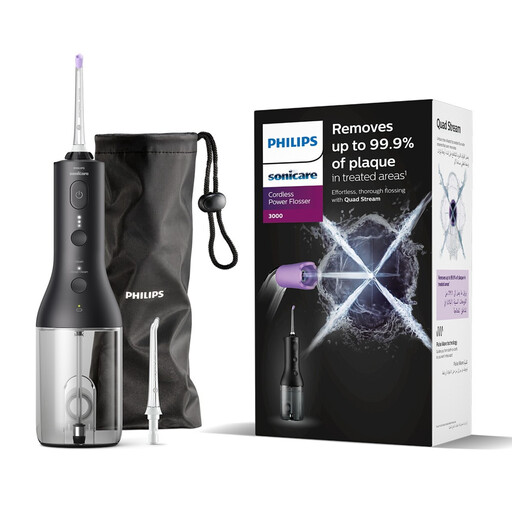
The cordless Power Flosser 3000 HX3826/33 is relevant when a stated short routine helps you assess a model for mornings.
Oral-B AquaCare is worth examining if selectable stream styles and a sensitive pressure option matter to you.
These cordless models offer different starting points for a pre-work routine. Compare their stated pressure choices, nozzle designs and capacities against what you need to reach your back teeth comfortably; a product title alone cannot establish how easily a nozzle will handle.
 No image available
Consider this cordless model if a stated short routine and intensity choices matter to you. Philips lists a 250 ml reservoir, two modes and three intensities for HX3826/33; its 60-second complete-clean time is a manufacturer claim, not a guaranteed personal routine time.
 No image available
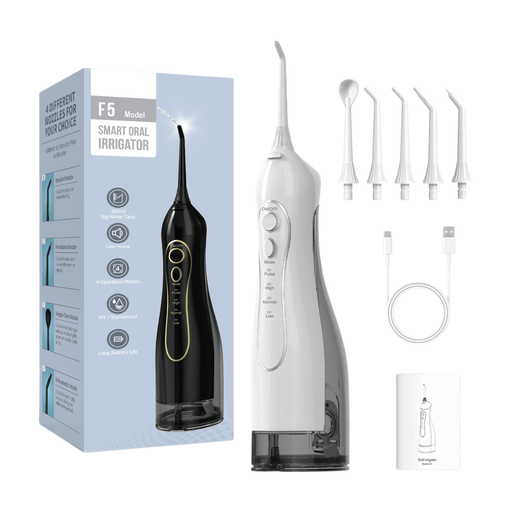
Consider this model if changing the nozzle angle towards rear teeth is a priority. Its product name specifies a 360° rotatable nozzle, five modes and a 300 ml tank; check which setting feels comfortable for your routine.
 No image available
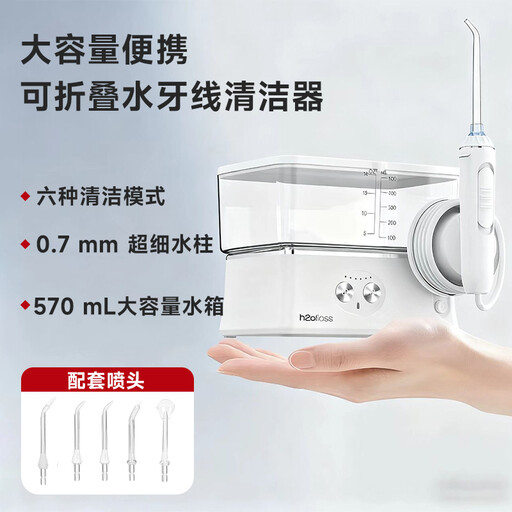
Consider this portable model if you want several mode and spray-head options. Its product name lists six modes and five spray heads; confirm the nozzle design for back teeth and the tank capacity before choosing it for an uninterrupted morning routine.
 No image available
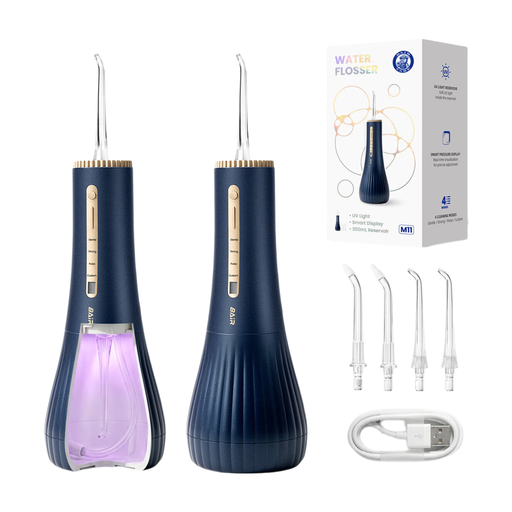
Consider this model if its listed tank size and mode choices fit your routine. Its product name specifies a 360 ml tank, four cleaning modes and USB-C charging; check the nozzle design if directing water towards rear teeth is decisive for you. The bacteria-removal wording in its full product title should not be treated as an independently established result.
 No image available
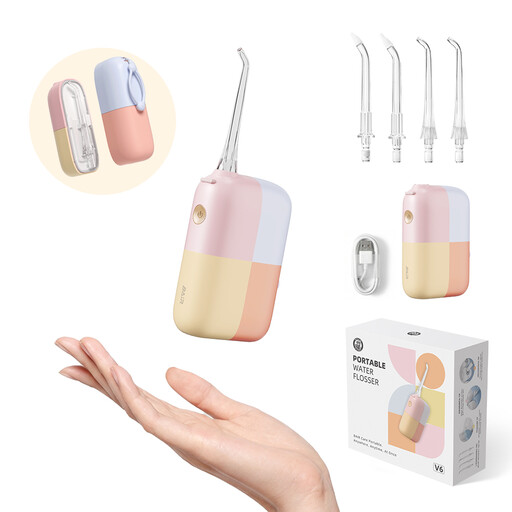
Consider this pocket format if compact storage matters most. The product name identifies a magnetic tank and press-spray operation; before relying on it for back teeth, check its nozzle design, reservoir capacity, pressure control and included tips.
No. NHS guidance says to brush twice daily for about two minutes with fluoride toothpaste. The American Dental Association discusses water flossing as an addition to conventional brushing, not a substitute for it.
A nozzle you can angle towards the rear teeth can make positioning easier to manage; Waterpik lists a 360° rotating tip on its Cordless Advanced. Oral-B advises starting with warm water and low pressure. Lean over the sink and work along the gumline and between teeth without assuming a stronger stream is necessary.
Choose cordless if portability and limited sink space are your priorities; consider countertop if the device will stay beside a mains-powered sink and you value longer reservoir time or more settings. Waterpik describes its countertop range as trading portability for those options, though features vary by model.
Have persistent bleeding or painful gums assessed by a dentist rather than relying on a change of setting. NHS guidance advises getting possible gum disease checked; a water flosser cannot diagnose or treat it.
Check the exact model's included tips, replacement-tip availability, charging connection and cleaning instructions. These details matter if you need a particular tip for dental work or want the device ready for a regular morning routine.