Weekend travellers dealing with trapped food
If food collects around your bridge after meals, consider whether a portable flosser gives you enough nozzle control and water for your usual routine away from home.


Choose a travel water flosser whose nozzle you can direct around your bridge, with pressure settings and a reservoir that suit your cleaning routine. A restoration-focused tip is worth checking if access around bridge margins is your priority, but rinsing should support—not replace—the cleaning method advised for your bridge. Leeds Teaching Hospitals advises cleaning beneath the false tooth, while the Scottish Dental Clinical Effectiveness Programme calls for personalised instruction for implant-supported bridges.
If food collects around your bridge after meals, consider whether a portable flosser gives you enough nozzle control and water for your usual routine away from home.
If directing water around restoration surfaces matters more to you than battery runtime, check tip compatibility alongside the technique your dental team recommends. Waterpik describes its Plaque Seeker™ tip as designed for bridges and other restorations.
If a USB power source may be inconvenient during your break, compare charging requirements with a battery-powered design. Panasonic states that its EW-DJ11 uses two AA batteries, which are not included.
For a weekend away, start with the method advised for your particular bridge. Then decide which part of using a flosser—aiming the nozzle, finishing without a refill, arranging power or controlling pressure—matters most to you.
| Concern | What to check | Who this matters to |
|---|---|---|
| Access around the bridge | Check the supplied and compatible tips, and whether you can aim the nozzle around accessible bridge surfaces. | Food catches around my bridge after meals, so directing water where I need it comes first. Around 31% of consumers put bridge access first. |
| Time between refills | Compare stated per-fill use time as well as reservoir capacity; consider where you would refill during your routine. | If I clean slowly around several surfaces, I would rather not stop midway to refill. Around 31% of consumers put uninterrupted cleaning first. |
| Power during the trip | Confirm the charging method and what comes in the box, or check the required batteries for a battery-powered model. | I may not have a convenient place to charge, so I need a power arrangement I can plan for. Around 23% of consumers make power independence their primary concern. |
| Pressure and technique | Look for adjustable settings and ask your dental team how to clean around your particular bridge, especially if it is implant-supported. | I want to control the jet comfortably without guessing at the right technique. Around 15% of consumers put controllable use first. |
A water jet does not establish which interdental method is right for your bridge. Leeds Teaching Hospitals advises sweeping floss beneath the false tooth along the gum line; the Scottish Dental Clinical Effectiveness Programme says implant-supported bridges require personalised oral-hygiene training.
Ask your dentist or hygienist to demonstrate your cleaning method, then use a flosser alongside it as advised.
Manufacturer-stated use times differ: Panasonic lists approximately 35 seconds for the EW-DJ11 at level 2 and approximately 40 seconds for the EW-DJ4B, while Waterpik lists up to 45 seconds for Cordless Advanced. Those figures help with refill planning, not a performance ranking.
If you clean slowly around several bridge surfaces, decide whether pausing to refill would be practical.
Waterpik describes its Plaque Seeker™ tip as designed for restorations, but accessories and compatibility depend on the model.
Check the box contents and compatible replacement tips before choosing a device specifically for bridge-margin access.
A specialist or replacement tip may need to be obtained separately.
A rechargeable model needs a suitable charging opportunity; a battery-powered one needs the specified batteries.
Check the selected model's connector, supplied cable and battery requirements before packing.
Panasonic states that the EW-DJ11 requires two AA batteries and that they are not included.
Its Cordless Advanced range offers a rechargeable option for travellers who want a restoration-oriented tip.
The Cordless Power Flosser 3000 HX3826/33 is an option to examine if battery runtime and reservoir size lead your travel decision.
Its travel irrigators offer a choice between rechargeable use and operation with AA batteries.
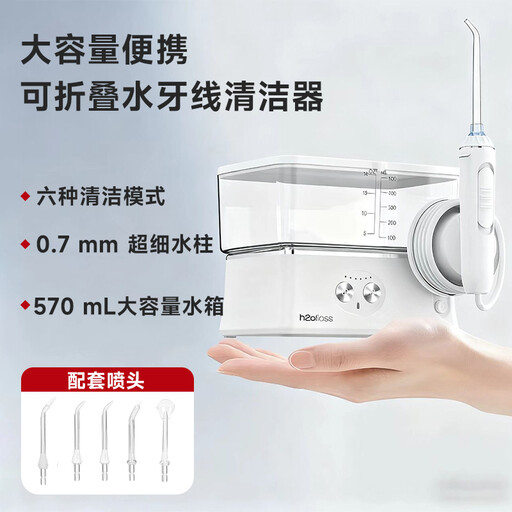
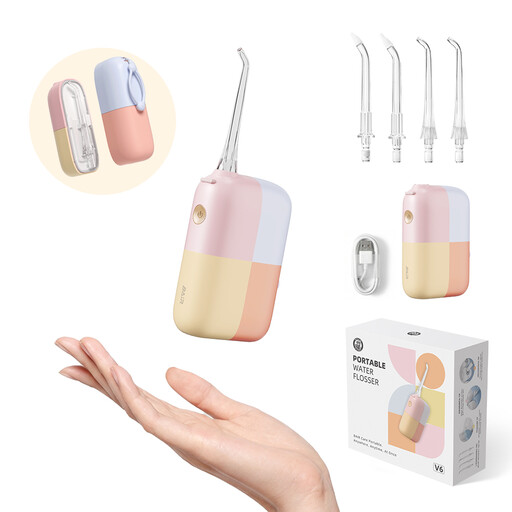
These portable water flossers offer different ways to plan for a short trip: compare the stated modes and included heads of the H2ofloss model with the rechargeable, pocket-oriented BAIR CARE V6. Check nozzle suitability and your bridge-cleaning technique separately.
 No image available
Consider this portable model if a choice of modes and heads matters for your routine; confirm which head is suitable for your bridge with your dental team. The product name states six modes, five spray heads and a 2500 mAh battery. Check the tank capacity, per-fill use time and charging connector before relying on it for travel.
 No image available
Consider this pocket-oriented rechargeable model if packing space matters on your weekend away. Its product name states a magnetic tank, press-spray mode, USB charging and a claimed 30-day battery life. Check the supplied tips, pressure control and per-fill use time against your bridge-cleaning routine.
Do not assume it can. Leeds Teaching Hospitals advises sweeping floss beneath the false tooth along the gum line, and the Scottish Dental Clinical Effectiveness Programme says people with implant-supported bridges need personalised instruction. Ask your dental team how a water flosser should fit into that method.
Check one when directing water around bridge margins or restoration surfaces is your main reason for buying. Waterpik describes its Plaque Seeker™ tip as designed for bridges and other restorations, but confirm compatibility and follow the technique advised for your bridge.
Choose a reservoir and stated per-fill duration that fit how long you normally spend cleaning, including whether you mind refilling. Panasonic lists a 150 mL tank for the EW-DJ4B and approximately 40 seconds of use; Philips lists a 250 mL reservoir for HX3826/33. Capacity alone does not tell you how well a device will clean your bridge.
Follow the selected model's instructions for emptying, rinsing and drying its reservoir and nozzle before packing. Check how its components come apart and what the travel case or accessories are intended to hold, rather than packing a filled reservoir by default.