
24/7 Customer Support

Free returns

Same-day & Next-day Delivery

Quality Guaranteed

Unlock Your Welcome Offers: FREE Delivery | Up to 80% OFF | Free 30-day JoyPlus trial
Download the APP
A water flosser can make interdental cleaning easier, particularly if you have braces, bridges, implants or tightly spaced teeth. However, choosing the right oral irrigator involves more than comparing the highest pressure figure or longest battery claim.
Many UK shoppers encounter the same purchasing traps: a tank that needs constant refilling, a device that is awkward to clean, or a powerful stream with too little control for sensitive gums. This guide explains which specifications matter and matches practical options to different routines.
A high PSI figure does not automatically mean a more suitable clean. Maximum pressure can feel uncomfortable for first-time users or people with sensitive gums. A useful electric water flosser should offer a softer setting as well as stronger modes, allowing you to adjust gradually.
Look for clearly stated pressure ranges and multiple modes rather than relying on phrases such as “professional power”. Pressure figures are not always presented using identical testing methods, so compare them alongside the number of settings and the nozzle design.
A compact portable water flosser is convenient for work, holidays and the gym, but a small reservoir may require refilling during a cleaning session. This can become frustrating when cleaning around orthodontic appliances or several hard-to-reach areas.
For regular home use, a 260–360ml tank generally offers a practical balance between capacity and portability. Smaller tanks, such as 150ml, can still suit travel if compact size is the priority.
An IPX7 or IPX8 rating describes water-resistance performance under specified conditions; it does not mean the device can be left submerged indefinitely or charged while wet. A waterproof water flosser still needs to be emptied, rinsed and dried after use.
Also check whether the tank is detachable and whether the nozzle can be removed for cleaning. A device that is simple to maintain is more likely to fit comfortably into a daily routine.
For beginners and users with sensitive gums, start with the lowest available setting. Products with three to five modes provide more flexibility than single-pressure designs. Pulse or on-demand operation can also help you control the flow around individual gaps.
A water flosser for braces should include an orthodontic nozzle or a tip designed to direct water around brackets and wires. Do not assume that every standard nozzle is equally convenient for orthodontic cleaning.
A larger tank reduces interruptions but adds bulk. A travel water flosser may prioritise a compact body, folding structure or leak-resistant tank over capacity.
Consider where you will use it:
A rechargeable water flosser should state its charging method and approximate charge time. Battery-life figures are normally usage-dependent, so treat “up to” claims as a guide rather than a guarantee.
IPX7 indicates protection against temporary immersion under specified test conditions, while IPX8 refers to a higher level of immersion protection defined by the manufacturer. Neither rating removes the need to keep the charging port dry before connecting a cable.
Use lukewarm water unless the product instructions specify otherwise. Avoid adding oils or unapproved solutions, as these may damage seals or internal components.
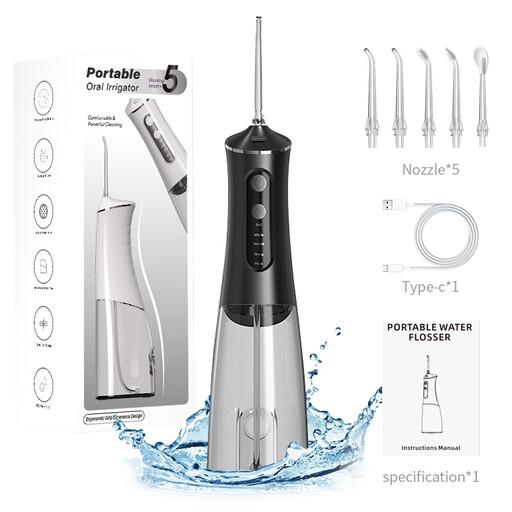
Why This Fits Their Persona: A straightforward cordless water flosser for adults starting an interdental cleaning routine at home.
Five pressure modes include a soft option, so users are not limited to one strong setting. Its 350ml tank also reduces frequent refilling.
Five modes, Type-C charging, a 350ml tank and an IPX7 rating.
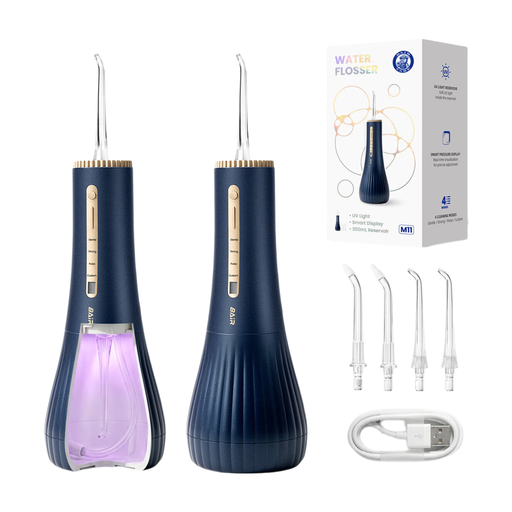
Why This Fits Their Persona: Suits shoppers who value a larger reservoir, USB-C charging and integrated nozzle storage for an organised bathroom setup.
The 360ml tank addresses capacity concerns, while four modes provide a softer starting point instead of relying on maximum pressure.
360ml capacity, four cleaning modes, USB-C rechargeability and IPX8 waterproof rating. The listing includes a UV sanitisation function; follow the supplied safety instructions.
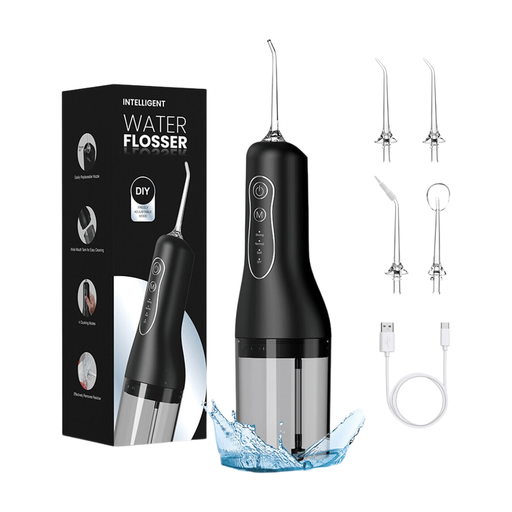
Why This Fits Their Persona: Designed for users who want several intensity options and a portable rechargeable water flosser for daily use or business travel.
Four modes, including soft and DIY settings, offer more control than a single high-pressure stream. The detachable 260ml tank is easier to refill and clean.
60–140 PSI range, 260ml detachable tank, USB-C charging, 50-day stated battery life and IPX6 water resistance.
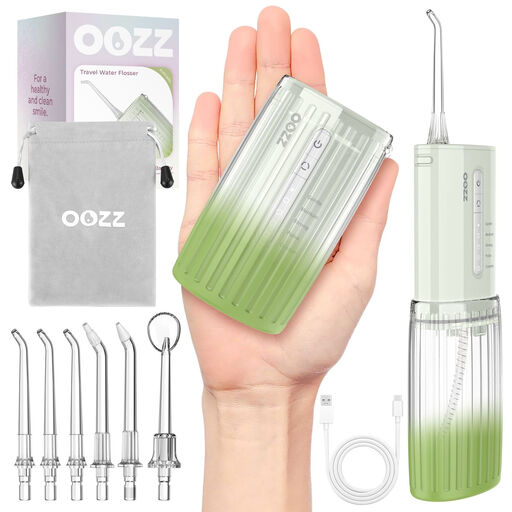
Why This Fits Their Persona: A pocket-sized travel water flosser for holidays, commuting, work and gym bags.
Its 150ml leak-proof twist-lock tank, built-in tip storage and travel pouch address common packing and spill concerns.
Five modes, six jet tips, USB-C charging, a two-minute timer and IPX8 waterproof construction.
We have compiled a complete, real-time list of products that fully satisfy these strict selection criteria and UK safety regulations.
A water flosser is convenient around braces, bridges and difficult-to-reach spaces, while dental floss harps are lightweight, inexpensive and require no charging. Harps can be useful for quick cleaning after meals, particularly when travelling without access to water.
Neither option replaces brushing with fluoride toothpaste. Use the method you can perform consistently and gently. If you have recent oral surgery, persistent bleeding, gum disease or dental implants, ask your dentist whether an oral irrigator is appropriate for your situation.
Many products are designed for daily use, but follow the manufacturer’s instructions. Start on a soft setting and guide the nozzle along the gumline without forcing it into the gums.
Battery life varies with pressure, mode and frequency. Product listings may state figures ranging from around 30 to 120 days, but these are usage-dependent estimates. Recharge the device before extended travel and keep the charging port dry.
Electricity use is generally modest because charging is intermittent. Ongoing costs are more likely to come from replacement nozzles, cleaning supplies and, where applicable, batteries or accessories. Check availability and recommended replacement intervals before buying.