
24/7 Customer Support

Free returns

Same-day & Next-day Delivery

Quality Guaranteed

Unlock Your Welcome Offers: FREE Delivery | Up to 80% OFF | Free 30-day JoyPlus trial
Download the APP
A water flosser can make cleaning between teeth more convenient, particularly if traditional floss is difficult to handle. It may also suit people with braces, bridges, implants or sensitive gums. However, product pages often highlight pressure figures and battery claims without explaining how those specifications affect everyday use.
The practical choice is not simply the device with the highest PSI rating. It is the model that offers suitable pressure control, a manageable tank, useful nozzles and charging features that fit your routine.
A high maximum pressure can sound impressive, but it may be uncomfortable for first-time users or people with sensitive gums. Maximum PSI is only one part of the specification. Check whether the device has a genuinely gentle setting and whether the pressure range is adjustable.
A water flosser for sensitive gums should allow you to begin at a lower intensity. Some products also offer pulse or gum-care modes, which can provide a more controlled experience than using the strongest continuous stream.
“Up to” battery claims depend on how often and how long the device is used. A rechargeable water flosser may last several weeks between charges, but frequent high-pressure use can reduce runtime.
Also check the charging connection. A USB-C water flosser is convenient if your household already uses USB-C cables, while proprietary chargers may be less convenient for work or travel.
IPX7 and IPX8 ratings describe resistance to water under specified test conditions; they do not mean the device can be charged while wet. Always dry the charging port, empty unused water and rinse the nozzle after use.
A detachable tank with a wide opening is easier to clean than a reservoir with narrow, difficult-to-reach sections. Waterproofing helps with bathroom use, but it does not remove the need for regular hygiene maintenance.
Most users need a range rather than one powerful setting. For everyday cleaning, look for at least three levels, including a soft option. People wearing orthodontic appliances may benefit from an orthodontic nozzle, while those requiring targeted gum care may prefer a periodontal tip.
Pressure figures vary between manufacturers, so they should not be treated as directly comparable unless measured under the same conditions. A cordless water flosser with gradual-start operation or a pulse mode can be easier to control around the gumline.
A compact tank is useful for a travel water flosser, but a smaller reservoir may require refilling during a full cleaning session. Capacities around 230–300 ml are common in portable models. Larger tanks, such as 350–570 ml, can reduce interruptions but may increase size and weight.
Consider where you will use it:
A waterproof water flosser should still be used according to its manual. IPX7 generally indicates protection during temporary immersion, while IPX8 refers to protection under manufacturer-defined immersion conditions. Neither rating means it should be operated while charging.
Review the accessories list carefully. Standard tips may be enough for daily use, while tongue-cleaning, orthodontic and gum-care nozzles provide more specialised options. A built-in storage compartment can also reduce the chance of losing small accessories.
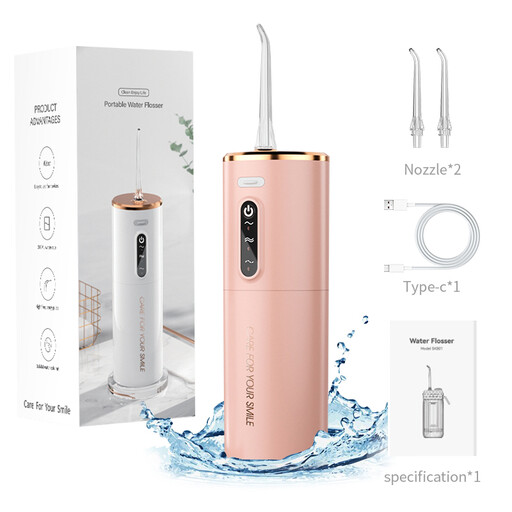
Why This Fits Their Persona: A straightforward cordless option for someone starting an everyday interdental cleaning routine without needing a large home unit. Its 280 ml tank balances portability with a useful session size.
It offers three selectable modes, including a gentle gum-care setting, rather than relying on one fixed high-pressure stream.
60–100 PSI range, 1200 mAh battery, removable 280 ml tank and IPX7 waterproof construction.
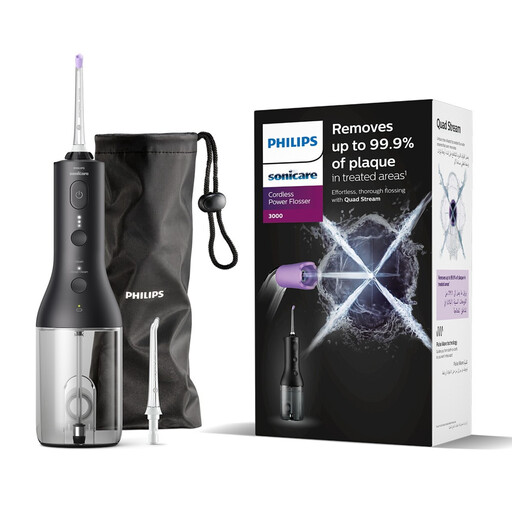
Why This Fits Their Persona: Suitable for users who value guided operation and a recognised accessory system for regular home use or occasional travel.
Its two flossing modes and three intensity levels make the specification more useful than a single headline pressure figure.
250 ml reservoir, IPX7 rating, 360° nozzle rotation and up to 40 days of typical use according to the product specification.
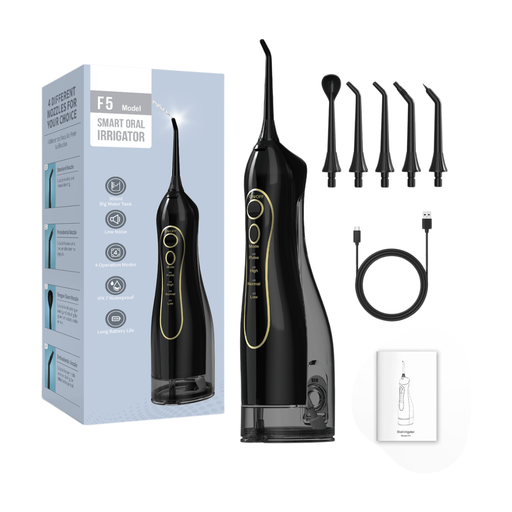
Why This Fits Their Persona: A practical match for users with braces or varied cleaning needs who want several modes and dedicated nozzle types in one cordless device.
The five modes include lower-pressure options, while the package lists standard, orthodontic, gum-care and tongue-cleaning nozzles.
40–140 PSI range, 300 ml detachable tank, 360° rotating nozzle, five nozzles and IPX7 waterproofing.
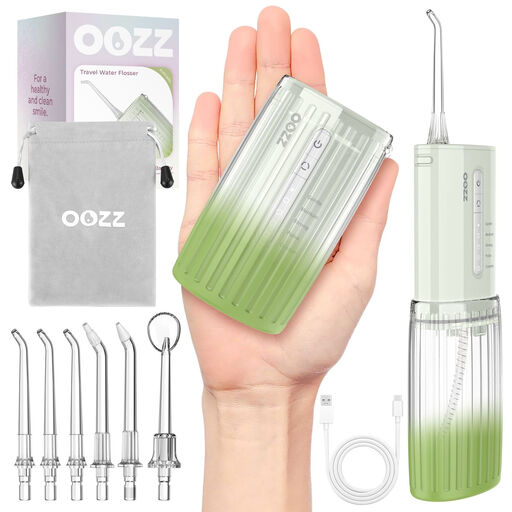
Why This Fits Their Persona: Designed for people moving between home, work, the gym and holidays who need a compact oral irrigator with organised accessories.
The twist-lock tank is specified as leak-proof, and the built-in tip compartment helps prevent loose nozzles in a wash bag.
150 ml detachable tank, six jet tips, five modes, USB-C charging, IPX8 rating and travel pouch.
We have compiled a complete, real-time list of products that fully satisfy these strict selection criteria and UK safety regulations.
A water flosser should complement regular brushing and any dental routine recommended by your dentist. If you have recent oral surgery, persistent bleeding, gum disease or dental implants, seek professional advice before use.
It can be a convenient alternative or complement, particularly for people who find string floss awkward or who need to clean around braces and bridges. It does not replace brushing or professional dental care.
Battery life varies by model and usage. The products above specify run times from around 30 to 90 days, but actual performance depends on pressure, session length and frequency. Rechargeable batteries also lose capacity over time, so check whether replacement parts or warranty support are available.
Electricity use is generally modest because the device charges through a small rechargeable battery. Ongoing costs are more likely to come from replacement nozzles and occasional battery or accessory replacement. Check the included tips, compatible replacements and cleaning requirements before ordering.