
24/7 Customer Support

Free returns

Same-day & Next-day Delivery

Quality Guaranteed

Unlock Your Welcome Offers: FREE Delivery | Up to 80% OFF | Free 30-day JoyPlus trial
Download the APP
A water flosser can make cleaning between teeth more convenient, particularly if traditional floss is awkward around braces, bridges, crowns or implants. However, product listings often highlight pressure figures, battery claims and waterproof ratings without explaining what they mean in everyday use.
As the Joybuy Product Recommendation Officer, I focus on separating useful specifications from marketing noise. Before choosing an electric water flosser, check these common pitfalls and match the design to your routine.
A high PSI figure may sound impressive, but maximum power is not suitable for every user. Beginners and people with sensitive gums generally need a lower setting, while users with orthodontic appliances may value a dedicated nozzle more than extra pressure.
Look for adjustable pressure settings, ideally including a soft mode. A cordless water flosser with gradual adjustment is easier to introduce into a daily routine.
Water-resistance ratings are not interchangeable. IPX6 indicates protection against powerful water jets, while IPX7 generally indicates protection during temporary immersion under specified test conditions. IPX8 refers to immersion beyond IPX7 conditions, as defined by the manufacturer.
These ratings do not mean the device should be charged while wet. Always dry the charging port, follow the supplied instructions and do not operate a rechargeable water flosser while connected to power.
A compact portable water flosser may fit neatly into a wash bag but require refilling during a full-mouth clean. Smaller tanks around 150ml–260ml save space, while tanks of 300ml or more can reduce interruptions.
A detachable, wide-opening reservoir is also practical because it is easier to empty, rinse and air-dry. Any water left standing inside the unit can create an unpleasant odour over time.
For a water flosser for sensitive gums, start with the lowest setting and increase only when comfortable. Models with three to five modes provide more control than single-pressure designs. Pulse or on-demand operation can also help beginners manage splashing and water flow.
Pressure figures should be read alongside the available modes. For example, the Ordo Hydro Sonic lists a range of 80–160 PSI with three pressure settings and on-demand operation, while the Sunluxy F5 offers 40–140 PSI across five modes.
A rechargeable water flosser is convenient for bathrooms without a nearby socket and for travel. USB-C charging can simplify cable management, although claimed runtimes depend on frequency, pressure and session length.
Check the charging time as well as the battery claim. The Rushi R-A31 has a 1500mAh battery, approximately three hours’ charging and a stated runtime of up to 90 days. The Philips Sonicare Cordless Power Flosser 3000 provides a stated runtime of up to 14 days for the HX3826/31 listing, so checking the exact model is important.
If you wear braces, look for an orthodontic nozzle. For gum care, a soft or periodontal tip may be more relevant. A rotating nozzle can make it easier to reach the back teeth, but it does not replace careful positioning.
A water flosser should complement brushing and any dental routine recommended by your dentist. If you have recently had oral surgery, persistent bleeding, gum disease or concerns about implants, bridges or crowns, seek dental advice before use.
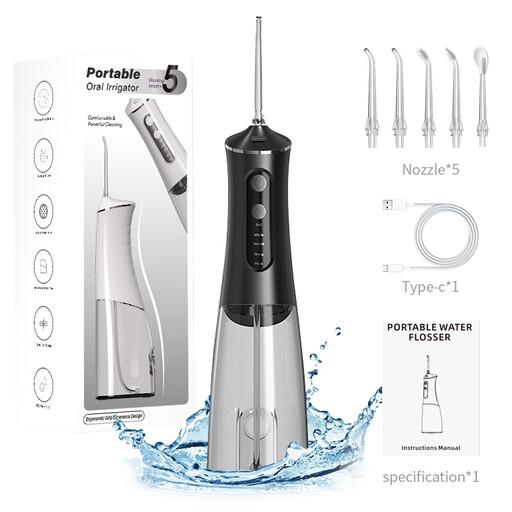
Why This Fits Their Persona: Five pressure modes give first-time users a softer starting point and room to adjust as they become familiar with daily use.
It offers adjustable Soft, Medium, Normal, Strong and Pulse settings rather than relying on one fixed high-pressure stream.
350ml tank, USB-C charging, 1500mAh battery and IPX7 water resistance.
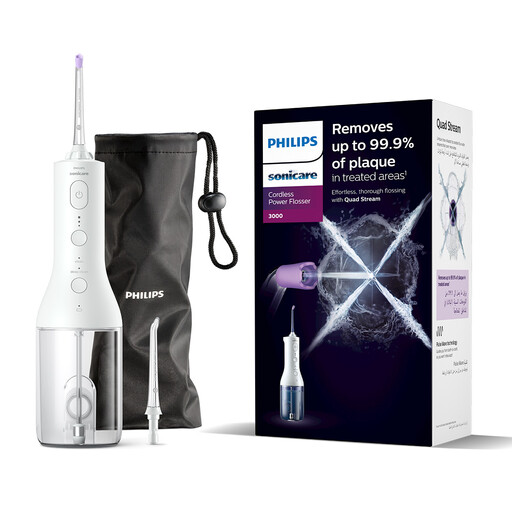
Why This Fits Their Persona: A recognised cordless format with guided cleaning features suits users prioritising a structured routine at home or while travelling.
Two flossing modes and three intensity levels provide control without requiring users to select from a long list of unclear presets.
250ml reservoir, 360° rotating nozzle, USB charging and a two-year manufacturer’s guarantee listed for the product.
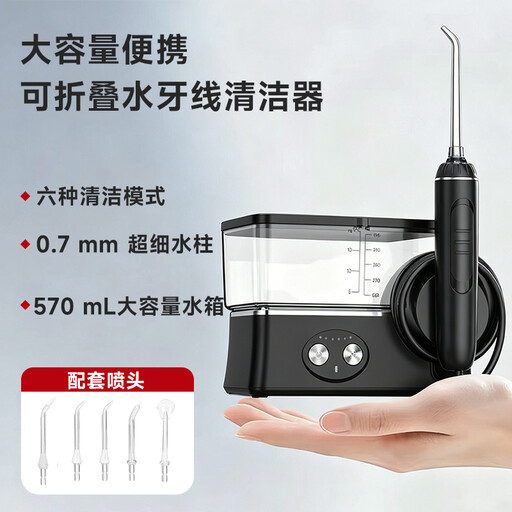
Why This Fits Their Persona: The larger reservoir is practical for households or users who prefer fewer refills during regular cleaning.
Its 570ml tank addresses the small-reservoir inconvenience, while six modes allow more tailored operation.
2500mAh battery, five spray heads and IPX7 waterproof construction.
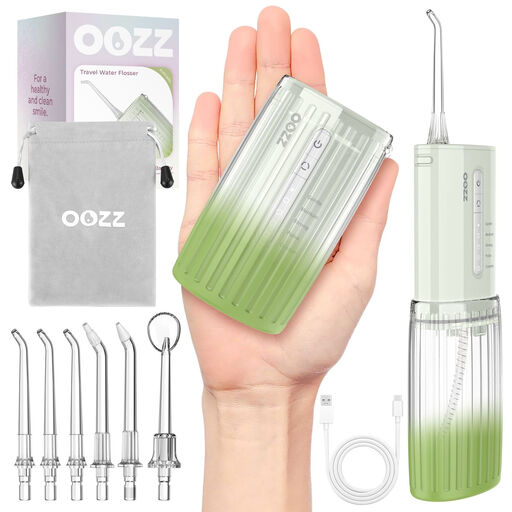
Why This Fits Their Persona: A pocket-sized design with a travel pouch and built-in tip storage suits holidays, work trips and gym bags.
The leak-proof twist-lock tank and IPX8 rating address transport and bathroom-cleaning concerns; the tank is 150ml, so compactness takes priority over capacity.
Five modes, six interchangeable tips, USB-C charging and a two-minute automatic timer.
We have compiled a complete, real-time list of products that fully satisfy these strict selection criteria and UK safety regulations.
Do not aim the jet at your eyes, ears, nose or throat. Avoid very hot water, essential oils and mouthwash unless the instructions specifically permit them.
It can help direct water around brackets and wires, provided the device includes a suitable orthodontic tip and you use a comfortable pressure. Follow advice from your orthodontist, particularly if your gums are sore or bleeding.
The stated runtime varies considerably. Some models list around 14 days, while others claim 30, 40, 50 or more days under specified usage conditions. Actual performance depends on mode, pressure and cleaning frequency, so compare charging convenience rather than relying solely on the largest figure.
No. An oral irrigator is generally used as a supplement to brushing and interdental cleaning. Maintain your regular oral-care routine and ask a dental professional which method is appropriate for your teeth and gums.