
24/7 Customer Support

Free returns

Same-day & Next-day Delivery

Quality Guaranteed

Unlock Your Welcome Offers: FREE Delivery | Up to 80% OFF | Free 30-day JoyPlus trial
Download the APP
A water flosser can make interdental cleaning more convenient, particularly if traditional string floss feels awkward around braces, bridges or dental implants. However, shopping by headline pressure figures or battery claims alone can lead to a device that is uncomfortable, difficult to clean or inconvenient for everyday use.
Before choosing an electric water flosser, look beyond marketing language and check the specifications that affect real use: pressure control, tank capacity, charging, waterproofing and nozzle design.
A high PSI figure may look impressive, but maximum pressure is not automatically suitable for every user. Beginners and people with sensitive gums generally need a gentle setting, while users with braces or more complex dental work may value targeted nozzles and flexible adjustment more than raw power.
A cordless water flosser with several pressure settings is usually easier to adapt over time. Start low and increase gradually only if it remains comfortable.
“Up to” battery figures depend on frequency, mode and usage time. A rechargeable water flosser may last for weeks, but it can still be inconvenient if it uses a proprietary charger or takes a long time to recharge.
For UK homes, offices and travel, a USB-C water flosser can be simpler to charge from a laptop, power bank or compatible mains adaptor. Always check whether the device can be used while charging; many cordless models should only be operated when disconnected from power.
A compact tank saves space but may require refilling during a session. A larger reservoir is convenient at home, yet it may make a portable water flosser heavier or less suitable for a wash bag.
Removable tanks, wide openings and nozzle storage can make cleaning easier. Empty the tank after use, rinse the nozzle and allow parts to air-dry. Do not leave standing water inside the device.
Look for at least two or three clearly defined modes, including a soft setting. The products listed here range from 60–120 PSI on the Rushi R-B41 to 80–160 PSI on the Ordo Hydro Sonic. These figures describe the stated operating range, not a guarantee of cleaning results.
A pulse mode alternates the water flow and can feel more controlled than a continuous stream. If you are new to an oral irrigator, begin with the lowest setting and direct the nozzle along the gumline rather than forcing it into the gums.
For regular use, a tank around 250–350ml often offers a practical balance between session capacity and handle size. The Rushi R-A31 has a 350ml tank, while the Philips Sonicare Cordless Power Flosser 3000 has a 250ml reservoir.
Travel models can be smaller. The OOZZ OZ-7213 has a 150ml leak-proof tank and built-in tip storage, prioritising portability over fewer refills. For a family bathroom or longer sessions, the H2ofloss model lists a 570ml tank, although its stated weight is approximately 1kg.
IP ratings should be read carefully:
Waterproofing does not mean the charging port can be connected while wet. Dry the port fully before charging. Nozzles also matter: orthodontic tips may be useful around brackets and wires, while periodontal or gum-care tips are designed for more targeted use. Replace damaged tips and follow the product instructions for replacement intervals.
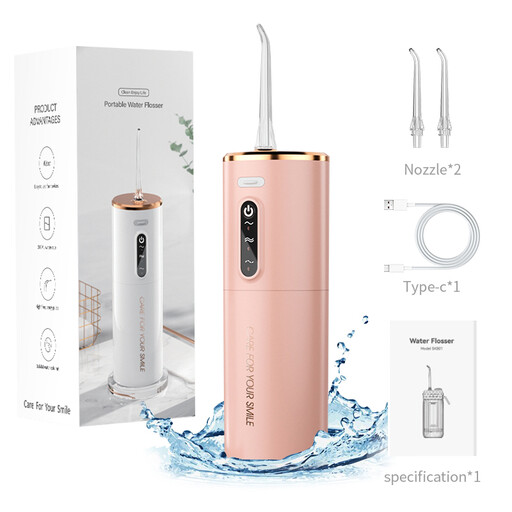
Why This Fits Their Persona: A straightforward cordless water flosser for users who want adjustable daily cleaning without a bulky countertop unit.
It provides three frequency options, including a gum-care setting, rather than relying on one fixed high-pressure stream.
280ml removable tank, 1200mAh battery, IPX7 waterproof rating and up to 70 days stated battery life.
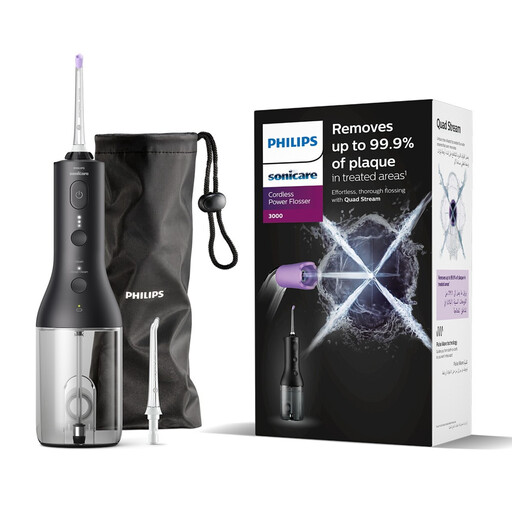
Why This Fits Their Persona: Suits buyers who value guided operation, a recognisable product ecosystem and a rechargeable design for home or travel.
Two flossing modes and three intensity levels provide more control than a device with a single output.
250ml reservoir, 360° nozzle rotation, IPX7 construction and a stated two-year manufacturer’s guarantee.
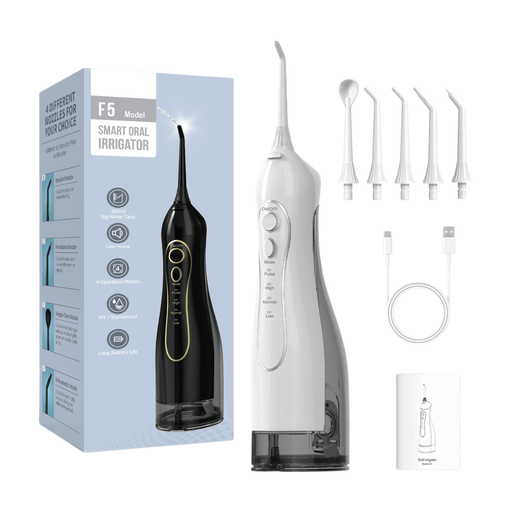
Why This Fits Their Persona: A practical match for users wanting dedicated nozzles and a larger tank for braces, gum-care routines or frequent daily use.
Five modes start at 40 PSI and include orthodontic and gum-care nozzles, so the 140 PSI maximum need not be used routinely.
300ml detachable tank, five included nozzle types, 360° rotation and IPX7 waterproofing.
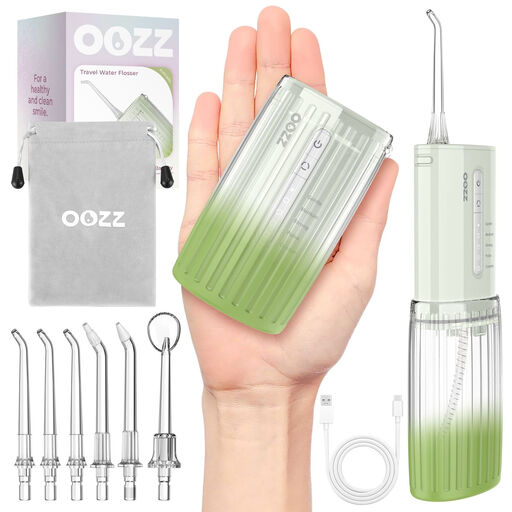
Why This Fits Their Persona: Designed for holidays, commuting, work or gym bags where a compact travel water flosser is more useful than a large reservoir.
Its leak-proof twist-lock tank and travel pouch address two common portable-device problems: spills and loose accessories.
USB-C charging, five modes, six jet tips, 150ml tank, IPX8 rating and automatic two-minute shut-off.
Fill the reservoir with clean lukewarm water, usually within the temperature range stated in the manual. Lean over the sink, place the nozzle in your mouth before switching on, and guide it along the gumline with your lips slightly open.
A water flosser should complement brushing and other recommended dental-care routines rather than replace them. If you have recent oral surgery, persistent gum bleeding, gum disease, implants or other dental concerns, ask a dental professional before use. Stop if you experience ongoing pain or bleeding.
We have compiled a complete, real-time list of products that fully satisfy these strict selection criteria and UK safety regulations.
Many models include orthodontic nozzles and adjustable pressure, which may make cleaning around brackets and wires more manageable. Use the lowest comfortable setting initially and follow advice from your orthodontic or dental team.
The stated figures vary considerably. Examples in this guide range from around 30 days to up to 90 or 120 days, depending on the model and usage. Treat these as manufacturer estimates rather than guaranteed runtime. Charging time, cable type and battery indicators are also worth checking.
A typical cordless model uses a single tank of water per cleaning session and charges through a low-voltage USB cable. Running costs are generally modest, but replacing nozzles and maintaining the tank are ongoing considerations. Emptying and drying the reservoir after every use can also help keep the device ready for the next session.