Weekend travellers with fixed braces
You need a device that fits in your wash bag and works away from your usual bathroom setup, while giving you control around brackets and wires.


For a weekend away with fixed braces, a cordless water flosser is easier to pack than a countertop model, provided you can aim its stream around brackets comfortably. Balance reservoir refills against luggage space and charging needs. Keep brushing and interdental cleaning: a water flosser is an addition to that routine, not a replacement.
You need a device that fits in your wash bag and works away from your usual bathroom setup, while giving you control around brackets and wires.
Food caught around brackets is your main concern. Queen Victoria Hospital NHS Foundation Trust advises cleaning around every bracket with small interdental brushes; a water flosser would be an additional step.
You would rather begin with a lower intensity than choose a device for its highest pressure setting. Check that the exact model offers controls you can adjust comfortably.
Choose the format first: a cordless device suits a compact weekend kit, while a countertop unit needs more room and mains power. Then check how you will aim the stream, refill the reservoir and charge the device.
| Concern | What to check | Who this matters to |
|---|---|---|
| Access around brackets | Check which nozzle comes with the exact model and whether you can direct the stream around brackets and wires. | If food catches around individual brackets, I want to aim the stream precisely without treating it as a substitute for interdental brushes. Around 39% of consumers put bracket access first. |
| Travel convenience | Check the packed accessories, reservoir capacity or stated session time, and charging connection. | With limited wash-bag space, I need a cordless device I can carry and refill without disrupting the trip. For around 38% of consumers, travel convenience is the primary concern. |
| Comfort and upkeep | Look for adjustable intensity and follow the exact model’s instructions for cleaning its reservoir and nozzle. | If I prefer to start gently, I need a setting that feels manageable and a unit I can clean after travelling. Comfort and upkeep come first for around 23% of consumers. |
Fixed braces still require careful brushing and cleaning around the appliance. The British Orthodontic Society recommends interdental or single-tufted brushing for plaque control; a 2024 review in Clinical and Experimental Dental Research describes oral irrigators as additional home-care aids.
Continue the brushing and interdental method advised by your orthodontic team, using the flosser as an extra cleaning step.
Waterpik describes countertop units as less portable and dependent on mains power. That matters when bathroom space and luggage room are limited.
For a short trip, weigh any reservoir advantage against the space and socket the unit needs.
GOV.UK says that at most UK airports, hand-luggage liquids must be in containers no larger than 100 ml, even when a larger container is only partly full. Airport rules can differ.
Empty the reservoir before security, then check the rules for each airport on your journey.
Reservoirs and nozzles need cleaning after use. Philips advises weekly cleaning for its Sonicare Power Flosser and says not to clean it while the charging cord and adapter are attached.
Follow your model’s cleaning instructions, empty the reservoir and let the parts dry before packing them away.
The Cordless Advanced is a travel-oriented option if a named Orthodontic tip is important to you.
The HX3826/33 offers a stated reservoir capacity and adjustable intensity for travellers planning their refill and charging routine.
AquaCare is worth considering if selectable stream styles and a sensitive pressure setting are your priorities.
These cordless water flossers offer different combinations of controls, nozzles and travel features. Check the exact package contents and refill requirements against the way you clean around your braces; the models below are not interchangeable with the brand examples above.
 No image available
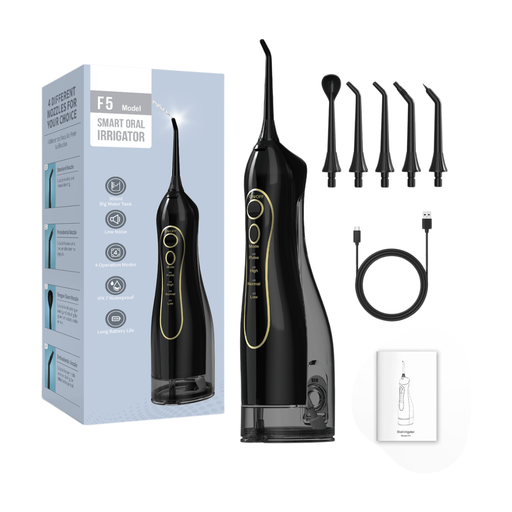
Consider this cordless model if reservoir size and adjustable controls matter for your trip. Its title lists a 300 ml tank, five modes, a 360° rotating nozzle and up to 40 days of battery use.
Check the exact included nozzle set if you want a tip specifically for cleaning around braces.
 No image available
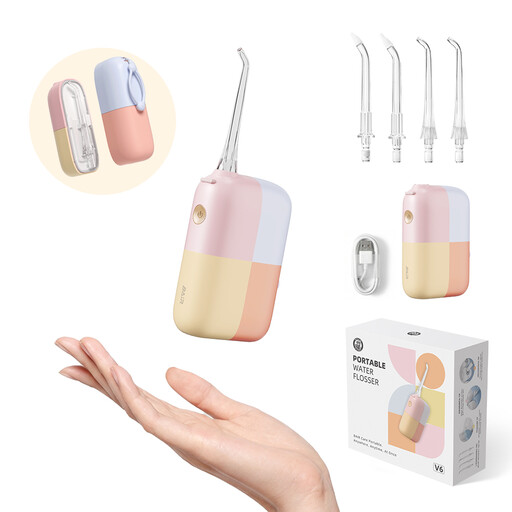
The pocket format may suit a small wash bag. Its title identifies a magnetic tank, press-spray mode, USB charging and an up-to-30-day battery-life claim.
Check the reservoir capacity and included nozzles before relying on it for a longer bracket-by-bracket clean.
 No image available
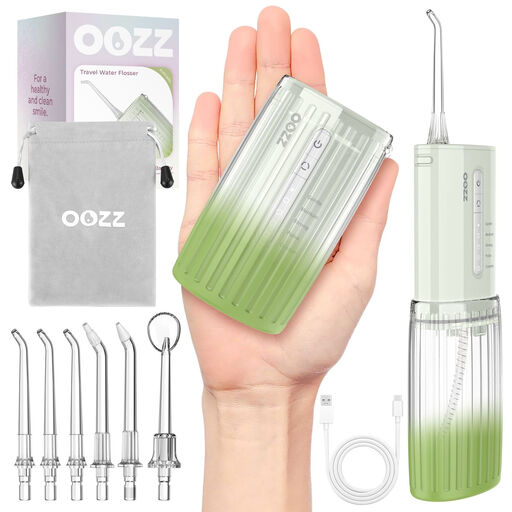
This portable option may suit travellers who want a choice of settings and tips. Its title lists five modes, six jet tips and USB-C charging.
Check which supplied tip you would use around brackets and whether the reservoir meets your refill needs.
 No image available
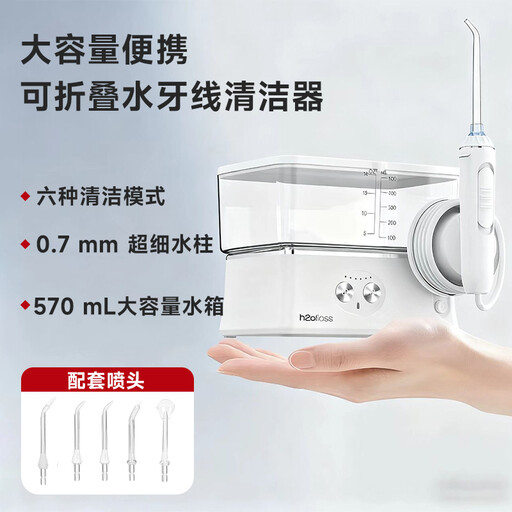
Consider this model if you want several settings and supplied spray heads. Its title lists six modes, five spray heads and a 2500 mAh battery.
Confirm the tank capacity, packed size and included heads before choosing it for limited luggage space.
 No image available
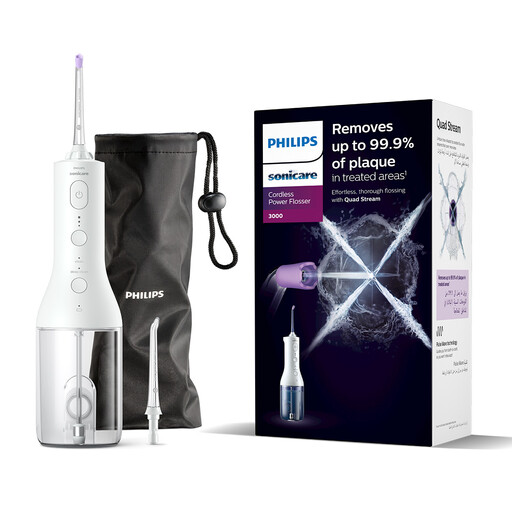
This cordless variant may suit someone who wants adjustable intensity during a short trip. Its title lists two flossing modes and three intensities.
Check the nozzles included with the HX3826/31 and how you would use them around your particular brace layout.
No. The British Orthodontic Society recommends interdental or single-tufted brushing for plaque control, while a 2024 review in Clinical and Experimental Dental Research describes oral irrigators as additional home-care aids. Follow the brace-cleaning routine advised by your orthodontic team.
Start with a cordless format you can pack, then check whether you can aim the supplied nozzle around brackets, adjust the intensity and manage the reservoir between refills. Check the charging connection if you may need to recharge during the trip.
Emptying the reservoir before security is the safer plan. GOV.UK says that at most UK airports, hand-luggage liquids must be in containers no larger than 100 ml even when partly full; check the rules at every departure and transit airport.
Follow the instructions for your exact model, emptying and cleaning the reservoir and nozzle before storage. For its Power Flosser, Philips advises weekly cleaning and says to disconnect the charging cord and adapter before cleaning.
Check your airline’s baggage instructions and the device manufacturer’s battery guidance. The UK Civil Aviation Authority advises following airline and manufacturer rules for lithium-powered devices, particularly if a cabin bag is moved to the hold.