People with little time before work
If cleaning between your teeth needs to fit alongside getting ready, look at session length, refilling, storage and charging—not just the number of settings.


For a short before-work routine, start by checking whether a cordless water flosser has enough reservoir capacity for your usual session, pressure settings you can control and a charging arrangement that suits where you keep it. Specialist tips matter more if you clean around braces or implants; a countertop model makes more sense when a larger reservoir matters more than compact storage. A water flosser should support, not replace, regular brushing and cleaning between teeth.
If cleaning between your teeth needs to fit alongside getting ready, look at session length, refilling, storage and charging—not just the number of settings.
Food caught around braces, implants or restorations may make tip choice and nozzle control especially relevant. Check the accessories for the exact model rather than assuming every cordless flosser includes specialist tips.
Adjustable pressure lets you start at a lower setting instead of assuming the strongest stream will feel right. Ask a dental professional about cleaning around any particular dental condition.
Choose the format around where the flosser will live, then check whether its reservoir, controls and tips suit the part of your routine that matters most.
Consider it when: you want a device that is easier to store or take away from home.
Trade-off: Waterpik describes cordless models as more portable but generally having smaller reservoirs and slightly lower pressure than countertop models.
Consider it when: the flosser will stay in one bathroom and a larger reservoir matters more than portability.
Trade-off: it takes up more space and needs a mains socket.
| Concern | What to check | Who this matters to |
|---|---|---|
| Morning routine | Check the stated reservoir capacity or session time, plus how conveniently the device charges and stores. | Before leaving for work, I need a cleaning step that fits the time available without an awkward refill; around 33% of consumers put a quick morning routine first. |
| Braces or dental work | Confirm the included tip types and the compatibility of replacements for the exact model. | When food gets caught around braces or dental work, I want a tip intended for that area; for around 27% of consumers, specialist cleaning is the primary concern. |
| Pressure control | Look for clearly stated pressure levels or a lower-pressure mode. | If a strong stream feels uncomfortable, I want to begin gently and adjust it myself; around 20% of consumers place controllable pressure first. |
| Space and portability | Compare device dimensions, charging arrangements and likely refill frequency. | With limited bathroom space or trips away from home, I need something straightforward to pack or put away; compactness comes first for around 20% of consumers. |
A water flosser does not take the place of the routine described by the NHS: brushing twice a day with fluoride toothpaste and cleaning between teeth daily.
Keep those steps in your routine, and ask a dental professional which interdental-cleaning method suits your mouth.
According to Waterpik’s cordless buying guidance, portability comes with smaller reservoirs; a longer session may require another fill.
Compare the stated reservoir capacity or duration for the exact model with the time you expect to spend cleaning. If refilling would interrupt your morning, consider a countertop format.
In a September 2024 recall, the UK Office for Product Safety and Standards identified an electric-shock risk involving the water-ingress resistance of the connector on the Waterpik Nano Plus Dental Water Flosser WP-320UK sold via Amazon. The notice concerns that named model, not every Waterpik flosser.
Check your exact model against UK product-safety recalls and follow any applicable recall instructions. Do not use a device with damaged charging components or water-ingress protection.
The Cordless Power Flosser 3000 range is relevant if you want a rechargeable device with selectable settings.
Waterpik offers cordless and countertop formats, making it useful to compare portability against reservoir size for a fixed bathroom routine.
AquaCare is a cordless option for people who want a choice of stream style and pressure mode.
These cordless models offer different stated reservoir sizes, settings and accessories for a before-work routine. Check the exact listing for session duration and replacement tips if either will determine your choice.
 No image available
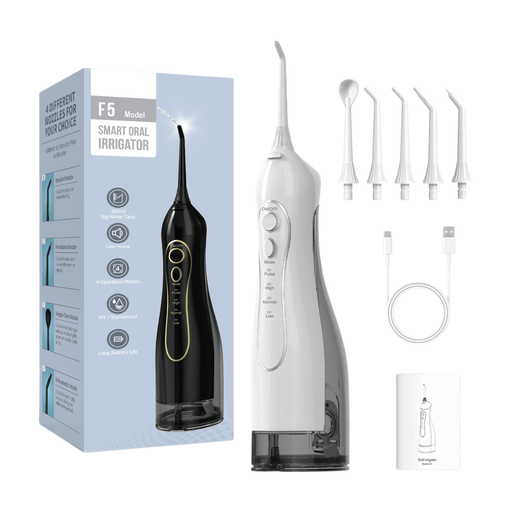
Consider this model if a cordless device with a stated reservoir capacity and adjustable modes fits your morning setup.
The product title lists a 300 ml tank, five modes and a 360° rotating nozzle. Check the included tips and replacement-nozzle compatibility if you need to clean around braces.
 No image available
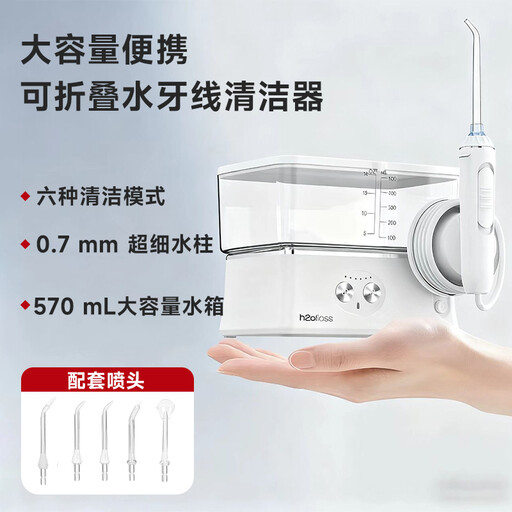
This cordless option is worth comparing if you want a choice of settings and supplied spray heads.
The product title lists six modes and five spray heads. Confirm the tank capacity on the exact listing before relying on it to complete a session without refilling, and check which replacement heads fit.
 No image available
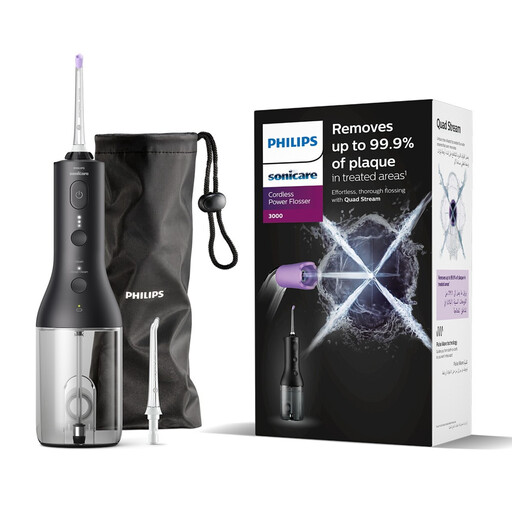
Consider the HX3826/33 if you want a cordless flosser with a choice of modes and intensity.
Its product title specifies two flossing modes and three intensities. Check the reservoir and replacement-nozzle details for this exact suffix rather than applying specifications from another Power Flosser 3000 variant.
 No image available
Consider this model if a stated tank capacity is important to your cordless morning routine.
The product title specifies a 350 ml tank and a 1500 mAh battery. Check its session duration and included tips if refilling or cleaning around dental work would affect your choice.
 No image available
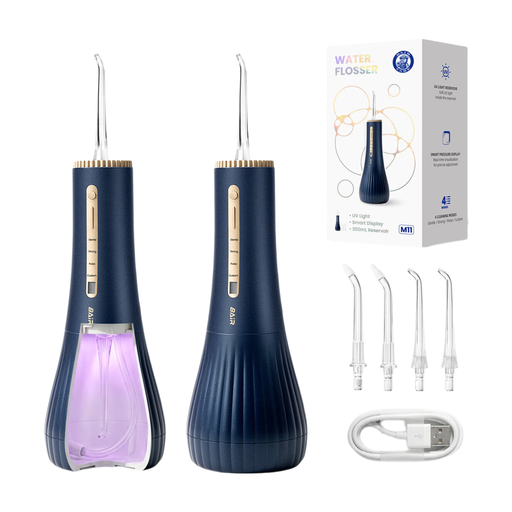
This model may suit a routine where USB-C charging and a choice of modes are priorities.
The product title states a 360 ml tank and four cleaning modes. Confirm the included nozzle types before choosing it specifically for braces; if you have implants or a particular oral-health condition, follow the listing’s advice to consult a dentist before use.
No. The NHS advises brushing twice daily with fluoride toothpaste and cleaning between teeth every day. Treat a water flosser as a tool within that routine, not a substitute for toothbrushing.
Using it before brushing avoids rinsing away toothpaste immediately afterwards. The NHS advises against rinsing with water straight after brushing because that washes away remaining fluoride; follow the instructions for your particular flosser as well.
It can be an option if the exact model has suitable controls and accessories for your needs. Waterpik says Cordless Advanced includes orthodontic and Plaque Seeker tips, while Oral-B describes AquaCare for cleaning trapped particles around braces and implants. Check the included and replacement tips, and seek individual advice from a dental professional where needed.
Reservoir size alone cannot tell you how long your session will last. Check the model’s stated session duration where available and consider how long you normally spend cleaning; a larger stated capacity is not a promise of a complete clean on one fill.
Only if the instructions for that exact model permit it. Waterpik describes its Cordless Advanced as suitable for shower use, but that does not establish the same suitability for other cordless flossers.