
24/7 Customer Support

Free returns

Same-day & Next-day Delivery

Quality Guaranteed

Unlock Your Welcome Offers: FREE Delivery | Up to 80% OFF | Free 30-day JoyPlus trial
Download the APP
If you're looking to elevate your oral hygiene routine, a water flosser, also known as an oral irrigator, can be a game-changer. It uses a pressurised stream of water to dislodge food particles and plaque from between teeth and below the gumline—areas where traditional brushing and flossing can sometimes fall short. They are particularly useful for anyone with braces, implants, crowns or sensitive gums.
However, the market is flooded with options, and it's easy to fall for marketing hype. Many buyers end up with a device that is more frustrating than functional. Before you invest, let's look at the common pitfalls to avoid.
To make an informed choice, focus on a few key technical details rather than flashy marketing claims. These parameters will determine how well the device performs for your specific needs.
This is perhaps the most critical feature for day-to-day usability. The capacity, measured in millilitres (ml), dictates how long you can floss before needing a refill.
For a cordless water pick, battery performance is paramount. Look for the battery capacity, measured in milliampere-hours (mAh). A higher mAh rating generally translates to longer use between charges. Also, consider the charging method. A device that uses a standard USB-C port is far more convenient, especially for a travel water flosser, as you can use the same cable as your phone or laptop.
Effective cleaning requires the right pressure. Look for models with multiple pressure modes, often described with terms like 'Soft', 'Normal' and 'Pulse'. A good pressure range is typically between 40-110 PSI (Pounds per Square Inch). This allows you to start gently and increase the intensity as your gums become accustomed to it.
Additionally, the included nozzles add versatility. A standard jet tip is for general use, but specialised tips—like an orthodontic tip for a water flosser for braces or a periodontal tip for deep cleaning—can significantly enhance performance.
We've analysed the specifications of various models to match them with different user needs. Here are a few recommendations that stand out for their practical design and features.

Why This Fits Their Persona: This model is an excellent entry point for anyone new to water flossing. It offers the core functionality needed for a better clean without an overwhelming number of features, making it easy to incorporate into a daily routine.
It avoids the "one-pressure-fits-all" problem with three distinct modes (Gentle, Intense, Gum Care), allowing new users to start comfortably. The 280ml tank is a good size for a compact unit, avoiding the frustration of a tiny reservoir.
Features a solid 1200mAh battery with fast charging and a comfortable pressure range of 60-100 PSI. Its straightforward, one-click operation is ideal for beginners.
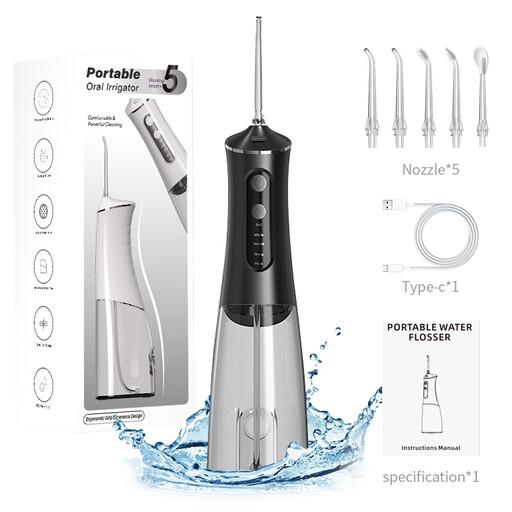
Why This Fits Their Persona: For UK residents who travel frequently for work or leisure, this device is a standout. Its impressive battery life means you can pack it for a week-long holiday or multiple business trips without worrying about bringing another charger.
It directly counters the "weak battery myth" with a high-capacity 1500mAh battery that can last up to 90 days on a single 3-hour charge. The 350ml tank is also generous for a portable model, avoiding the "tiny tank trap".
Exceptional battery longevity combined with modern Type-C charging. It also offers 5 distinct pressure modes, providing versatility for different cleaning needs while on the go.

Why This Fits Their Persona: This model is built for those who need a more intensive clean. The large tank is perfect for the extended time required to navigate around braces, implants or bridges, ensuring a thorough clean without stopping to refill.
It completely solves the "tiny tank trap" with its huge 570ml water tank, which rivals many countertop units. The powerful 2500mAh battery also ensures it can sustain high pressure throughout a long cleaning session.
The combination of a very large tank, a powerful battery, 6 cleaning modes and 5 included nozzles makes it an extremely versatile and capable tool for complex oral care needs.
We have compiled a complete, real-time list of products that fully satisfy these strict selection criteria and UK safety regulations.
Most manufacturers recommend replacing the standard jet tips every 3 to 6 months. This is because mineral deposits from water can build up and affect performance and the tip itself can harbour bacteria over time. Specialised tips, like those with bristles, may need more frequent replacement.
It is generally not recommended to use mouthwash, essential oils or saline solutions in your water flosser unless the manufacturer explicitly states it is safe to do so. These substances can leave behind sticky residues that may clog the internal pump mechanism or degrade the plastic seals over time, potentially damaging the device. Always use lukewarm tap water for cleaning.
Yes, many modern portable water flossers are more than capable of effectively cleaning around braces. The key is to choose a model with a sufficient pressure range (e.g., 40-110 PSI) and an orthodontic-specific nozzle. This type of nozzle often has a tapered brush at the end to help scrub away plaque from brackets and wires while the water jet flushes debris away. A model with a larger water tank is also beneficial, as cleaning with braces can take longer.