For a shared bathroom with limited space, start by comparing cordless water flossers that can be put away, have cleanable water-contact parts and allow each user to keep track of a compatible nozzle. A countertop model makes more sense when there is a suitable fixed location and its larger reservoir or wider pressure adjustment matters more than portability. Plan charging separately from wet-area use, and do not assume a water flosser replaces the daily flossing or interdental brushing advised by the NHS.
Who is this for?
People short on bathroom space
If the basin area needs to stay clear between users, a cordless flosser is a sensible format to examine. Check that its reservoir and settings still suit the intended routine; compactness alone does not settle the choice.
Households organising shared use
One device needs a workable routine for identifying compatible personal nozzles, cleaning the reservoir and storing the parts. Included tips are worth counting, but their types and replacement compatibility matter too.
Users with braces, implants or sensitivity
Pressure adjustment and compatible tip types may matter more than choosing the smallest unit. Ask a dentist or hygienist which between-teeth cleaning method suits your dental work and needs.
What matters when choosing?
Cordless handheld
Choose when: The flosser needs to leave the basin area clear and be stored between uses.
Trade-off: Waterpik describes smaller reservoirs and fewer pressure options across its cordless range than on larger countertop designs; compare the exact models rather than assuming every handheld unit is alike.
Countertop
Choose when: There is a suitable fixed location and a longer session or wider pressure adjustment takes priority over putting the unit away.
Trade-off: A mains-powered unit needs more space and an appropriate electrical arrangement. Waterpik’s Ultra Professional has 10 pressure settings and a stated 90-second reservoir, but those figures belong to that model.
| Concern | What to check | Who this matters to |
|---|
| Storage and portability |
Compare the unit’s stored size, reservoir capacity and documented water resistance. |
I need to clear the basin after use without choosing a reservoir that interrupts my routine. Around 29% of consumers put compact storage first. |
| Cleaning and personal nozzles |
Count the included tips, check replacements for the exact model and read its reservoir-cleaning instructions. |
Several of us will use one device, so I need a way to identify each person’s nozzle and keep the parts cleanable. For around 36% of consumers, organising shared use is the main concern. |
| Settings and dental needs |
Check the available pressure settings and compatible tip types; seek dental advice for braces, implants or treatment concerns. |
If a standard nozzle or setting does not suit my dental needs, I would rather check the available options than buy solely for size. Around 21% of consumers prioritise this fit. |
| Charging arrangements |
Check what charging equipment is supplied and identify an appropriate location away from water. |
I need somewhere practical to charge the unit without bringing an extension lead into the bathroom. Safe charging comes first for around 14% of consumers. |
Buying pitfalls
-
Assuming a water-resistant handset makes bathroom charging safe
A rating for the handset does not establish that its charger, a socket or an extension lead is suitable near water.
Choose a charging location before buying. Electrical Safety First advises against using an extension lead to power appliances in a bathroom without socket outlets; ask a registered electrician about the suitability of an installation.
-
Counting included tips without checking replacements
A multi-user routine is harder to organise if compatible replacement nozzles cannot be identified for the exact model.
Check the model number, supplied tip types and compatible replacements, then decide how each person’s nozzle will be identified and stored.
-
Choosing countertop solely for more pressure settings
A larger unit may offer useful adjustment yet be awkward in a shared bathroom with little clear space and no suitable mains arrangement.
Decide where the unit can safely live before comparing a countertop model’s settings with a cordless model’s reservoir and pressure options.
-
Assuming water flossing replaces every other interdental method
The NHS advises daily flossing or interdental brushing to clean between teeth. A water flosser should not be treated as an automatic substitute for that advice.
Ask a dentist or hygienist which method suits your teeth and dental work, particularly if you have braces, implants, gum concerns or recent treatment.
Brands to consider for these features
Waterpik
Waterpik’s UK range includes compact cordless models and a larger countertop option, making format and storage the useful starting points for comparison.
- According to Waterpik UK, the Cordless Pearl has two pressure settings and four included tips; the Cordless Pulse has two included tips and a removable reservoir.
- The Ultra Professional countertop model offers 10 pressure settings and five tips, but requires space for a fixed, mains-powered unit. These model features should not be assumed across the range.
Philips Sonicare
The cordless HX3826/33 is worth examining when documented handset water resistance and adjustable settings are priorities.
- Philips lists IPX7 water resistance, two modes, three intensities and a 250 ml reservoir for HX3826/33.
- For shared use, check the supplied nozzle types and compatible replacements for this exact variant, as well as where it will be charged.
Oral-B
Oral-B’s AquaCare range offers a cordless option for shoppers comparing stream patterns and pressure choices.
- Oral-B UK describes focused or rotational streams and intense, medium or sensitive pressure choices for AquaCare.
- Oral-B’s reservoir and tip-cleaning instructions apply to its specified products; check the manual for the model you choose rather than transferring that routine to another brand.
Cordless water flossers on Joybuy
These cordless models relate to putting a water flosser away between shared-bathroom uses. Compare their stated settings and reservoir details alongside nozzle organisation and a suitable charging location; the cards do not cover countertop models.
 No image available
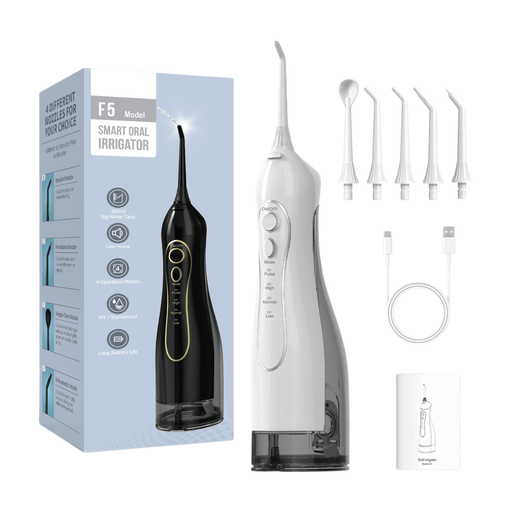
Sunluxy F5 Cordless Water Flosser, White
A cordless option to compare if the device must be put away between users.
The product name states five modes, a 300 ml tank and pressure up to 140 PSI. Confirm compatible personal nozzles and the charging equipment before planning a shared routine.
View on Joybuy
 No image available
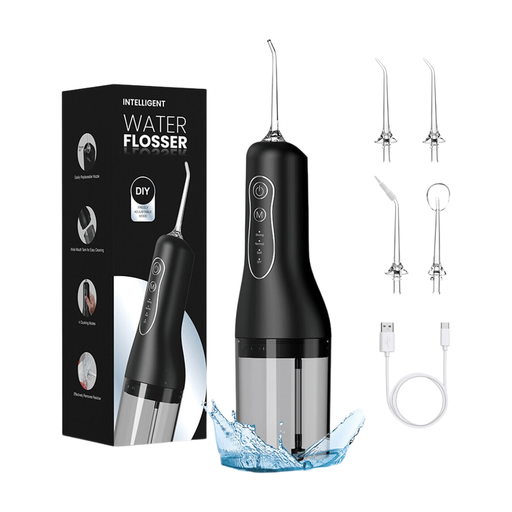
Sunluxy L5 Portable Water Flosser, Black
Consider this cordless format if both storage space and nozzle options matter to the household.
The product name states four modes, a detachable 260 ml tank and three types of nozzle. Check which nozzles are supplied, which replacements fit L5 and what charging equipment is included.
View on Joybuy
 No image available
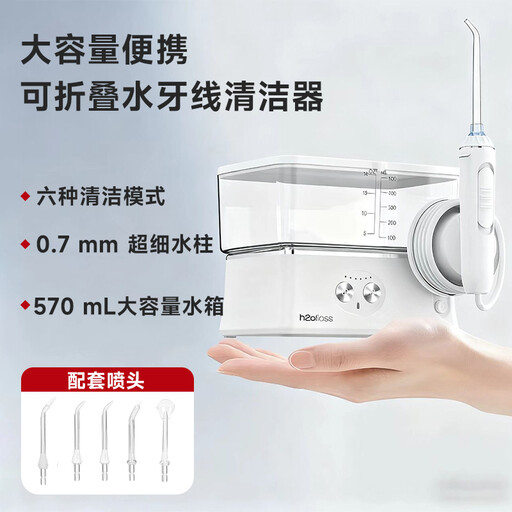
H2ofloss Portable Water Flosser, White
The portable format may suit storage between uses if its size and refill routine work for everyone sharing the bathroom.
The product name states six modes, five spray heads and IPX7 water resistance. Confirm the tank capacity for this SKU before relying on a particular refill interval: the product information gives both 500 ml and 570 ml.
View on Joybuy
 No image available
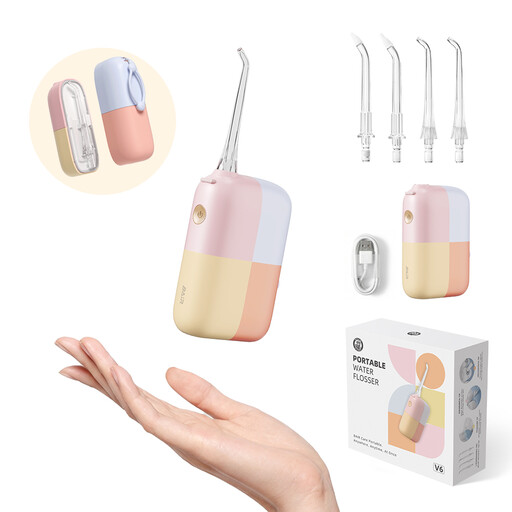
BAIR CARE V6 Pocket Water Flosser with Magnetic Tank
The foldable format and magnetic tank are relevant if the flosser needs to be put away after each use.
The product name specifies press-spray operation, USB recharging and IPX7 water resistance. Confirm the supplied nozzle count and tank capacity for V6 before organising use across several people.
View on Joybuy
 No image available
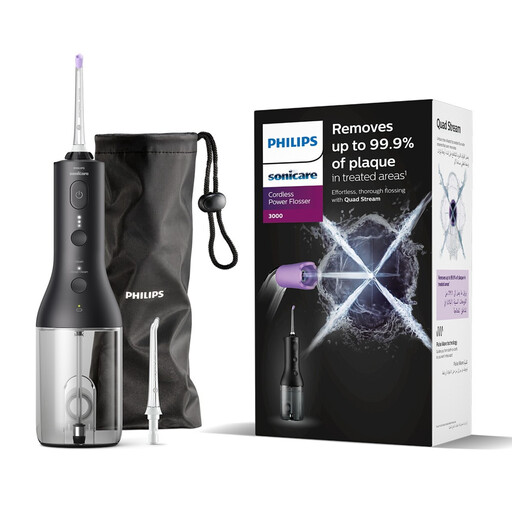
Philips Sonicare Cordless Power Flosser 3000 HX3826/33, Black
This cordless model is relevant if adjustable intensity is a priority alongside storage away from the basin.
Philips lists two modes, three intensities and a 250 ml reservoir for HX3826/33. Check compatible personal nozzles and follow the model’s cleaning instructions when planning shared use.
View on Joybuy
Common questions
Can several people use one water-flosser base?
If your household chooses to share a base, plan for a separately identifiable compatible nozzle for each person and follow the exact model’s cleaning instructions. That practical arrangement is not a universal assurance about shared-use hygiene; ask a dental professional about individual infection or treatment concerns.
Where should I charge a cordless water flosser?
Arrange a dry charging location outside the bathroom unless a qualified professional confirms that the electrical installation is appropriate. Electrical Safety First advises against using extension leads to power appliances inside a bathroom without socket outlets; a water-resistant handset does not change the requirements for its charger.
Does a water flosser replace floss or interdental brushes?
Do not assume it does: the NHS advises daily flossing or use of an interdental brush to remove debris and plaque between teeth. Ask a dentist or hygienist which method suits your teeth, gums and any dental work.
How should I clean a water flosser used in a shared bathroom?
Follow the instructions for the exact model, including its reservoir, nozzle and water-path cleaning steps. Oral-B advises rinsing the reservoir after each use and gives periodic cleaning instructions for its products; Philips provides separate Power Flosser cleaning instructions. Do not apply either brand’s vinegar procedure to another model without checking its manual.


