Holidaymakers doing light activity
For travel days, sightseeing and short walks, water is a straightforward drink to carry. The NHS identifies water as a way to stay hydrated; a sports drink is not necessary just because it is available.


For everyday sightseeing and light activity, start with water; the NHS identifies it as a way to stay hydrated. A zero-sugar sports drink may suit someone who wants a flavoured option without sugar, while a carbohydrate-containing drink is a different choice for exercise where carbohydrate is wanted. Warm weather alone does not settle the decision: consider the activity and compare sugars, carbohydrate, salt and serving size on the label.
The useful distinction is what you plan to do on holiday, not simply whether the day is warm.
For travel days, sightseeing and short walks, water is a straightforward drink to carry. The NHS identifies water as a way to stay hydrated; a sports drink is not necessary just because it is available.
For a long ride, run, hike or organised sport, think about the length of the activity and whether you want carbohydrate alongside fluid. NHS Tayside describes isotonic drinks containing 4–8g carbohydrate per 100ml; individual products still need a label check.
A flavoured sports-drink format does not have to mean a carbohydrate-containing drink. For example, Tesco lists 0g sugars per 100ml for Lucozade Sport Zero Sugar Orange & Peach, a product positioned for low-intensity exercise. Check the particular flavour and pack you buy.
Decide whether you need an everyday drink, a sugar-free flavoured option or carbohydrate during exercise; then compare products on the same nutrition basis.
Choose it for: sightseeing, travel and light activity when you want a drink without added carbohydrate.
Bear in mind: water does not supply the carbohydrate found in conventional isotonic drinks.
Choose it for: a flavoured sports-drink option when avoiding sugar matters more than obtaining carbohydrate from the drink.
Bear in mind: check the particular product’s sodium, sweeteners and carbohydrate rather than assuming all zero-sugar formulas are alike.
Choose it for: exercise where you have decided that carbohydrate as well as fluid is useful.
Bear in mind: it adds sugars that you may not want in a drink consumed throughout an ordinary travel day.
| Priority | What to check | Your needs |
|---|---|---|
| Activity and heat | Consider how long you will be active, the conditions and whether you can carry or obtain water during the outing. | For a travel day or short walk, I want a drink for ordinary thirst, not exercise carbohydrate by default. |
| Sugars and carbohydrate | Compare both figures per 100ml and for the amount you will drink. Tesco lists 0g sugars per 100ml for Lucozade Sport Zero Sugar Orange & Peach, versus 4.1g sugars and 4.1g carbohydrate per 100ml for Powerade Berry & Tropical. | If I want carbohydrate during exercise, I can choose a drink that contains it. Otherwise, I would compare water and zero-sugar options. |
| Salt and ingredients | Read the salt figure and ingredient list, including sweeteners. An electrolyte description alone does not establish that a drink is sugar-free. | I want to know what is in the particular flavour I am packing, rather than choosing by the front-of-pack wording. |
| Format and preparation | Check bottle or serving size and whether a powder needs water. Sainsbury’s lists one 13.5g Gatorade Hydration Booster sachet mixed with 500ml water; its prepared serving contains 11g sugars. | For an excursion, I might prefer a bottle I can open immediately, or a sachet if I will have water and somewhere to mix it. |
Amounts add up across a bottle: Tesco lists 4.1g sugars per 100ml for Powerade Berry & Tropical, while its Lucozade Sport Zero Sugar Orange & Peach listing gives 0g per 100ml.
Start with water for ordinary hydration. If you choose a sports drink, decide whether you want its carbohydrate for the activity you have planned.
An electrolyte product may also contain sugar. Sainsbury’s lists 11g sugars in a prepared 500ml serving of Gatorade Hydration Booster.
Read the nutrition information for the drink as prepared, as well as its front-of-pack description.
These examples refer to particular UK-listed products, not every drink made by each brand.
Tesco lists Lucozade Sport Zero Sugar Orange & Peach as a zero-sugar option for low-intensity exercise.
Tesco’s Berry & Tropical 500ml listing is an example of a carbohydrate-containing sports drink.
Sainsbury’s lists Gatorade Hydration Booster as a powder mixed with water rather than a ready-to-drink bottle.
These options include bottled sports drinks, a canned drink and powder sachets for different holiday outings. Water remains a separate choice for everyday thirst.
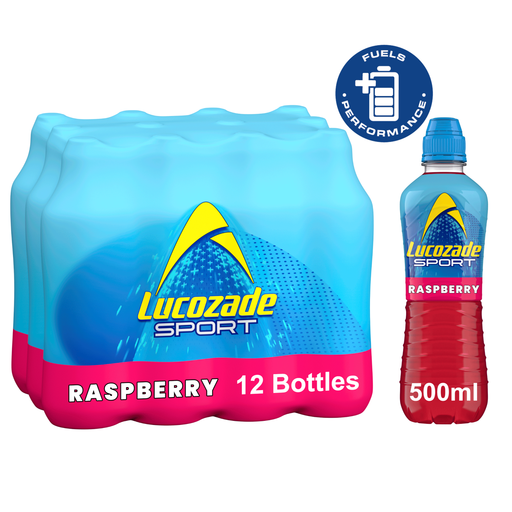 No image available
A bottled isotonic option for an outing where you want carbohydrate as well as fluid. The pack contains twelve 500ml bottles. Its product information identifies aspartame as a source of phenylalanine and says it is unsuitable for people with phenylketonuria.
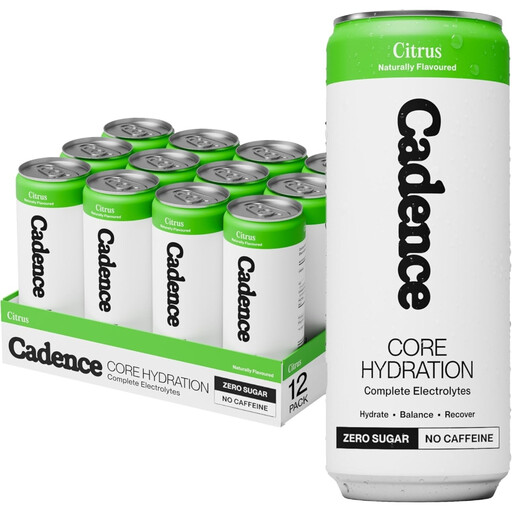 No image available
A ready-to-drink can format to consider when carrying a drink for exercise. The pack contains twelve 330ml cans. Compare sugars and salt on the can, and check the label’s age guidance if buying for a child.
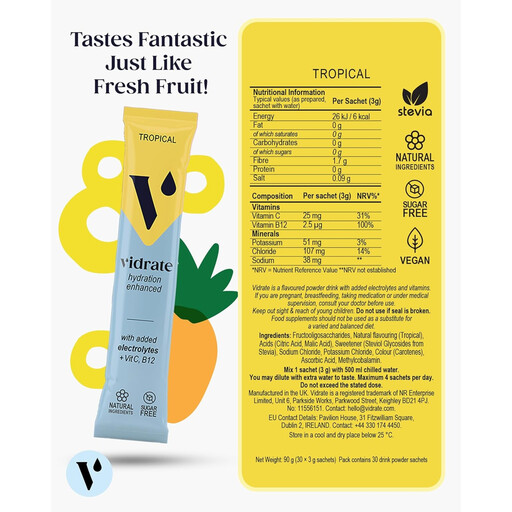 No image available
Individual sachets offer a packing alternative to prepared drinks when you will have water and a bottle. Mix one sachet with 500–700ml water; do not consume the powder undiluted. Compare the prepared drink’s nutrition information with other options.
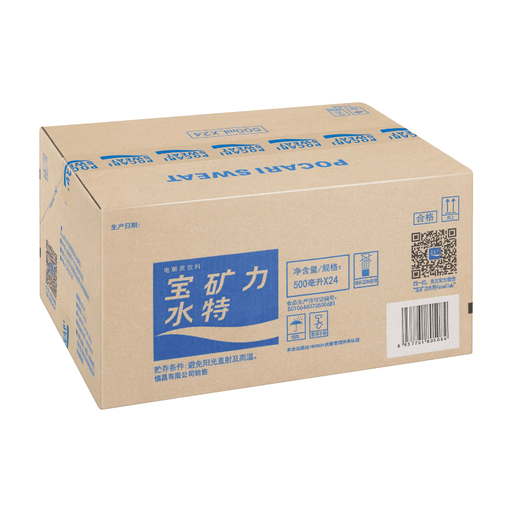 No image available
A ready-to-drink bottle option to compare when planning drinks for exercise or travel. This is a 24-pack of 500ml bottles, so consider how many you can use and carry. Check its sugars and carbohydrate per 100ml if avoiding sugar is a priority.
 No image available
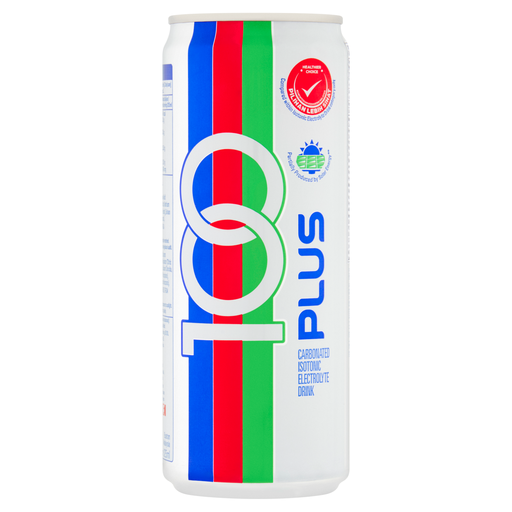
A single 325ml carbonated isotonic drink to consider when a carbohydrate-containing drink fits your exercise plans. It is not the zero-sugar route; compare sugars per 100ml with other drinks before choosing it for routine thirst.
Not for ordinary sightseeing or light activity simply because it is hot. The NHS identifies water as a way to stay hydrated; choose a sports drink according to the activity and whether you want its carbohydrate or particular format.
Their nutrition labels show the practical distinction. Tesco lists 0g sugars per 100ml for Lucozade Sport Zero Sugar Orange & Peach, while Powerade Berry & Tropical lists 4.1g carbohydrate and 4.1g sugars per 100ml. Compare the exact drinks you are considering, including how much you intend to drink.
Yes, if you will have suitable water and a bottle for mixing. Sainsbury’s lists one 13.5g Gatorade Hydration Booster sachet mixed with 500ml water; the resulting drink contains sugar, so check its prepared-serving nutrition information.
Use your individual diabetes-management advice rather than general holiday drink guidance to decide what to carry. NHS Tayside describes isotonic drinks containing 4–8g carbohydrate per 100ml; check the carbohydrate figure for the specific product and discuss exercise plans with your diabetes team where needed.
Start with sugars and carbohydrate per 100ml, then look at the amount in the bottle or prepared serving. Check salt, ingredients, sweeteners and any preparation directions on the pack you will actually use.