
24/7 Customer Support

Free returns

Same-day & Next-day Delivery

Quality Guaranteed

Unlock Your Welcome Offers: FREE Delivery | Up to 80% OFF | Free 30-day JoyPlus trial
Download the APP
Buying watercolour and art supplies can seem straightforward until you compare paint formats, brush types, paper weights and complete kits. A low-priced set may appear convenient, yet it may not include suitable paper or brushes for the techniques you want to try. Conversely, a large colour selection can add cost without improving your results if you mainly need a few dependable shades.
This guide highlights common buying traps, explains the specifications that matter and matches practical products to different creative routines.
A set with 24 or 38 colours may look more appealing than a smaller set, but colour count does not tell you whether the kit includes a useful brush, mixing area or suitable paper. Check the full contents before buying. A compact set with a water brush and palette may be more practical for travel, while a larger pan set may suit classroom or home use.
Paper weight is an important indicator. Lightweight paper can curl when wet, particularly during wet-on-wet painting or repeated washes. A 300gsm watercolour paper pad offers more support than a 190gsm pad, although taping the edges to a board can still help minimise movement. Also check whether the paper is acid-free if you plan to store finished artwork.
A fine round brush, wash brush and water brush serve different purposes. Watercolour brushes with varied shapes can help with details, backgrounds and blending. A water brush has an integrated reservoir, which reduces the need to carry a separate water pot, but it requires regular rinsing to prevent paint residue from clogging the tip.
For children and younger users, read the age warnings carefully. Many paint sets and palettes contain small pans, caps, ferrules or other components. Products should be kept away from children under three, and children aged three to eight should use them under adult supervision.
Do not use art paints as cosmetics or face paint, and never treat “non-toxic” as meaning food-safe.
For regular watercolour washes, look for a pad with a clearly stated paper weight. The Faber-Castell A4 pad uses 300gsm paper and contains 10 sheets, making it a suitable option for larger studies and mixed media work. Its spiral binding allows the pad to lie flat and pages can be turned or removed.
The A5 190gsm pad contains 15 sheets and is easier to carry in a school bag or art pouch. It may suit lighter washes, drawing, markers and everyday practice. If you plan to use substantial water, tape the edges down and allow each layer to dry before adding another.
For a general watercolour set-up, consider:
A travel kit is useful for sketching outdoors, journalling or commuting between home, school and an art club. Check whether the case includes a palette, water container, sponge or drawing tools, rather than assuming these are supplied.
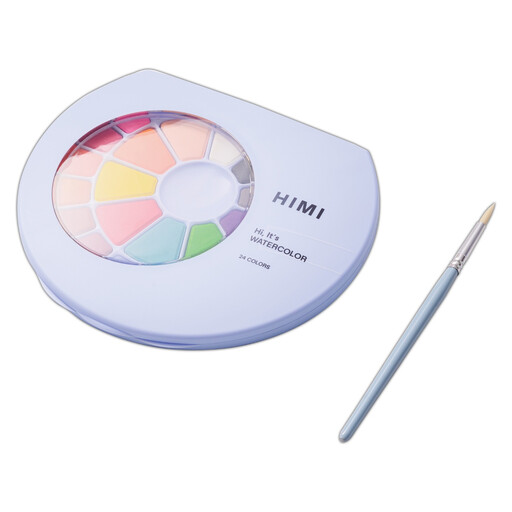
Why This Fits Their Persona: A straightforward choice for beginners, students and family craft sessions that need multiple colours without assembling separate supplies.
The contents are clearly listed as 24 solid pans and one round synthetic brush, while the case lid functions as a mixing palette.
Pressed pans; compact blue case; included brush; ring-shaped layout for accessible colours.
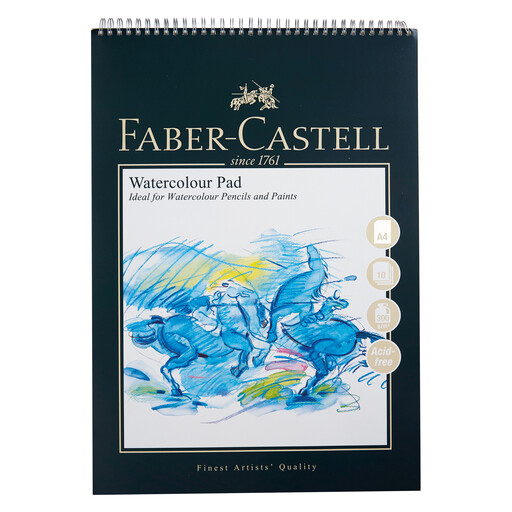
Why This Fits Their Persona: Suitable for artists and students who place greater emphasis on a substantial surface for washes, illustration and mixed media work.
The specification states 300gsm, acid-free paper rather than relying on a vague description of “artist quality”.
A4 format; 10 sheets; spiral binding; compatible with watercolour, gouache, acrylics, inks and pencils.
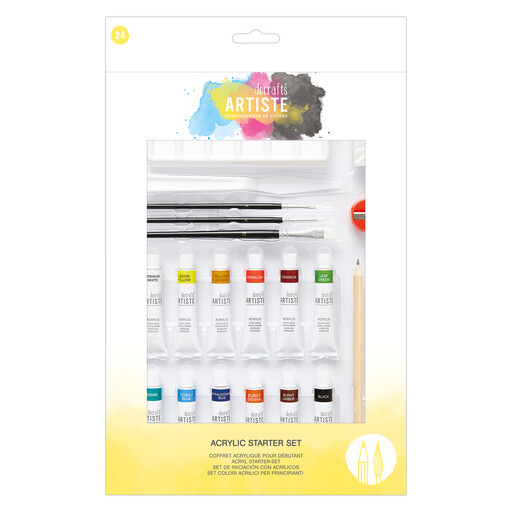
Why This Fits Their Persona: A practical all-in-one option for crafters, art clubs, college projects and households working across several surfaces.
The set does not only supply paint: it lists pencils, brushes, eraser, sharpener, palette, palette knife and three A4 painting boards.
12 x 12ml acrylic tubes; water-based formula; three 190gsm boards; suitable for brush and decorative techniques.
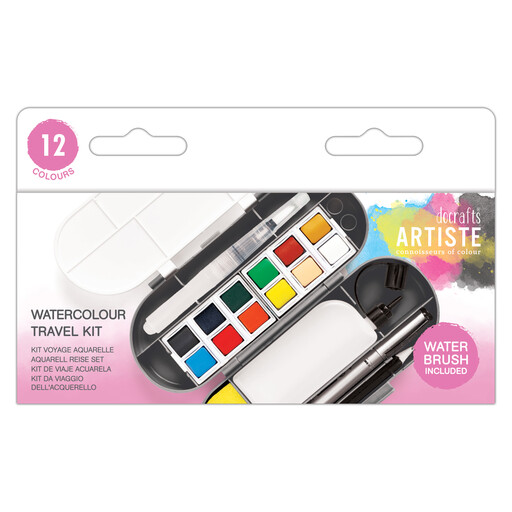
Why This Fits Their Persona: Designed for sketchbook users, commuters, travellers and anyone painting outdoors without a full studio set-up.
The listed accessories make its portability functional: the kit includes a water brush, palette, hand water bottle, sponges, pen and pencil.
12 watercolour pans; compact format; integrated mixing tools; suitable for sketching and journalling.
We have compiled a complete, real-time list of products that fully satisfy these strict selection criteria and UK safety regulations.
Start with clean water, a suitable paper pad and a palette with separate wells. Rinse brushes between colours and allow pans to dry before closing a case. For gouache, use only a small amount of water when reactivating dried paint. Acrylic paint should be cleaned from brushes promptly because it becomes water-resistant when dry.
Store paper flat in a dry place and keep paint cases away from excessive heat and direct sunlight. A 5-piece multi-medium brush set can cover watercolour, gouache and acrylic projects, while a separate watercolour brush set may provide more specialised shapes.
A basic set-up includes watercolour pans or tubes, watercolour brushes, a suitable paper pad, clean water and a palette. A travel kit can reduce the number of separate purchases, but check whether its paper is included and whether the brush suits your preferred scale of work.
300gsm paper is generally more supportive for wet washes and larger work. 190gsm paper is lighter and easier to carry, making it useful for practice, drawing and lighter applications. Taping either paper to a board can help reduce curling.
Lifespan depends on frequency of use, storage and cleaning. Solid pans can remain usable through many sessions when kept dry between uses. Brushes last longer when rinsed promptly, reshaped gently and stored away from direct heat. Check lids, caps and brush tips regularly, particularly when supplies are shared in classrooms or art clubs.