
24/7 Customer Support

Free returns

Same-day & Next-day Delivery

Quality Guaranteed

Unlock Your Welcome Offers: FREE Delivery | Up to 80% OFF | Free 30-day JoyPlus trial
Download the APP
Choosing watercolour art supplies can seem straightforward until you compare paint formats, paper weights, brush types and complete kits. A low-priced set may contain plenty of colours but lack suitable paper, while a portable kit may include accessories you never use.
This guide focuses on practical specifications rather than packaging claims, helping beginners, students, parents, hobby artists and illustrators choose supplies that suit how and where they paint.
A large colour count can look appealing, but beginners often use a smaller group of colours repeatedly. Unused pans may take up storage space, while the included brush may not suit detailed work. Check the paint format, pan size, brush quality and case design, not only the number of shades.
Lightweight paper can buckle when it absorbs water. A 190gsm pad may be practical for light washes, dry-brush work, watercolour pencils and classroom projects, but heavier mixed media paper is more suitable when using several wet layers or combining paint with other media.
Paper described as “mixed media” is not automatically designed for every technique. Check the weight, surface, colour and intended media before buying.
Watercolour pans and palettes need to dry before being closed. Trapped moisture can create an unpleasant environment for mould. Similarly, brushes left in dirty water may lose their shape. A case with a built-in palette is convenient, but it still needs rinsing and air-drying after use.
For children, also check the age warning. Products containing small pans, brush components, wire binding or pointed accessories are not suitable for children under three. Children aged 3–8 should use art supplies with adult supervision.
Watercolour pans are compact and economical for controlled use. Firm pressed pans generally need to be activated with water, making them suitable for classrooms, sketchbooks and travel.
Semi-moist watercolour sets offer quicker activation and may feel more convenient when you want to start painting without extensive preparation. They are useful for journalling, outdoor sketching and everyday practice.
Gouache paint sets contain more opaque paint than traditional watercolour. Gouache can be reactivated with water, but it usually creates flatter, more solid coverage. It is worth choosing when you create illustrations, colour studies, lettering or craft projects rather than transparent washes alone.
Tube paints are practical when you want to mix larger quantities or control the amount dispensed. Look for the tube size and included accessories, especially if buying a starter kit.
Paper weight is measured in gsm, or grams per square metre. As a practical guide:
Acid-free paper is a useful feature for work intended to be stored, displayed or added to a portfolio. Spiral or wiro binding allows a pad to lie flat, while perforated pages can make finished work easier to remove.
A starter kit should ideally include at least one round watercolour brush for detail and controlled lines. A broader wash brush is useful for backgrounds, while fan and flat brushes support blending and larger marks.
A separate paint palette is helpful when mixing custom colours. Non-absorbent plastic palettes can be rinsed with water, but avoid abrasive cleaners that could scratch the surface. Foldable palettes are convenient for travel because they protect wet mixes and take up less room in an art bag.
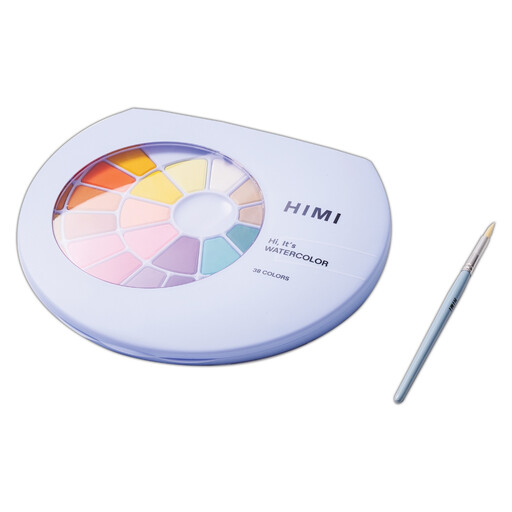
Why This Fits Their Persona: The 38-colour pan format gives beginners, students and families a broad palette in one compact blue case for home, classroom or travel use.
It provides stated quantities, 38 pressed pans and an included brush, rather than requiring several separate purchases at the start.
38 x 12 g solid pans; the lid doubles as a mixing palette; a synthetic brush is included.
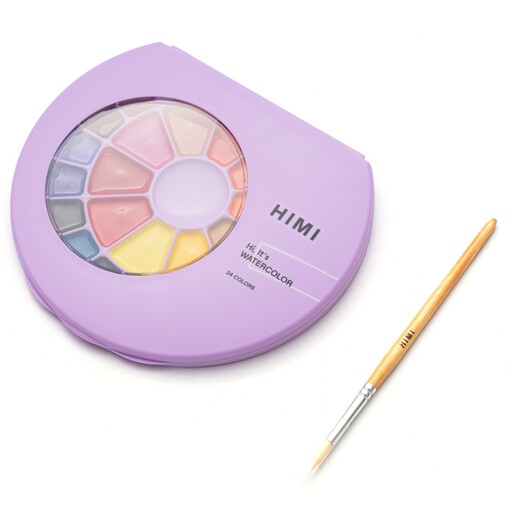
Why This Fits Their Persona: This compact format suits artists who value quick setup for sketching, colour studies, journalling and painting away from the studio.
The semi-moist pan format addresses the inconvenience of slow activation, while the case and lid reduce the need for separate storage and mixing equipment.
24 semi-moist pans; ring-shaped layout; lid mixing palette; round synthetic brush included.
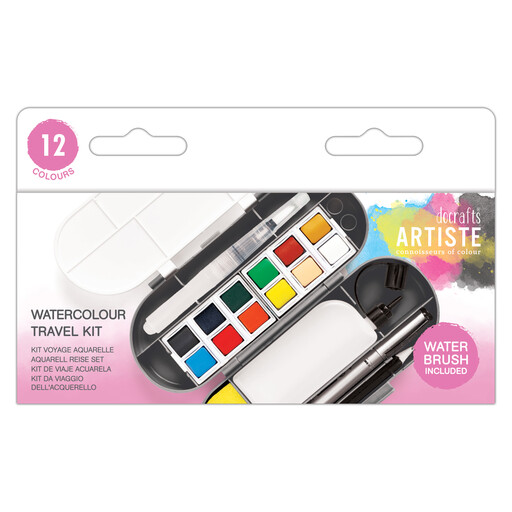
Why This Fits Their Persona: Travellers, journallers, crafters and students can carry a complete selection for sketching, outlining and painting without assembling separate supplies.
The listed accessories make the contents clear, helping buyers avoid paying for a paint-only set when they also need tools for portable work.
Includes 12 pans, a water brush, palette, hand water bottle, sponges, needle point pen and pencil.
We have compiled a complete, real-time list of products that fully satisfy these strict selection criteria and UK safety regulations.
Yes. Solid pans are usually straightforward to activate, store and transport. Beginners should prioritise a manageable colour range, a usable brush and paper that matches the amount of water they expect to use.
Rinse brushes after use, reshape the bristles and let them dry naturally. Leave pans and palettes open until all visible moisture has evaporated, then close the case and store it somewhere cool and dry.
It can be suitable for light washes, watercolour pencils and practice work. For repeated heavy washes, taping the sheet to a board or choosing a heavier pad can help reduce curling and surface damage.