
24/7 Customer Support

Free returns

Same-day & Next-day Delivery

Quality Guaranteed

Unlock Your Welcome Offers: FREE Delivery | Up to 80% OFF | Free 30-day JoyPlus trial
Download the APP
Choosing a watercolour paint set should be simple: pick some colours, add water and start painting. Yet many UK shoppers end up paying for features they rarely use, discovering that a compact kit lacks essential accessories or finding that a child-friendly set is unsuitable for unsupervised use.
A thoughtful purchase starts with the format rather than the colour count. Solid pans, semi-moist pans, tube paints and complete travel kits each suit different routines. The right choice depends on where you paint, how much control you want over mixing and whether you need brushes or paper included.
A set containing dozens of shades may look attractive, but beginners often use a small group of colours repeatedly. A smaller palette can be easier to understand and carry. Check the number of colours, amount per colour and included accessories rather than judging value by the colour count alone.
These media behave differently:
Buying acrylics for a traditional watercolour sketchbook or gouache when you want transparent washes can lead to disappointing results.
A compact case is useful, but it may contain only paint pans and one basic brush. If you plan to paint outdoors, commute to class or keep a travel journal, check whether the kit includes a mixing palette, water brush, pencil, sponge or water container. Otherwise, the apparent convenience may mean carrying several extra items.
A solid watercolour set contains pressed cakes that are activated with a damp brush. It is generally straightforward to store and less prone to spills than liquid paint. Semi-moist watercolour pans contain more moisture, so they may feel quicker to activate with water.
Tube paints offer more control over quantity and can be useful when mixing larger washes. They also need a separate palette and careful sealing after use.
For most beginners, pans are practical for sketching, school activities and journalling. For larger paintings or custom colour mixing, tubes may offer greater flexibility.
Compare the total amount of paint, not just the number printed on the box. For example, the HIMI Solid Watercolour Set with 38 colours contains 38 x 12 g pans, while the 24-colour solid version contains 24 pans and includes a round synthetic brush.
A 12-colour set may be sufficient for learning basic colour mixing. A 24- or 38-colour set can reduce the need to mix frequently, although a larger case may take up more space.
One included brush allows you to begin, but it may not cover every technique. A round brush is useful for lines and details, while wash and flat brushes help cover larger areas. A dedicated watercolour brush set with varied shapes can therefore be a useful addition for students and hobby artists.
Water brushes have a built-in reservoir. They are particularly convenient for travel because they remove the need for a separate water pot, although the barrel needs to be emptied and cleaned after use.
Also check the product’s age guidance. Art materials containing small pans, caps, cases or pointed brush ends should not be given to children under three. Children aged three to eight should use these products with adult supervision. “Non-toxic” does not mean edible, and paints should not be used as face or body paint.
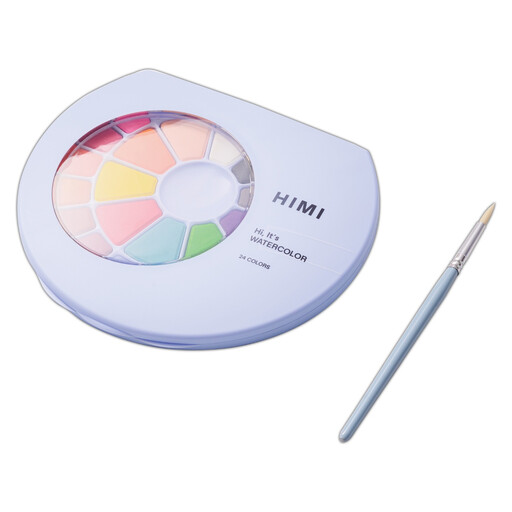
Why This Fits Their Persona: A straightforward choice for first paintings, school projects and home crafting, with 24 colours and a brush in one compact case.
The set identifies a clear pan format and included brush, so you are not paying for a case without basic painting equipment.
24 solid pans, round synthetic brush, ring-shaped layout and a lid that doubles as a mixing palette.
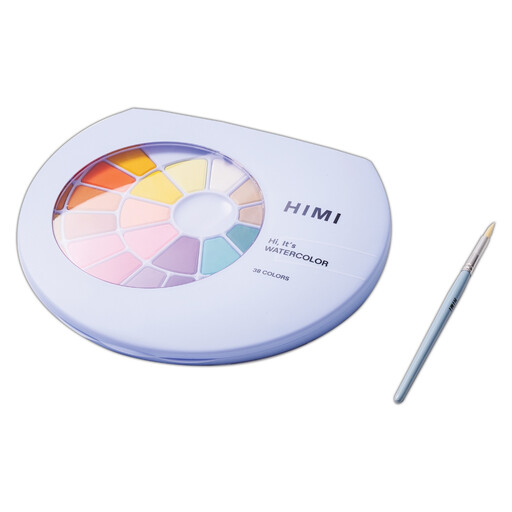
Why This Fits Their Persona: Suitable for hobby painters who want a broader palette for colour studies, illustrations and repeated practice without using tubes.
The specification states the exact format and quantity: 38 pressed pans at 12 g each, rather than relying only on promotional colour-count language.
38 x 12 g pans, synthetic brush, portable case and built-in mixing surface.
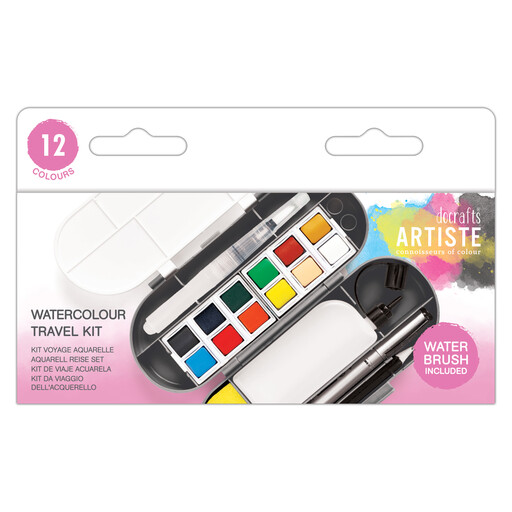
Why This Fits Their Persona: Designed for commuters, travellers, journalling enthusiasts and outdoor sketchers who want several portable art supplies in one case.
It addresses the missing-accessory problem with a water brush, palette, hand water bottle, sponges, pencil and needle point pen.
12 watercolour pans and multiple accessories in a compact format suited to sketchbooks and travel.
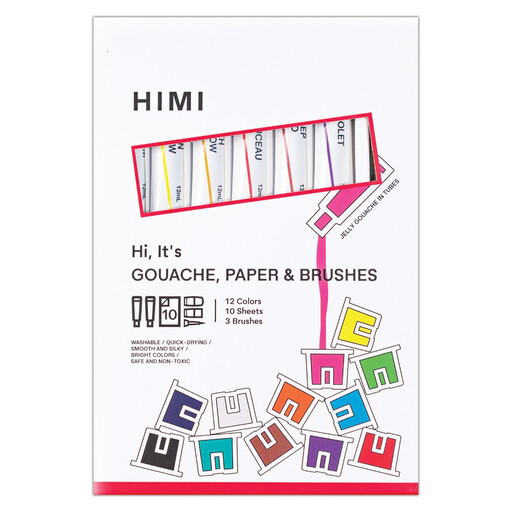
Why This Fits Their Persona: A practical option for students, illustrators and crafters who want to mix custom shades and work with more opaque paint.
The kit makes its medium clear: it is jelly gouache in 12 ml tubes, not transparent pan watercolour, and includes paper and brushes for immediate use.
12 x 12 ml tubes, three brushes and ten sheets of multimedia paper for illustration and mixed-media projects.
A basic art paint brushes collection can make one set more versatile. A 10-piece Artiste watercolour brush set includes fan, round and wash shapes for broad coverage, blending and detail work. For mess-free painting, the three-piece Artiste water brush set has fine, medium and broad tips with refillable water reservoirs.
If you prefer acrylics for card, wood or canvas projects, the Artiste 24-colour acrylic paint set contains 24 x 12 ml water-based tubes. Acrylic paint dries quickly, so clean brushes promptly before residue hardens.
We have compiled a complete, real-time list of products that fully satisfy these strict selection criteria and UK safety regulations.
Place a small amount of clean water on the pan, wait briefly for the colour to soften, then load a damp brush. Test the strength on scrap paper before painting. Use watercolour paper where possible, as ordinary printer paper can buckle when heavily wetted.
There is no fixed lifespan. Pans can remain usable for a long time when kept dry between sessions and protected from dust. Close the case after the paint has dried and rinse brushes after use. Tube and gouache paints should be sealed securely to reduce drying.
Some products are intended for children aged three and over, but always follow the individual product warning. Small pans, caps and brush components can present choking risks. Adult supervision is advised for children aged three to eight, and all paints should be kept away from mouths, eyes, food and pets.