
24/7 Customer Support

Free returns

Same-day & Next-day Delivery

Quality Guaranteed

Unlock Your Welcome Offers: FREE Delivery | Up to 80% OFF | Free 30-day JoyPlus trial
Download the APP
Buying a watercolour paint set can look straightforward until you compare paint formats, colour counts, brushes and age guidance. A larger palette is not automatically more useful, and a “washable” label does not mean every surface will be stain-free.
For UK households, classrooms and hobby spaces, the practical choice depends on where the set will be used, how much mess is acceptable and whether the user needs transparent washes, opaque coverage or a portable kit.
A palette with 36 or 38 shades may look appealing, but beginners often use only a small group of colours. More pans can also mean a larger case and more difficult cleaning. Check whether the layout leaves space for mixing and whether the lid doubles as a palette.
These products behave differently:
Buying acrylic paint for a traditional watercolour exercise can produce disappointing results, while a watercolour set may not provide the solid coverage required for decorating wood or card.
Washable watercolour paints and children’s paints can be easier to clean from hands and some fabrics, but pigments may still mark furniture, walls or clothing. Paint is not food, face paint or body paint. Sets containing small pans, cups, caps or brush components should not be given to children under three. Children aged 3–8 should be supervised according to the product safety information.
Solid watercolour paints and pressed pans are convenient for schools, travel and quick sketching. They activate when a wet brush is applied and are less likely to spill inside a bag.
Semi-moist watercolour pans offer a softer texture and can activate quickly with water. They may suit users who want vivid colour without carrying liquid tubes.
Liquid paints, including jelly gouache, provide a creamy consistency and can be easier to mix in larger quantities. However, they require more careful sealing and storage to prevent drying.
For first projects, 10–12 colours can provide a manageable introduction to mixing. A 24-colour watercolour paint set gives more ready-made options, while 36–38 colours may suit colour studies, classroom sharing or users who prefer less mixing.
Do not compare colour count alone. Check the quantity per pan or tube, whether a brush is included and whether a mixing palette is built into the case.
A watercolour paint set with a brush kit can be useful for beginners, students and travel, but the included brush may not replace a selection of brushes for detailed work. Look for:
After use, rinse brushes and palettes with clean water. Allow pans and the inside of the case to dry before closing, as trapped moisture can encourage mould. For acrylics, clean tools promptly because dried paint can become difficult to remove.
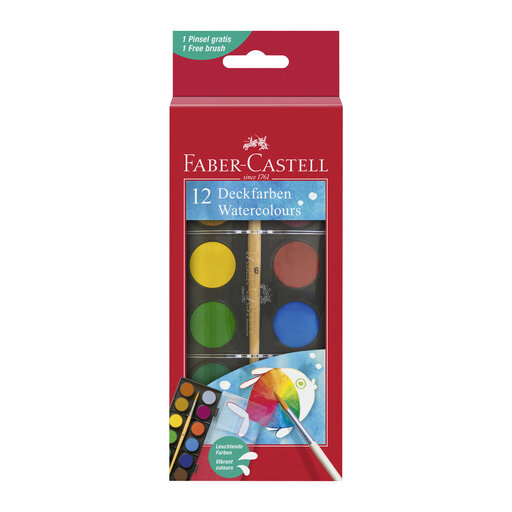
Why This Fits Their Persona: Twelve opaque watercolours offer a straightforward starting palette for school projects, home painting and beginner practice without an oversized selection.
The 12-colour format avoids paying for a very large palette before the user knows which shades they need.
Solid cake format, durable plastic case and water activation suitable for beginner use.
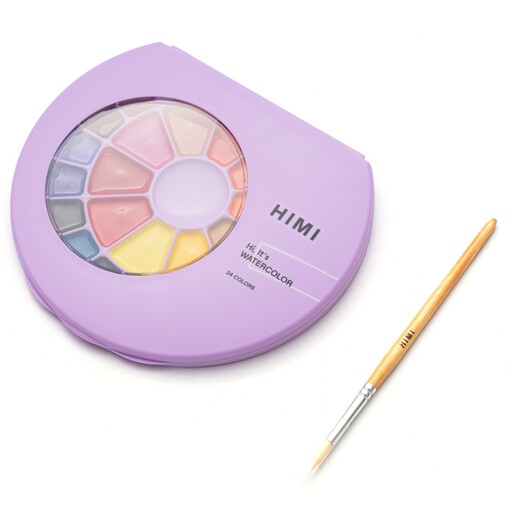
Why This Fits Their Persona: The 24 semi-moist pans and integrated palette suit hobby artists, illustrators and students wanting a more organised setup for regular painting.
The case includes a ring-shaped layout, a mixing-palette lid and a round synthetic brush, reducing the need for separate accessories.
Semi-moist pans, 24 colours, portable purple case and included brush.
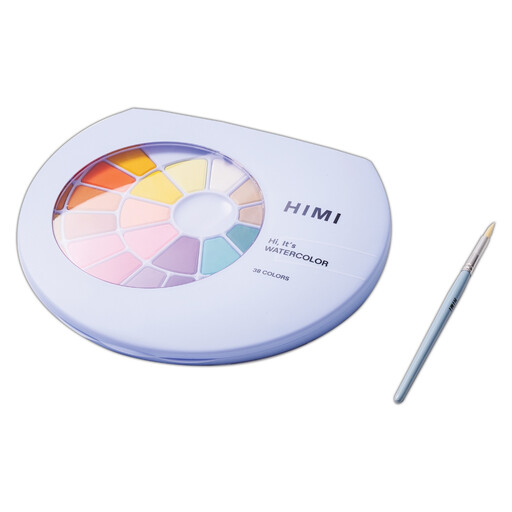
Why This Fits Their Persona: A broad selection works for frequent sketchers, art-class users and households sharing one palette across several projects.
Firm pressed pans reduce the risk of liquid spills in a travel bag, while the case keeps 38 shades together.
38 solid pans at 12 g each, a mixing-palette lid and a synthetic brush.
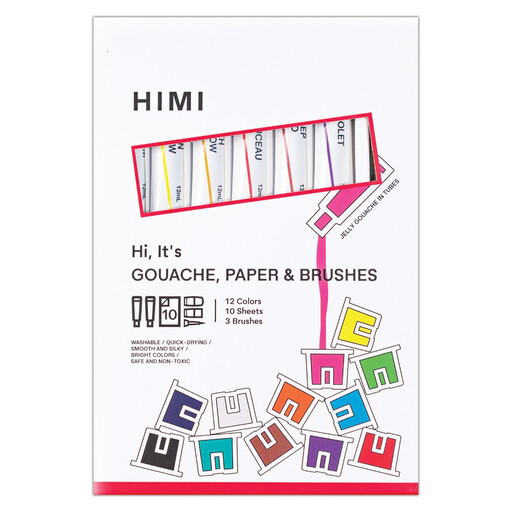
Why This Fits Their Persona: The tube format gives illustrators, crafters and students control over the amount used and supports custom colour mixing.
It clearly uses gouache rather than watercolour, so buyers seeking opaque, matt coverage are less likely to choose the wrong format.
12 x 12 ml tubes, three brushes and ten sheets of multimedia paper.
For younger users, check the stated age range rather than relying only on words such as “non-toxic” or “washable”. Children’s watercolour paints should be used on suitable paper, with adults supervising where required. A washable formula may simplify cleaning, but it is sensible to cover tables and protect clothing.
For children aged three and over, compact palettes, chunky paint sticks and washable kids’ art supplies can be easier to handle than liquid tubes. Keep all paint away from mouths, eyes, pets and food areas, and wash hands after use.
We have compiled a complete, real-time list of products that fully satisfy these strict selection criteria and UK safety regulations.
Solid and semi-moist pans can remain usable across many sessions when kept clean and dry. Actual lifespan depends on how often they are used, how much water is applied and whether the case is stored closed while damp. Liquid gouache and acrylic tubes should be sealed promptly to reduce drying.
Watercolour paper is preferable for wet washes because it is designed to handle more moisture than ordinary printer paper. Children’s projects may use standard paper, but heavily diluted paint can cause curling or tearing.
A direct comparison depends on usage. Pans can be economical for small paintings because only the required amount is activated with water. Acrylic paint is suitable for broader craft surfaces, but unused paint squeezed onto a palette may dry and cannot normally be returned to the tube.