
24/7 Customer Support

Free returns

Same-day & Next-day Delivery

Quality Guaranteed

Unlock Your Welcome Offers: FREE Delivery | Up to 80% OFF | Free 30-day JoyPlus trial
Download the APP
Choosing between watercolour paint sets can seem straightforward until you compare colour counts, paint formats, brushes and accessories. A compact box may look convenient, while a larger palette may offer more shades than a beginner will realistically use. For UK households, classrooms and hobby artists, the right choice depends less on bold packaging claims and more on practical details such as activation, storage, cleaning and age suitability.
A palette with 36 or 38 shades sounds appealing, but beginners often rely on a smaller core selection while learning washes, layering and colour mixing. More pans can also mean a larger case and more unused paint. Check whether the set includes useful mixing space and whether the colours are easy to reach.
Some watercolour sets include only paint pans, meaning you still need to buy brushes, paper and a water container. A watercolour set with brush is more convenient for starting immediately, but the included brush may be a general-purpose round brush rather than a fine detail tool. If you plan to paint small illustrations or lettering, check whether additional brushes are needed.
Solid watercolour pans and washable paint are relatively simple to maintain, but storing a damp palette can encourage mould or make colours muddy. Allow pans and the inside of the case to air-dry before closing. For liquid gouache, keep the container sealed to reduce drying, while acrylic paint requires prompt brush cleaning because it becomes water-resistant when dry.
Solid watercolour pans are firm cakes activated with a wet brush. They are convenient for school, sketching and travel because they are compact and less likely to spill. Semi-moist pans generally need less initial wetting and can offer quick colour activation.
Gouache is more opaque than traditional watercolour and is useful for illustrations, colour blocking and bold craft work. A gouache paint set may be supplied in jelly cups or tubes. Jelly cups are ready to access directly, while tubes allow you to dispense smaller amounts and mix custom shades.
An acrylic paint set is a different option altogether. Water-based acrylics can be used on surfaces such as paper, card, wood and some craft materials, but they dry quickly and need immediate brush cleaning. They are not a substitute for transparent watercolour washes.
For basic exercises, 12 colours can be enough when the palette includes primary and secondary shades. A 24-colour set offers more convenience, while 38 colours provide a broader selection with less need to mix every shade. However, colour count should be considered alongside pan size and case design. The HIMI 38-colour set, for example, specifies 12 g per solid pan, whereas other sets provide a colour count without the same stated quantity.
A portable watercolour kit should fit easily into your bag without loose pans or accessories. Look for a secure case, built-in mixing palette and tools that suit your painting routine. A watercolour travel set with a water brush can remove the need for a separate water pot, which is useful on trains, in cafés or outdoors.
Check the contents carefully. Some kits include paper, pencils, sponges or a mixing palette; others contain only paint and one brush. You will usually need suitable watercolour paper, as thin printer paper can buckle when heavily wet.
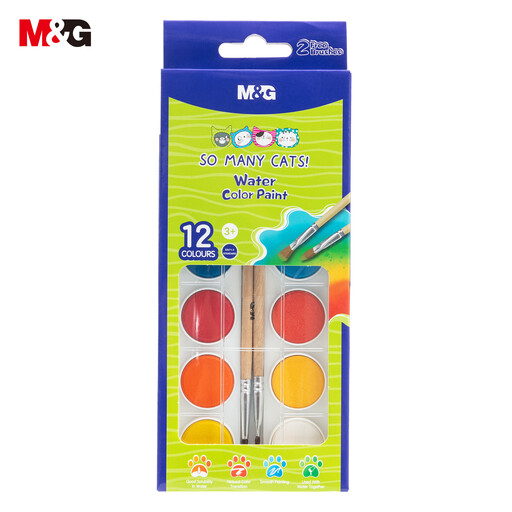
Why This Fits Their Persona: A straightforward option for children over three, first-time painters and parents wanting a compact kit for home or school activities.
The 12 solid cakes keep the colour range manageable, while the included water brush avoids the need for a separate water pot.
Washable formula, portable palette and solid format designed for controlled colour release.
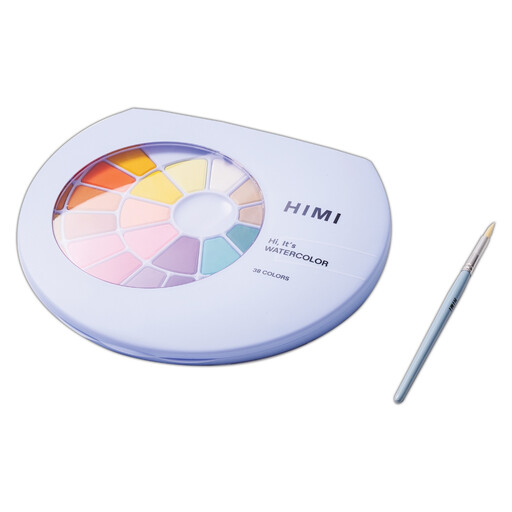
Why This Fits Their Persona: Suits hobby artists, students and illustrators who want a wide selection of shades in one organised case.
The product specifies 38 firm pans at 12 g each, rather than relying only on a large colour-count claim.
Includes a round synthetic brush, ring-shaped layout and lid that doubles as a mixing palette.
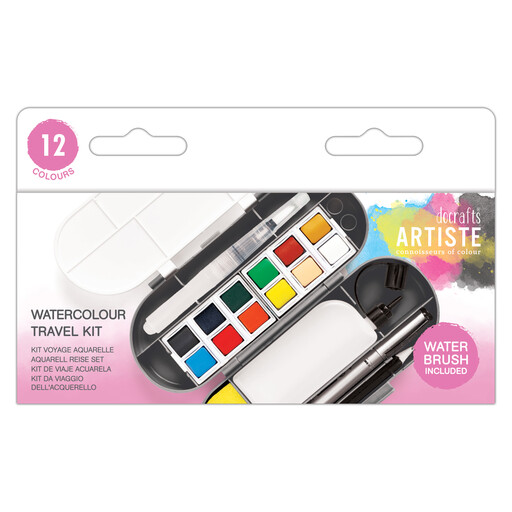
Why This Fits Their Persona: A practical match for sketchbook users, commuters, travellers and creative adults painting away from a studio.
The contents are clearly listed, so buyers can compare the full kit rather than assuming accessories are included.
Includes 12 pans, water brush, hand water bottle, palette, sponges, pencil and needle point pen.
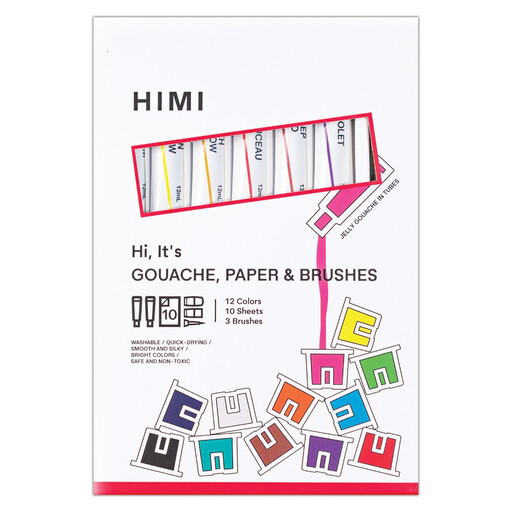
Why This Fits Their Persona: Suitable for illustrators, design students and crafters who prefer opaque coverage and mixing colours in smaller amounts.
The kit identifies tube sizes and included tools, making it easier to judge how much paint and equipment you receive.
Includes 12 x 12 ml tubes, three brushes and 10 sheets of multimedia paper.
Alongside the paint, consider watercolour paper, a pencil for light outlines, a cloth for controlling moisture and a clean water container. A water brush set is useful when portability matters; the Artiste three-piece set includes fine, medium and broad tips with self-contained reservoirs.
For younger users, check the stated age guidance. These products contain small parts and are not suitable for children under three. Children aged three to eight should use art materials with adult supervision. “Non-toxic” does not mean edible, and paint should not be used as face or body paint.
We have compiled a complete, real-time list of products that fully satisfy these strict selection criteria and UK safety regulations.
Yes. A beginner watercolour set with solid pans, one round brush and a mixing palette is usually simple to operate. Twelve to 24 colours provide enough variety for learning basic washes and colour mixing without making the case unnecessarily complicated.
Their lifespan depends on pan size, painting frequency and how much water is used. Allowing the palette to dry between sessions, avoiding contamination between colours and keeping the case closed when stored can help reduce waste and preserve the paints.
Not necessarily, but it can make travel easier. A water brush stores water in its barrel and reduces reliance on a separate pot. For home or classroom use, conventional brushes and a stable water container may provide more control for larger washes.