
24/7 全天候客户支持

免费退货

当日/次日达

品质保障

开启新人专享福利: 全场免邮 | 低至 2 折 | 免费试用 30 天 JoyPlus 会员
下载 Joybuy
By Joybuy Product Recommendation Officer
A tent can look suitable online yet prove awkward on a wet Welsh hillside, cramped at a festival or unnecessarily heavy on a long-distance trail. When comparing waterproof camping tents, look beyond dramatic phrases such as “all-weather” or “instant shelter”. The useful details are usually found in the specifications: waterproof ratings, seam construction, packed dimensions, ventilation and the weight you will actually carry.
A figure such as PU2000mm or PU3000mm describes the water pressure the fabric coating is designed to resist under test conditions. It does not guarantee comfort in prolonged driving rain, strong winds or standing water.
The floor, taped seams, zip protection and pitching position matter too. A tent with a waterproof flysheet can still allow moisture inside if the groundsheet is exposed, the fabric is not tensioned correctly or condensation is mistaken for leakage.
An ultralight backpacking tent can reduce pack weight, but a compact two-person model may offer limited room for bulky rucksacks and wet clothing. Check the floor dimensions, peak height, vestibule space and door arrangement, rather than relying only on the stated capacity.
For two people carrying hiking equipment, two doors can make getting in and out easier. For family holidays, a taller structure and additional sheltered space may be more practical than saving several hundred grams.
A pop-up camping tent or automatic frame can be convenient at a campsite, festival or park. However, larger shelters may still need guy lines, pegs and careful positioning. A quick setup tent can also have a larger packed size than a traditional hiking tent.
Before buying, check whether the quoted setup time refers to opening the main structure only, or includes attaching the flysheet, securing corners and erecting a canopy.
For a UK three-season tent, compare the flysheet and groundsheet ratings separately where available. PU2000mm is a commonly listed coating level for general camping designs, while some products specify a higher rating for the inner or floor area.
Also look for:
Waterproof coatings can age if a tent is repeatedly stored damp or left exposed to strong sunlight. Dry the shelter fully before packing it away and avoid machine washing, abrasive brushes and corrosive cleaners.
A lightweight camping shelter is useful when walking between campsites, travelling by public transport or carrying equipment uphill. Compare total packed weight, including poles, pegs and carry bag, rather than looking only at fabric weight.
For reference, a 2-person hiking tent weighing around 1.18kg is suited to weight-conscious backpacking, while a 2.64kg model may offer a more accessible balance between portability and structure. Family shelters can weigh considerably more but provide greater headroom and covered outdoor space.
Packed length also matters. A long pole bundle may be inconvenient for a backpack, whereas a compact package can fit more easily inside or alongside hiking luggage.
Mesh panels, opposing doors and adjustable vents help air circulate and may reduce internal condensation. This is particularly relevant in cool, damp UK conditions, where moisture from breathing can collect on the inside of the flysheet overnight.
Choose according to use:
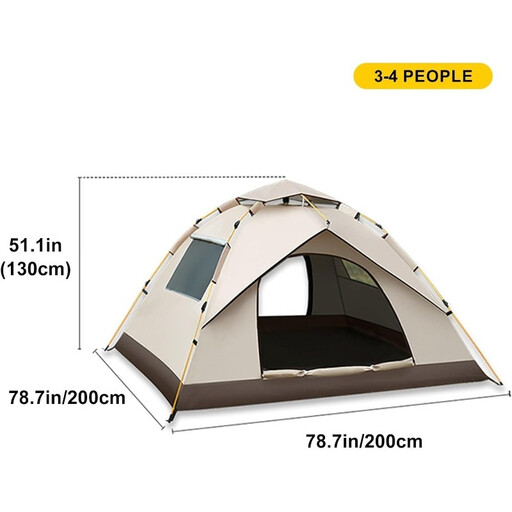
Why This Fits Their Persona: A practical choice for occasional campsite trips, festivals and short family breaks where straightforward pitching matters more than minimum pack weight.
Its automatic hydraulic structure and pre-attached poles reduce the number of separate assembly steps. The detachable outer layer can also be used as a canopy or sunshade.
210T polyester outer rated up to 3000mm, two doors, two windows and a packed weight of approximately 3kg.
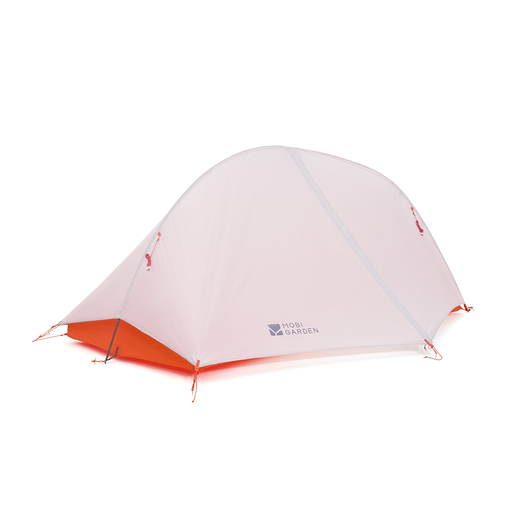
Why This Fits Their Persona: Designed for backpackers who prioritise low carrying weight, compact storage and ventilation on long-distance routes or mountain traverses.
The specification gives both packed size and net weight, while the mesh inner tent and two doors address the ventilation and access issues common in compact shelters.
Approximately 1.18kg, packed size 48 × 11 × 11cm, aluminium poles, ripstop nylon flysheet and PU2000mm waterproof rating.
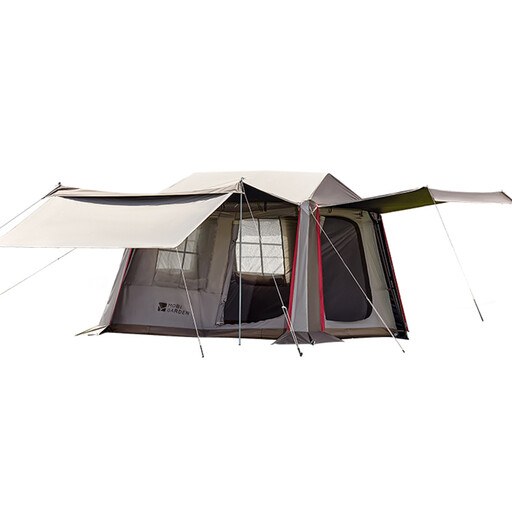
Why This Fits Their Persona: A family camping option for car-based holidays, park camping and longer stays where standing room, shade and covered outdoor living are priorities.
The automatic aluminium frame simplifies pitching, while four mesh windows and adjustable modes provide more control over airflow and enclosure.
2–4-person capacity, 5.9m² tent area, approximately 11.8kg, PU2000mm flysheet and canopy space extending the total area to approximately 15.2m².
Even well-specified waterproof hiking tents need appropriate care. Pitch on ground free from sharp stones and thorns, keep the floor protected and use guy lines when wind increases. Do not cook, smoke or use open flames inside a tent. If the shelter becomes wet, dry the flysheet, inner, poles and pegs before long-term storage.
A three-season design should not be treated as a winter storm shelter. Avoid exposed summits during thunderstorms and do not rely on a canopy as protection from severe weather. Following the manufacturer’s pitching instructions also helps maintain correct tension and prevents water pooling.
They can be suitable for ordinary three-season rain when correctly pitched, but no fabric rating guarantees performance in every storm. Choose sealed seams, a fully covered flysheet, a durable groundsheet and a sheltered site. Keep the inner tent away from the wet outer fabric and maintain ventilation to manage condensation.
Automatic-frame and pop-up designs generally involve fewer pole-assembly steps than conventional hiking tents. A quick setup tent may still require pegging, guy lines and flysheet attachments, particularly in windy conditions. Practise opening and packing it at home before taking it to a campsite.
Lifespan depends on frequency of use, sunlight, abrasion, storage and cleaning. Packing a tent while damp can encourage mould and contribute to coating failure. Dry it fully, clean it with water and a soft cloth, store it in a cool, dry place and inspect seams, zips and the groundsheet before each trip.