
24/7 Customer Support

Free returns

Same-day & Next-day Delivery

Quality Guaranteed

Unlock Your Welcome Offers: FREE Delivery | Up to 80% OFF | Free 30-day JoyPlus trial
Download the APP
Living in the UK means accepting that rain is a near-constant companion. A reliable waterproof jacket isn't a luxury; it's an essential piece of kit. Yet, finding one that keeps you dry without costing a fortune or feeling like you're wearing a plastic bag can be a frustrating exercise. Many jackets promise the world but fail during the first proper downpour, leaving you damp, cold and disappointed.
As a Joybuy Product Recommendation Officer, my role is to help you navigate the market and avoid common purchasing mistakes. Before you spend your hard-earned money, be aware of these frequent pitfalls:
To make an informed choice, you need to understand a few key technical specifications. Forget the marketing hype and focus on these three practical measures of performance.
This measures how much water pressure a fabric can withstand before it starts to leak. It's measured in millimetres (mm) and is often referred to as the Hydrostatic Head (HH) rating.
Breathability is just as important as waterproofing. It's measured by the Moisture Vapour Transmission Rate (MVTR), in grams of water vapour that can pass through a square metre of fabric in 24 hours (g/m?/24h).
A jacket is more than just its fabric. Look for these features:
To help you find the right fit for your needs, we've matched a few standout options to different user profiles.
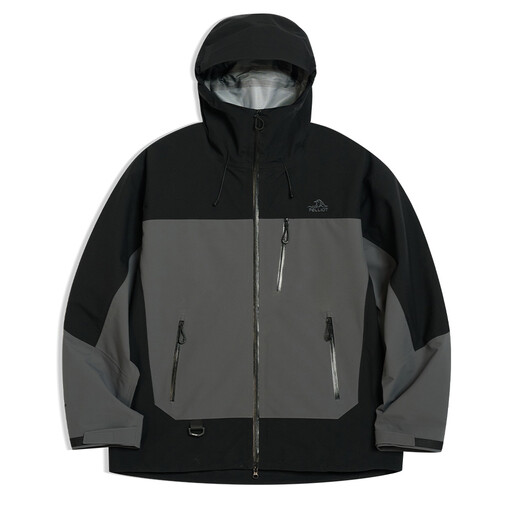
Why This Fits Their Persona: This user needs a jacket that performs reliably on a rainy commute to the office but is also capable enough for a weekend walk in the Peak District. This jacket's modern, colour-blocked design looks smart in the city, while its technical features provide the necessary protection for the trail.
It offers genuine storm-proof waterproofing, not just 'water-resistance'. Its high-breathability fabric directly counters the 'boil-in-the-bag' effect by allowing sweat to escape during a brisk walk.
Versatility: The design is equally at home on a high street and a hillside. Durability: The abrasion-resistant fabric is built to handle everyday wear and tear, including contact with branches or rough surfaces.
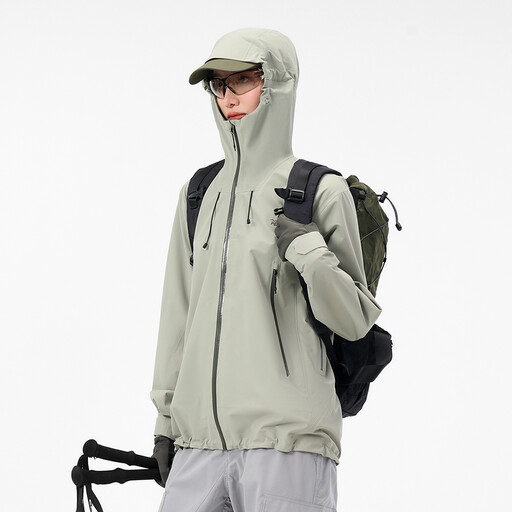
Why This Fits Their Persona: This user spends weekends in the Brecon Beacons or the Lake District and needs a jacket that can handle unpredictable mountain weather. Performance, low weight and safety features are their top priorities.
This is a purpose-built hardshell with enhanced waterproof and breathability ratings. It includes extended underarm zips ('pit zips') for rapid ventilation during strenuous ascents, actively preventing internal moisture build-up.
Advanced Features: Includes a RECCO avalanche rescue reflector, a critical safety feature for backcountry and winter mountain use. Superior Ventilation: The long underarm vents offer temperature regulation that is a step above standard jackets.
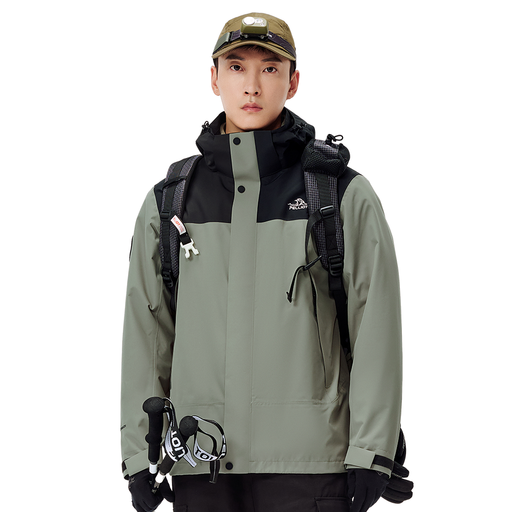
Why This Fits Their Persona: This person wants one jacket to do it all, from a cool autumn day to a freezing winter expedition. A 3-in-1 jacket offers the ultimate versatility, adapting to changing conditions and temperatures across all four seasons.
Instead of buying separate jackets, this system combines a fully waterproof and seam-sealed outer shell with a warm, breathable inner fleece. Both layers are designed to work together, ensuring all construction details are up to standard.
Adaptability: Wear the shell on its own in wet, mild weather; use the fleece liner for cool, dry days; or zip them together for full protection against cold and rain. Value: Provides a cost-effective solution that covers a wide range of temperatures and conditions.
We have compiled a complete, real-time list of products that fully satisfy these strict selection criteria and UK safety regulations.
Most waterproof jackets have a Durable Water Repellent (DWR) finish that makes water bead up and roll off. Over time, dirt and abrasion can wear this off. You can often reactivate it by washing the jacket with a technical wash solution (not standard detergent) and then applying low heat, either in a tumble dryer or with an iron on a low setting (always check the care label first). If this doesn't work, you can re-apply the DWR finish with a spray-on or wash-in proofer.
A hardshell jacket is your fortress against the elements. It is fully waterproof, windproof and typically made from a more rigid, durable fabric. It's the top choice for heavy rain and harsh conditions. A softshell jacket prioritises breathability, stretch and comfort. It's usually only water-resistant and is better suited for high-output activities in cool, dry or lightly showery weather.
Often, yes. While you can find basic waterproof jackets at a low price, the extra investment typically buys you significantly better performance and durability. A higher price point usually corresponds to higher waterproof (HH) and breathability (MVTR) ratings, more robust construction with fully taped seams, lighter materials and more advanced features like helmet-compatible hoods and strategically placed pockets. For those who spend a lot of time outdoors, the improved comfort and reliable protection are well worth the cost.