
24/7 Customer Support

Free returns

Same-day & Next-day Delivery

Quality Guaranteed

Unlock Your Welcome Offers: FREE Delivery | Up to 80% OFF | Free 30-day JoyPlus trial
Download the APP
Navigating the world of waterproof jackets can feel like wading through a flood of technical jargon and marketing promises. With the famously unpredictable British weather, a reliable outdoor coat is less of a luxury and more of a necessity. Yet, many of us have been caught out, left damp and disappointed by a jacket that didn't live up to its claims. As a Joybuy Product Recommendation Officer, my role is to help you sidestep these common issues and find a jacket that truly keeps you dry and comfortable.
Before you spend your hard-earned money, let's look at the three most common pitfalls that lead to buyer's remorse.
To ensure your next purchase is a sound investment, focus on these core technical specifications. They are the true measure of a jacket's performance, cutting through the marketing clutter.
This is the single most important metric for rain protection. Measured in millimetres (mm), the Hydrostatic Head (HH) rating indicates how much water pressure a fabric can withstand before it starts to leak.
To avoid that clammy, "boil in the bag" feeling, you need breathable outerwear. Breathability is measured by the Moisture Vapour Transmission Rate (MVTR), in grams of water vapour that can pass through a square metre of fabric in 24 hours (g/m?/24h).
The details make the difference between a good outdoor coat and a great one. Always check for:
Based on these practical criteria, here are a few options from our catalogue that are well-suited to different needs and activities across the UK.
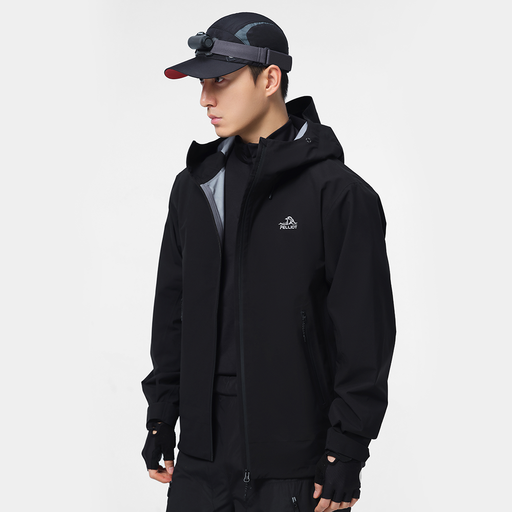
Why This Fits Their Persona: This hardshell is built for demanding conditions. Its storm-proof construction and high breathability are ideal for those tackling challenging trails in the Peak District or Snowdonia, where weather can turn in an instant.
This is a true hardshell with specified storm-proof performance, not a flimsy "water-resistant" coat. Its high moisture breathability directly counters the "boil in the bag" effect during strenuous climbs.
Features abrasion-resistant fabric for durability against rocks and branches. Its functional, modern design works well on both the trail and the high street.
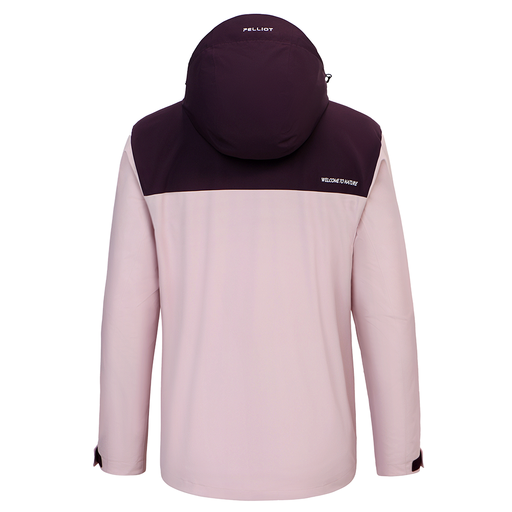
Why This Fits Their Persona: For someone who needs one jacket to do it all, this 3-in-1 system is ideal. It adapts from a waterproof shell for a rainy autumn day to a fully insulated winter coat, making it a practical choice for dog walking, school runs and weekend trips.
It provides a complete, engineered system. The outer shell is fully waterproof with seam taping to prevent leaks, while the separate thermal liner ensures warmth without compromising the shell's breathability.
Exceptional versatility with three wearing options. The outer shell is also scratch-resistant, adding to its long-term durability for everyday use.

Why This Fits Their Persona: This lightweight and packable shell jacket is perfect for the eco-conscious commuter. It's made from recycled polyester and is free from PFCs, offering reliable rain protection without the environmental baggage. It easily packs into its own pocket for stashing in a bag.
It uses a recognised waterproof/breathable technology and is fully seam-sealed. This ensures it performs as a proper men's rain jacket, unlike many stylish but ineffective high-street alternatives.
Eco-friendly construction with recycled materials. The packable design makes it exceptionally convenient for travel and commuting.
We have compiled a complete, real-time list of products that fully satisfy these strict selection criteria and UK safety regulations.
Over time, the factory-applied Durable Water Repellent (DWR) finish that makes water bead up and roll off will wear away. To restore it, first clean your jacket with a specialised technical wash designed for outdoor gear, as regular detergents can damage the waterproof membrane. After washing, you can re-apply the DWR using either a wash-in or a spray-on proofer. This will revitalise the fabric's performance and is a key part of long-term care.
While price isn't always a guarantee of quality, it often correlates with higher performance specifications, more durable materials and better construction. A more expensive jacket will typically have higher HH and MVTR ratings, meaning it will keep you drier and more comfortable in challenging weather. It is also more likely to feature fully taped seams, high-quality water-resistant zips and a more refined, articulated fit for better freedom of movement. For frequent use or serious outdoor pursuits, the investment often pays for itself in longevity and comfort.
This refers to how the waterproof membrane is constructed.