
24/7 Customer Support

Free returns

Same-day & Next-day Delivery

Quality Guaranteed

Unlock Your Welcome Offers: FREE Delivery | Up to 80% OFF | Free 30-day JoyPlus trial
Download the APP
A reliable waterproof jacket is an essential piece of kit for life in the UK. Whether you're commuting in a downpour, walking the dog or trekking through the Peak District, staying dry is key to comfort and safety. However, the market is flooded with options, and it's easy to spend money on a jacket that fails when you need it most. Many are labelled "waterproof" but can't handle more than a light shower, while others feel like wearing a plastic bag.
As the Joybuy Product Recommendation Officer, my role is to help you navigate the marketing jargon. This guide focuses on the critical details that separate a dependable outdoor jacket from one that will let you down. We'll look at three common purchasing pitfalls and the key specifications to check before you buy.
To avoid these pitfalls, focus on a few core technical specifications. These numbers and terms cut through the marketing jargon and tell you how a jacket will actually perform.
This measures how much water pressure a fabric can withstand before it starts to leak. It's measured in millimetres (mm) and is often referred to as the Hydrostatic Head (HH). For UK conditions, this is a non-negotiable number to check.
Breathability is measured by the Moisture Vapour Transmission Rate (MVTR), in units of g/m?/24h. This indicates how many grams of water vapour can pass through a square metre of the fabric over 24 hours.
Your choice here depends on your need for versatility versus specialised performance.
Based on these practical criteria, here are a few jackets from our selection matched to different user needs.
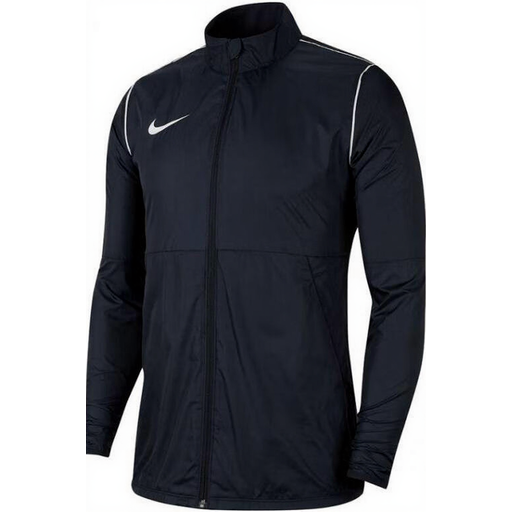
Why This Fits Their Persona: Ideal for the daily commute, running errands or a walk in the park when the forecast predicts light showers. It is lightweight and easily packable, providing basic protection without the bulk of a heavy-duty hiking jacket.
It avoids the "waterproof" vs. "water-resistant" trap by being clearly positioned as a water-repellent jacket for light rain. You are not paying for storm-proof features you do not need for city life.
According to Nike, its Dri-Fit technology helps manage sweat, making it more comfortable than a basic raincoat during an active commute. It is also made with a high percentage of recycled materials.
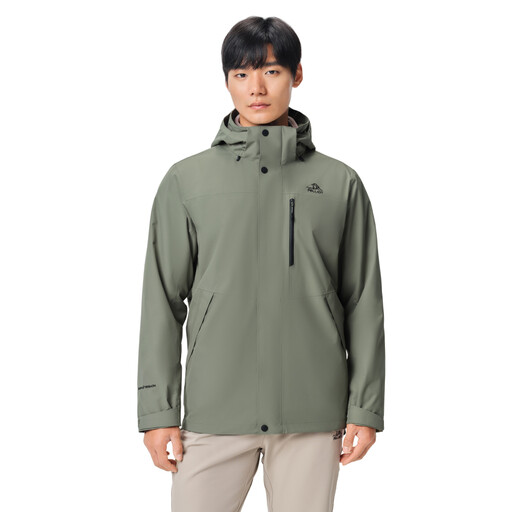
Why This Fits Their Persona: This user needs one jacket that works for a weekend hike, a camping trip and a chilly winter commute. The 3-in-1 jacket design provides the versatility to adapt to changing UK weather throughout the year.
It directly counters the performance pitfalls with stated technical ratings: a Hydrostatic Head of 35,900mm and an MVTR of 16,000g/m?/24h. This ensures it is both highly waterproof and breathable, avoiding the "boil in the bag" effect.
The modular 3-in-1 system is its main strength. You can wear the shell alone, the thermal liner alone or both combined, providing a solution for temperatures from mild to well below freezing.
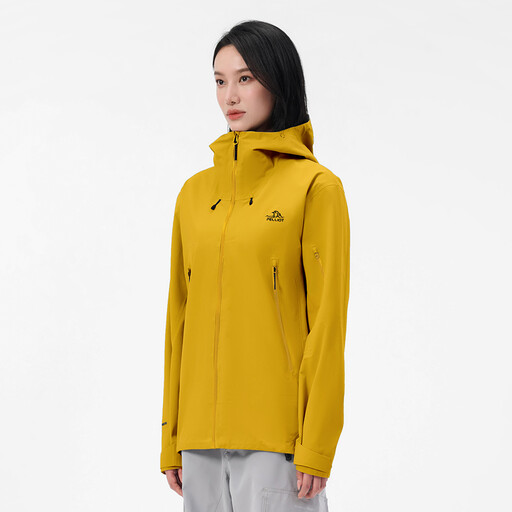
Why This Fits Their Persona: This user is tackling challenging terrain in places like the Scottish Highlands or Snowdonia, where weather is unpredictable and performance is a matter of safety. They need a dedicated, high-performance hardshell jacket.
This is a purpose-built shell, not a compromised all-rounder. It avoids the trap of using a less durable jacket in abrasive environments, with fabric designed for abrasion resistance against rock and branches. Extended underarm vents directly combat overheating.
It includes a RECCO avalanche rescue reflector, a passive safety device that can be critical for being located by rescue teams in backcountry emergencies. This is a professional-grade feature for serious mountain exploration.
We have compiled a complete, real-time list of products that fully satisfy these strict selection criteria and UK safety regulations.
The lifespan of a waterproof jacket depends heavily on use and care. For a quality jacket used regularly for hiking, you can expect 3 to 5 years of reliable performance before the waterproof membrane or coatings may begin to degrade. For a jacket used only for occasional light walks, it could last much longer. Following the care instructions, including proper washing and re-proofing, is the most effective way to extend its life.
DWR stands for Durable Water Repellent. It is a chemical finish applied to the exterior of the jacket fabric that causes water to bead up and roll off, preventing the fabric from becoming saturated (a state known as 'wetting out'). This is the jacket's first line of defence. Over time, dirt, abrasion and washing will cause the DWR to wear off. You will know it is time to re-proof when water starts soaking into the outer fabric instead of beading. You can restore it with widely available wash-in or spray-on DWR treatments.
While you can, a standard hiking jacket is often too heavy and not breathable enough for a high-intensity activity like running. You would likely overheat very quickly. For running, it is better to look for a jacket specifically designed for that purpose. These are typically extremely lightweight, more athletic in fit and feature exceptionally high breathability ratings (often over 20,000g/m?/24h) to manage the intense heat and sweat produced.