
24/7 Customer Support

Free returns

Same-day & Next-day Delivery

Quality Guaranteed

Unlock Your Welcome Offers: FREE Delivery | Up to 80% OFF | Free 30-day JoyPlus trial
Download the APP
A mattress is one of the most important investments for your home, directly impacting your sleep quality and overall well-being. Yet, it's constantly at risk from life's little accidents—a spilt morning coffee, a child's nighttime mishap or shedding from a beloved pet. A high-quality waterproof mattress protector is not a luxury; it's an essential layer of defence.
However, the market is filled with options, and choosing the right one can feel overwhelming. Do you need cotton or microfibre? A full-fit or corner straps? This guide is designed to cut through the clutter. As the Joybuy Product Recommendation Officer, my role is to provide clear, practical advice to help you find a protector that keeps your mattress pristine without compromising on comfort.
Before we get to our recommendations, here are a few key factors to consider during your search. Understanding these will help you select a product that truly meets your needs.
The top fabric layer is what you feel, and it plays a huge role in comfort.
Crucially, a modern breathable mattress protector uses a special membrane (often TPU) on the underside. This layer is waterproof to block liquids but is engineered to allow air to circulate, preventing you from feeling hot and clammy.
An ill-fitting protector that bunches up or slides around is a common frustration. There are two main styles to consider:
Your mattress protector is the frontline defence against dirt, allergens and bacteria, so it needs to be easy to clean. Look for a washable mattress cover that can be machine washed. For situations requiring a higher level of hygiene, such as for an incontinence bed protector or a bedwetting sheet, check if the product can be washed at 60°C, a temperature that helps to effectively sanitise the fabric.
Based on materials, user-focused features and practicality, here are our recommendations for keeping your mattress in top condition.

Why It Stands Out: This protector’s standout feature is its 100% cotton terry surface. It offers a level of softness and breathability that is ideal for a comfortable night's sleep, wicking away moisture naturally while the waterproof membrane provides silent protection.
Pros:
Who is it for? This is an excellent choice for hot sleepers, individuals with sensitive skin and parents looking for a natural-feeling material for their child's bed. It's available in multiple sizes, including as a double mattress protector and king size mattress protector.
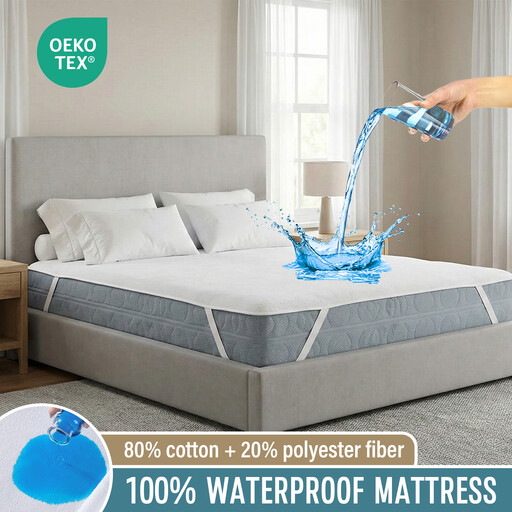
Why It Stands Out: This protector is crafted from a durable blend of 80% cotton and 20% polyester. This combination creates a resilient fabric that withstands frequent washing while retaining a soft feel, making it a true workhorse for demanding environments.
Pros:
Who is it for? Its robust construction makes it a practical option for guest houses, care facilities and anyone needing a reliable incontinence bed protector. It’s also great for family homes where bedding is washed frequently.

Why It Stands Out: Made from 100% microfibre polyester, this protector is a fantastic functional and affordable choice. The soft terry surface is comfortable and lightweight, and the material is inherently easy to care for, drying much faster than cotton.
Pros:
Who is it for? This is a great pick for students, spare bedrooms or anyone seeking a practical, no-fuss protective layer that offers excellent value.
While our top recommendations feature a versatile corner-strap design, you might be looking for a different style, such as a fully fitted protector. To see a wider selection of bedding protection, browse our complete category.
Discover Our Full Range of Mattress Protectors
1. Are waterproof mattress protectors hot to sleep on? This is a common concern, but modern protectors have come a long way. High-quality options use a breathable membrane that blocks water molecules but allows air and vapour to pass through. This prevents heat and moisture from getting trapped, ensuring a comfortable sleep temperature. Choosing a protector with a natural top fabric like cotton can further enhance breathability.
2. How often should I wash a waterproof mattress cover? For general use, it's good practice to wash your protector every one to two months, or whenever you change your seasonal bedding. However, if it's used as a bedwetting sheet or for managing incontinence, it should be washed immediately after any accident. Always check the care label, but many protectors, including those recommended above, can be washed at 40°C for regular cleaning and up to 60°C when you need to ensure it's fully sanitised.
3. Will a protector make noise when I move? The crinkly, noisy plastic sheets of the past are gone. Today's waterproof protectors are designed for silence. They use soft, flexible materials like TPU for the waterproof layer, which is bonded to a quiet fabric top. The result is a protector that is virtually unnoticeable under your sheets, allowing for a peaceful, undisturbed sleep.