
24/7 Customer Support

Free returns

Same-day & Next-day Delivery

Quality Guaranteed

Unlock Your Welcome Offers: FREE Delivery | Up to 80% OFF | Free 30-day JoyPlus trial
Download the APP
A quality mattress is a significant investment in your comfort and well-being. Protecting that investment from life's inevitable spills, accidents and general wear is a practical step towards ensuring its longevity. Whether you're a parent safeguarding against bedwetting, a pet owner dealing with occasional mishaps or simply someone looking to maintain a hygienic sleep environment, a waterproof mattress protector is an essential piece of bedding.
Navigating the options can be confusing. This guide is designed to help you understand the key features to look for and to present some carefully selected recommendations, allowing you to choose the right mattress cover for your home.
Before diving into specific products, let's cover a few key considerations that will help you make an informed decision.
The material of a protector directly impacts comfort. While the primary function is to be waterproof, you don't want to feel like you're sleeping on a plastic sheet.
A protector that bunches up or shifts during the night is ineffective and uncomfortable. The fit is crucial for ensuring complete protection.
For hygiene, especially when dealing with spills or for use as an incontinence bed protector, ease of cleaning is vital. Always check the care label, but most modern protectors are designed to be a washable mattress cover. Look for options that can be machine washed at 40°C for general cleaning and occasionally at 60°C to eliminate bacteria and allergens. The ability to tumble dry on a low heat setting is also a convenient feature.
Here are a few recommendations that address different needs and preferences, from natural materials to enhanced comfort.

Why It Stands Out: This protector combines the natural comfort of a cotton terry surface with a fully waterproof yet breathable membrane. Its ultra-thin design ensures it won't alter the feel of your mattress or create disruptive crinkling noises.
Pros:
Who is it for?: This is an ideal choice for individuals who prioritise the feel of natural fibres. Its soft, quiet surface makes it suitable for the main bedroom, children's rooms and anyone sensitive to the feel of synthetic materials.
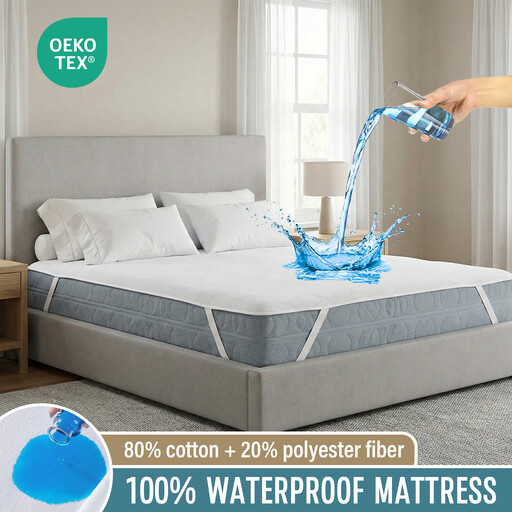
Why It Stands Out: Offering a practical balance of comfort and durability, this protector features a cotton-polyester blend surface. It provides reliable waterproof protection with a design focused on a secure, non-slip fit for everyday use.
Pros:
Who is it for?: A great all-rounder for busy households. Its durable blend and reliable waterproofing make it well-suited for children's beds, guest rooms or any mattress requiring dependable, long-term protection.

Why It Stands Out: This product is a mattress topper, designed primarily to add a layer of softness and comfort. Its quilted microfibre construction provides a plush sleeping surface. Please note: this topper is not waterproof.
Pros:
Who is it for?: This is for anyone looking to improve the comfort of their existing mattress. If you need liquid protection, it should be used in combination with one of the waterproof protectors listed above, which can be placed underneath the topper.
If these specific protectors aren't quite what you're looking for, or if you're planning a complete bedding refresh, there are many other styles and materials to consider. To find complementary items like duvet covers, pillowcases and fitted sheets, you may wish to browse a wider selection.
Explore our curated collection of white cotton bedding to find everything you need for a clean and comfortable bedroom.
1. Can you wash a waterproof mattress protector? Yes, almost all modern protectors are designed to be a washable mattress cover. It is always best to check the product's specific care instructions, but a machine wash at 40°C is generally sufficient for regular cleaning. For situations requiring sanitisation, many can handle an occasional wash at 60°C. It is typically recommended to tumble dry on a low heat setting or air dry to preserve the waterproof membrane.
2. Do waterproof mattress protectors make you sweat? This was a common issue with older, plastic-style covers. However, a modern breathable mattress protector is constructed differently. They use advanced materials like TPU membranes that block water molecules but allow air vapour to escape. This breathability helps regulate your body temperature and significantly reduces the chance of overheating or sweating.
3. What is the difference between a mattress protector and a mattress topper? This is a key distinction. A mattress protector's main purpose is to shield your mattress from liquids, stains, dust mites and allergens. It is typically thin and does not significantly alter the feel of the mattress. A mattress topper, on the other hand, is designed to change the comfort level of your bed. It is a thick, padded layer that can make a firm mattress feel softer or add a plush surface. While a topper offers some protection from general wear, it is not usually waterproof.