
24/7 Customer Support

Free returns

Same-day & Next-day Delivery

Quality Guaranteed

Unlock Your Welcome Offers: FREE Delivery | Up to 80% OFF | Free 30-day JoyPlus trial
Download the APP
A mattress is a significant investment in your comfort and well-being. Whether it's an accidental coffee spill, a child's nighttime accident or simply the effects of daily use, protecting that investment is essential. A quality waterproof mattress protector acts as a crucial barrier, safeguarding your mattress from liquids, stains and allergens, which can extend its life and maintain a more hygienic sleeping environment.
Navigating the options can be confusing. Some protectors feel plasticky and noisy, while others can trap heat and disrupt your sleep. This guide is designed to help you understand the key features to look for, so you can choose a protector that offers reliable defence without compromising on comfort. We will look at materials, fit and practicality to help you find a suitable match for your needs.
Making the right choice comes down to a few key considerations. Focusing on these features will help you find a protector that performs well and feels comfortable night after night.
The material of a mattress protector directly impacts comfort. While the primary function is to be waterproof, it shouldn't feel like you're sleeping on a plastic sheet.
A key feature to look for is a crinkle-free mattress protector. Modern waterproof layers are often made from polyurethane (TPU), which is a flexible and quiet material, ensuring your sleep is not disturbed by noisy rustling.
A protector that bunches up or slides around is not only uncomfortable but can also fail to provide complete protection.
Before buying, measure your mattress depth to ensure the protector's straps or skirt will fit properly. A standard 90 x 200 cm mattress protector will fit a single bed, but always check the dimensions match your specific mattress size.
For many households, especially those with children or pets, ease of cleaning is non-negotiable. A washable mattress protector is a must. Check the care label for the maximum washing temperature. For hygiene purposes, particularly when used as a bedwetting mattress protector or an incontinence bed pad, being able to wash it at 60°C can be beneficial for eliminating bacteria. Also, check if it can be tumble-dried, as this adds a layer of convenience.
Here are a few recommendations that balance waterproof functionality with everyday comfort and practicality.

Why It Stands Out: This protector's main appeal is its 100% cotton terry cloth surface. It offers a natural, soft and absorbent feel that is noticeably breathable, making it a strong choice for those who tend to sleep warm.
Pros:
Who is it for? This is an excellent option for individuals who prioritise natural materials and breathability. It's well-suited for adults, children and anyone looking for effective protection without sacrificing the comfortable feel of cotton.
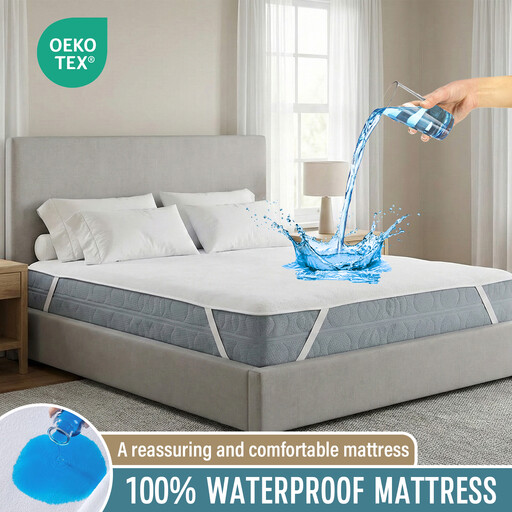
Why It Stands Out: Made from 100% polyester microfibre, this protector has a very soft, towel-like surface. It provides a practical and durable solution that is easy to care for, making it a reliable workhorse for busy households.
Pros:
Who is it for? This is a great all-rounder for families, pet owners or anyone seeking a durable, low-maintenance and affordable protector. Its soft texture and easy-care instructions make it a highly practical choice.
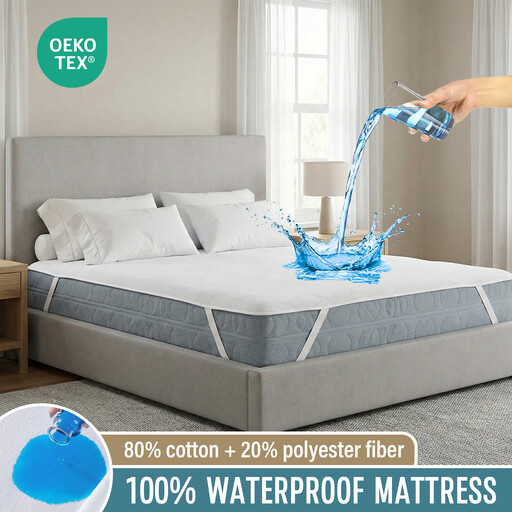
Why It Stands Out: This protector offers a balanced approach with its 80% cotton and 20% polyester blend. It combines the natural comfort and absorbency of cotton with the strength and quick-drying nature of polyester, offering a practical middle ground.
Pros:
Who is it for? This protector is ideal for those who want some of the benefits of cotton but also value the durability and easy-care properties of synthetic fibres. It's a versatile option suitable for everything from a child's bed to the master bedroom.
These recommendations cover some of the most popular needs, but the right choice is always a personal one. If you're looking for different sizes, materials or fitting styles, there are many other protectors available.
Explore Our Full Range of Mattress Covers
1. Can a waterproof mattress protector make you sweat? A common concern is that the waterproof layer will trap heat. However, modern protectors are designed to be breathable. The waterproof membrane has microscopic pores that are small enough to block water molecules but large enough to let air and water vapour pass through. Choosing a breathable mattress protector, especially one with a natural top layer like cotton, can help minimise heat build-up and keep you comfortable.
2. How often should you wash a waterproof mattress protector? For general use, washing your mattress protector every one to two months is a good rule of thumb, often at the same time you wash your duvet or pillows. However, if it's being used as a bedwetting mattress protector or for incontinence, it should be washed immediately after any accident. The same applies to any significant spills. Always follow the product's care instructions.
3. Will a mattress protector change the feel of my bed? High-quality modern protectors are designed to be as unobtrusive as possible. Look for options described as thin, soft and crinkle-free. These are made with flexible materials that conform to your mattress without creating a stiff or noisy layer, so you can enjoy the full comfort of your mattress with the added peace of mind.