
24/7 Customer Support

Free returns

Same-day & Next-day Delivery

Quality Guaranteed

Unlock Your Welcome Offers: FREE Delivery | Up to 80% OFF | Free 30-day JoyPlus trial
Download the APP
A mattress is a significant investment in your comfort and well-being. Whether it's a morning coffee spill, a child's nighttime accident or simply the gradual effects of sweat and oils, liquids pose a constant threat to its lifespan and hygiene. A quality waterproof mattress protector is not a luxury; it's an essential layer of defence.
Navigating the options can be confusing. From materials to fit, the details matter. As the Joybuy Product Recommendation Officer, my role is to help you understand these differences so you can choose a practical solution that meets your needs without the marketing jargon. This guide will walk you through key features to consider and present some of our top recommendations for 2026.
Before looking at specific products, it's helpful to understand the main features that will impact performance and comfort. Focusing on these three areas will help you narrow down your search.
The surface material of a protector directly affects how it feels to sleep on. The most common options are cotton and polyester (or microfibre).
How a protector attaches to your mattress is crucial for ensuring it stays in place. There are two primary styles:
For any item designed to catch spills and accidents, easy maintenance is non-negotiable. A washable mattress protector is a must. Most are machine washable, but it's important to check the care label for temperature limits and drying instructions. Protectors intended for use as an incontinence bed protector may be designed to withstand higher temperature washes for better sanitisation.
Based on materials, design and user needs, here are our recommendations to help protect your mattress.

Why It Stands Out: This protector combines a 100% cotton terry cloth surface with a silent, waterproof membrane. It prioritises natural comfort and breathability, making it feel less like a protective layer and more like a part of your bedding. The four-corner elastic strap design ensures it stays put without fuss.
Pros:
Who is it for? This is an excellent choice for anyone who prioritises natural materials and a cool sleeping environment. It's particularly well-suited for a single mattress protector on a child's bed or for adults who are warm sleepers.

Why It Stands Out: This model offers the complete coverage of a fitted mattress protector with a generous 30 cm deep pocket, making it suitable for thicker modern mattresses. The diamond-quilted microfibre surface adds a light layer of plushness, while the waterproof barrier provides full protection.
Pros:
Who is it for? Ideal for those who want the secure, all-around fit of a fitted sheet. If you have a deep mattress or simply prefer a protector that won't budge, this is a practical solution for a double mattress protector or king size mattress protector.
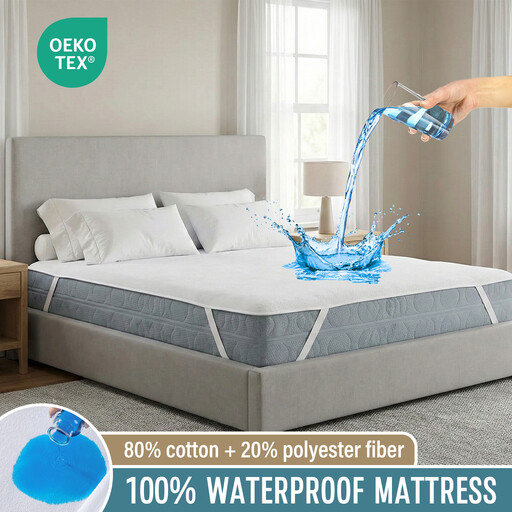
Why It Stands Out: This protector offers a balanced approach, blending 80% cotton with 20% polyester. This combination provides much of the softness and breathability of cotton with the added strength and quick-drying properties of polyester. It uses the secure four-corner strap system and is an effective incontinence bed protector thanks to its reliable barrier and durable construction.
Pros:
Who is it for? A great all-rounder for those seeking a practical balance between natural feel and long-term durability. Its ability to be washed at higher temperatures makes it a strong candidate for situations requiring stringent hygiene, such as for incontinence care.
If you're interested in durable, easy-care materials, there are many choices available. Explore our wider selection of washable polyester protectors to find the perfect match for your home.
Yes, almost all modern waterproof protectors are designed to be machine washed. It is crucial to follow the manufacturer's care instructions. Generally, this means washing on a gentle cycle with mild detergent and avoiding bleach. To preserve the waterproof membrane, it's best to tumble dry on a low heat setting or line dry.
Older styles of waterproof protectors were often made of vinyl or plastic, which trapped heat and caused sweating. However, modern protectors use advanced materials and breathable membranes (like TPU) that allow air to pass through while blocking liquids. A breathable mattress protector, especially one with a cotton surface, will significantly reduce the chance of overheating.
The two serve different purposes. A mattress protector is a thin, waterproof layer designed purely to shield the mattress from liquids, stains and allergens. Its primary function is protection. A mattress topper, on the other hand, is a thick layer of cushioning (made from memory foam, latex, or fibre-fill) placed on top of a mattress to change its feel, adding softness or support. While some toppers have protective covers, their main goal is comfort, not waterproofing.