
24/7 Customer Support

Free returns

Same-day & Next-day Delivery

Quality Guaranteed

Unlock Your Welcome Offers: FREE Delivery | Up to 80% OFF | Free 30-day JoyPlus trial
Download the APP
A waterproof motorcycle tail bag can make commuting, touring and weekend trips much easier—provided it is genuinely suited to your bike and riding conditions. The wrong model may shift on the rear seat, allow water through the closure or offer more capacity than your motorcycle can safely carry.
Before buying, focus on the construction, attachment system and usable capacity rather than relying on phrases such as “heavy duty” or “all-weather”. The following guide explains the main buying pitfalls and highlights suitable options for different UK riders.
A bag described as water-repellent may protect against light splashes but is not necessarily suitable for prolonged rainfall. Look for a roll-top motorcycle bag with a sealed closure and clearly stated material details.
PVC and TPU are common materials for a motorcycle dry bag:
No soft luggage should be treated as permanently submersible. Even a well-sealed waterproof motorcycle luggage system needs the roll-top folded correctly and the outer surface maintained.
A larger bag is not automatically more practical. A 66L or 86L motorcycle tail bag may suit extended touring, but it can obstruct the rider, exceed the available rack area or affect the bike’s balance when fully loaded.
Check:
A 36L motorcycle tail bag is often easier to position for daily use. A 50L motorcycle tail bag offers more room for clothing and travel equipment, while larger capacities are more appropriate when you have a suitable rack and understand the bike’s permitted load.
A quick-release motorcycle bag can be convenient, but fast installation does not mean “fit and forget”. Straps should be tightened evenly and checked before every ride. Loose webbing can reach hot components, moving parts or the rear wheel.
Reflective motorcycle luggage may improve visibility when caught by headlights, but reflective trim is not a substitute for approved motorcycle lighting, high-visibility clothing or safe riding practices.
For regular wet-weather riding, prioritise a PVC 500D-style construction, heavy-duty TPU or another clearly specified coated material. The key feature is the closure: a roll-top should be folded several times and secured firmly. A wide opening can make packing easier, but it must still form a compressed seal.
Avoid placing sharp tools, unprotected metal edges or pointed camping equipment directly against the inner layer. These items can damage the material and compromise water resistance.
A suitable rear seat bag should have reinforced attachment points and straps long enough for your motorcycle or scooter. Universal fit should still be checked against the actual bike.
Some bags rely on a specific mounting surface. For example, the 20L LOBOO model is specified for a clean steel rear rack, steel pillion seat or steel tail cowl, and is not listed as compatible with plastic or aluminium tail sections. Its IPX6 rating is a useful reference for resistance to powerful water jets, but it does not mean the bag can be submerged.
Capacity figures describe internal volume, not a recommendation to fill every available litre. Consider what you normally carry:
A rear seat bag should not interfere with your seating position or make it difficult to mount and dismount. Measure the available space before ordering, especially on scooters, mopeds and smaller adventure bikes.
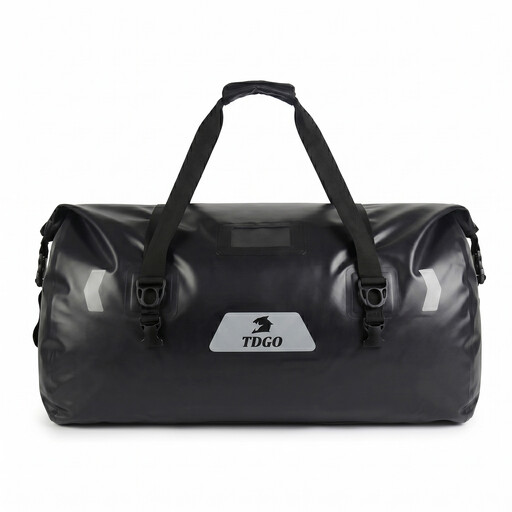
Why This Fits Their Persona: A practical size for UK commuters, scooter riders and occasional weekend travellers who need more room than a small day pack without fitting a large touring load.
Its PVC construction, roll-top closure and supplied quick-release straps address the common problems of weak fabric, exposed zips and awkward fitting.
36-litre capacity, reflective trim, PVC material and four fixed straps for rear-seat or rack mounting.
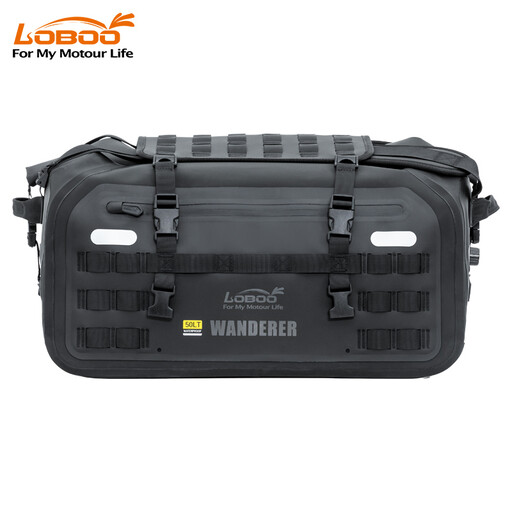
Why This Fits Their Persona: A useful match for riders planning longer tours who want a flexible bag that can also be carried away from the motorcycle.
The listing specifies heavy-duty TPU, four adjustable buckle straps and a roll-top that should be folded at least four to five times before fastening.
50-litre capacity, TPU construction, backpack straps and compatibility with exposed rear seats or racks up to 35cm wide.
Why This Fits Their Persona: Designed for riders carrying substantial touring or outdoor equipment, assuming the motorcycle has suitable rear support and permitted luggage capacity.
The stated 60×32×33cm dimensions and four-strap fixing system make it easier to assess fit before purchase, while the roll-top design avoids relying solely on zips.
66-litre storage, PVC material, reflective warning elements and quick-release straps for repeated touring use.
We have compiled a complete, real-time list of products that fully satisfy these strict selection criteria and UK safety regulations.
Before setting off, place the waterproof motorcycle tail bag centrally and keep the weight low. Tighten each strap, then check that no webbing is near the exhaust, chain, wheel or controls. After a short distance, stop in a safe place and inspect the attachment points again.
To preserve the bag:
A roll-top dry bag made from PVC or TPU can provide useful protection in wet weather when correctly closed. However, waterproof performance depends on the seal, material condition and installation. Do not assume that any bag marked “water resistant” offers the same protection.
Use all supplied straps where possible, attach them to strong fixed points and keep the bag centred. Remove slack without crushing the material. Confirm that the bag does not touch hot exhaust parts or restrict movement before riding.
For short trips, 20L to 36L may be sufficient. A 50L or 66L motorcycle touring bag gives more room for clothing and equipment. An 86L motorcycle tail bag is intended for a larger load and requires especially careful checks of rear support, dimensions, balance and the motorcycle’s load limit.