
24/7 Customer Support

Free returns

Same-day & Next-day Delivery

Quality Guaranteed

Unlock Your Welcome Offers: FREE Delivery | Up to 80% OFF | Free 30-day JoyPlus trial
Download the APP
A waterproof motorcycle tail bag can make commuting, touring and everyday riding far easier, but the wrong design may create more problems than it solves. A bag that shifts on the pillion seat, allows water through its closure or leaves awkward unused space can quickly become an expensive purchase that stays in the garage.
Before choosing motorcycle luggage, look beyond phrases such as “all-weather”, “heavy duty” and “large capacity”. The useful details are found in the construction, fastening system and compatibility information.
A coated outer fabric may repel light rain, but it does not necessarily protect clothing, electronics or documents during sustained rainfall. A roll-top closure can offer better protection because folding the opening several times creates a sealed barrier, but it still needs to be closed correctly.
Look for clear information about the material and closure. PVC and TPU are commonly used for motorcycle dry bags because they can be wiped clean and resist surface moisture. However, no soft luggage should be treated as permanently waterproof if the opening is left unsealed, the seams are damaged or the bag is submerged.
A large-capacity motorcycle bag may sound practical, but litres alone do not tell you whether it will fit your bike. A bulky 66L or 86L bag may obstruct a top box, pillion position, indicators or exhaust clearance. Smaller bags can also be inconvenient if your daily load includes waterproofs, a lock and work equipment.
Check the stated length, width and height, then measure the rear rack or passenger seat. Leave clearance around hot exhaust components and make sure the bag cannot interfere with steering, braking or mounting points.
A waterproof rear seat bag is only useful if it remains stable while riding. Straps should be routed around suitable fixed points and tightened evenly. Quick-release buckles make removal easier, but they do not replace a proper pre-ride inspection.
Avoid placing straps near the chain, wheel, brake components or accelerator controls. After loading, shake the bag gently from several directions and check that nothing can hang into moving parts. For high-speed riding, follow the product’s specific fastening instructions rather than relying on magnets or a single strap.
A motorcycle dry bag with a roll-top seal is a practical choice for UK rain. PVC offers a firm, wipe-clean construction, while TPU is often selected for its flexible feel and abrasion resistance. Neither material removes the need to protect especially sensitive items inside a separate pouch.
An IP rating can help clarify water protection. For example, IPX6 indicates resistance to powerful water jets under defined test conditions; it does not mean the bag is suitable for prolonged immersion. Always follow the product instructions, including drying the bag after use and avoiding sharp objects that could damage the inner layer.
A roll-top motorcycle luggage system may use adjustable buckles, quick-release straps or magnetic positioning. Magnetic systems require compatible metal surfaces, so check whether your motorcycle has a steel rear rack, steel pillion seat or another suitable mounting area. A plastic or aluminium tail section may not provide the required magnetic hold.
For strap-mounted luggage, confirm the maximum usable width and identify secure attachment points before purchase. The bag should sit centrally, remain clear of the exhaust and leave access to the rider’s normal seating position.
Choose capacity based on the load you regularly carry:
Multiple carrying modes can be convenient when moving the bag from the bike to accommodation. For riding, however, securing the luggage to the motorcycle is generally preferable to wearing a large rear bag as a backpack.
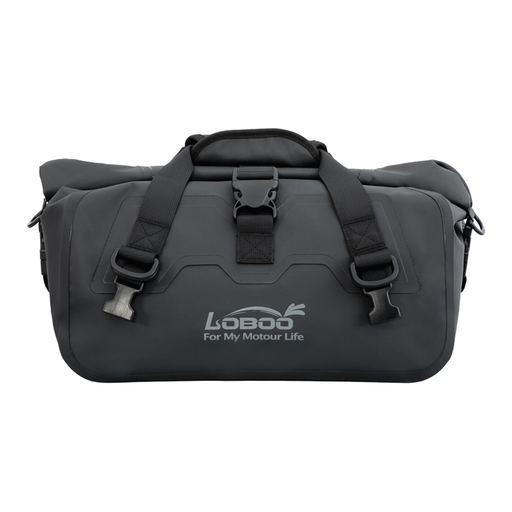
Why This Fits Their Persona: The 20-litre format suits scooter riders, moped users and commuters carrying daily essentials without the bulk of touring luggage.
Its stated IPX6 rating and roll-top format provide clearer water-protection information than a vague “weatherproof” label. The product instructions also specify when additional nylon straps are required.
20-litre capacity; magnetic self-centring on compatible steel surfaces; additional strap guidance for faster riding setup.
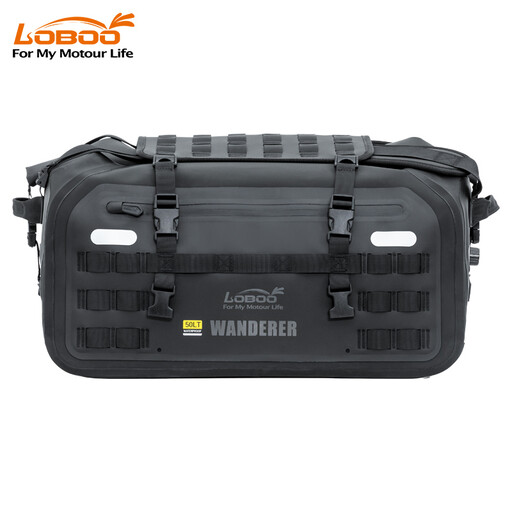
Why This Fits Their Persona: A 50-litre format balances weekday practicality with weekend touring, particularly for riders who prefer a flexible TPU motorcycle travel bag.
The instructions state that the top should be rolled down at least four to five times before the magnetic buckle is secured, reducing reliance on an incorrectly closed opening.
Heavy-duty TPU construction; 50-litre capacity; four adjustable buckle straps; backpack straps for off-bike carrying.
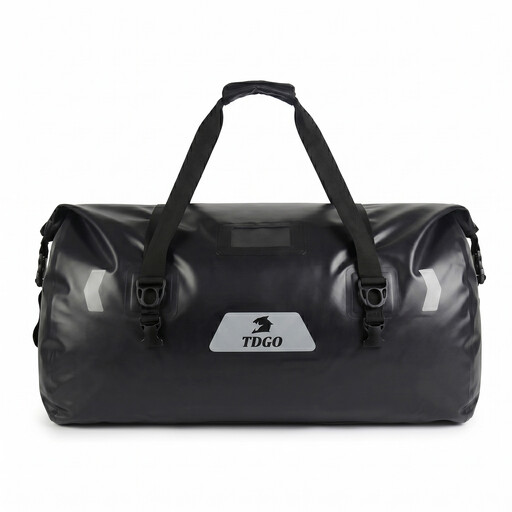
Why This Fits Their Persona: This option suits commuters and touring riders who need a structured 36-litre rear seat bag with quick removal and added visibility for darker UK journeys.
The stated PVC roll-top construction addresses the weak-opening issue, while four fixing straps provide more attachment points than a single central fastening.
36-litre capacity; PVC material; reflective warning elements; quick-release straps; stated dimensions of 41 × 26 × 28cm.
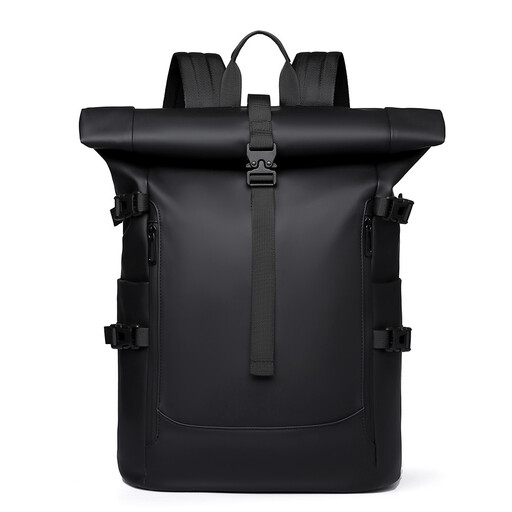
Why This Fits Their Persona: This format is designed for people moving between motorcycle, bicycle, public transport and the workplace with a 15.6-inch laptop and everyday items.
It separates the use case from motorcycle-specific luggage: a water-repellent roll-top backpack is convenient off the bike, but should be placed inside protective motorcycle luggage during heavy rain if electronics require additional cover.
15.6-inch laptop compatibility; roll-top opening; multi-strap design; stated suitability for work, cycling and urban travel.
We have compiled a complete, real-time list of products that fully satisfy these strict selection criteria and UK safety regulations.
Use this checklist before every ride:
If you need more room, compare the dimensions of the 66L and 86L PVC options carefully before ordering. A larger motorcycle pannier bag or rear luggage system may be more suitable than overloading one tail bag.
It can provide useful rain protection, but a tail bag is not automatically a dedicated laptop case. Place the laptop in a padded sleeve or a waterproof laptop backpack, then secure it so it cannot move inside the motorcycle luggage. Check the bag’s internal dimensions against your device, especially for a 15.6-inch laptop.
Lifespan depends on UV exposure, abrasion, heat from the exhaust, loading and cleaning. Avoid sharp items, corrosive cleaners and prolonged high temperatures. Inspect the roll-top, seams, buckles and strap attachment points regularly; replace the bag if the closure no longer seals or the fabric develops cracks.
A 20L bag is generally more manageable for daily commuting, while 36L to 50L suits longer day trips and weekend travel. Choose 66L or more only when you have a suitable mounting area and genuinely need the extra space. Oversized luggage can affect stability and access, so capacity should follow your bike’s available space rather than marketing claims.