
24/7 Customer Support

Free returns

Same-day & Next-day Delivery

Quality Guaranteed

Unlock Your Welcome Offers: FREE Delivery | Up to 80% OFF | Free 30-day JoyPlus trial
Download the APP
Riding in the UK means accepting one simple fact: you will get wet. While you might be kitted out in waterproof gear, the luggage carrying your essentials is often the weak link. A bag that claims to be waterproof but leaves your change of clothes, laptop or documents soaked after a 30-minute downpour is not just an inconvenience; it's a waste of money.
As the Joybuy Product Recommendation Officer, my role is to help you see past the marketing noise. Before you invest in new motorcycle luggage, be aware of these common pitfalls that catch out even experienced riders:
To ensure your gear stays dry and secure, you need to focus on a few core features that define a truly reliable waterproof motorcycle tail bag.
True weather protection comes from two things: material and construction. The most dependable bags use heavy-duty, waterproof fabrics like PVC (Polyvinyl Chloride) or TPU (Thermoplastic Polyurethane). Unlike standard nylon, these materials are inherently impervious to water.
The closure system is equally critical. Look for a roll top motorcycle bag design. This system, where you roll the top edge down several times before clipping it shut, creates a highly effective seal that prevents water from seeping in, a feature that zips simply cannot match. Furthermore, check for welded seams instead of stitched ones. Welding fuses the material together, creating a continuous waterproof barrier with no needle holes for water to penetrate.
A motorcycle rear seat bag must remain completely stable, whether you're navigating city traffic or leaning into a corner on a country lane. A good mounting system should include:
For maximum convenience, some models offer a quick release tail bag system, allowing you to attach and detach the bag in seconds without having to re-thread straps every time.
Capacity is measured in litres. A 20-30L bag is often sufficient for daily commuting, holding a laptop, waterproofs and lunch. For weekend trips, 35-50L provides space for a change of clothes and other essentials. For serious adventure bike luggage, riders often look at 60L or more.
Durability is often indicated by the material specification, such as 500D PVC, where 'D' stands for Denier—a measure of fabric thickness. A higher number generally means a more robust and abrasion-resistant material, which is vital for long-term use.
Based on these practical criteria, here are a few options suited to different types of UK riders.
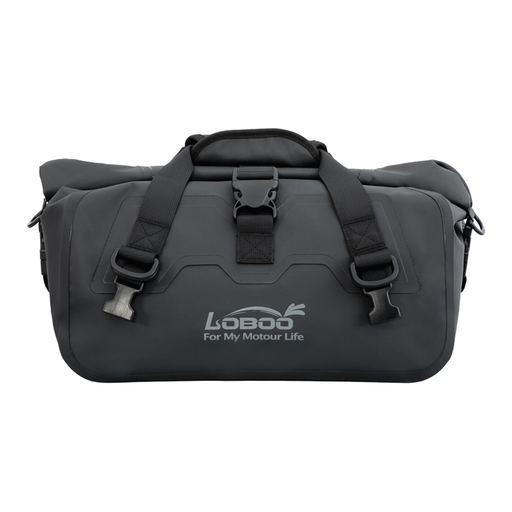
Why This Fits Their Persona: The 20L capacity is ideal for carrying daily essentials like a laptop, waterproof over-suit and lunch without being bulky. Its compact size is perfect for filtering through city traffic.
It features a proper roll-top closure and an IPX6 waterproof rating, meaning it's built to withstand powerful water jets from any direction—far exceeding the protection of a "water-resistant" zipped bag.
The universal fit with included straps ensures it can be securely fastened to almost any pillion seat or rear rack, preventing dangerous shifting during the commute.
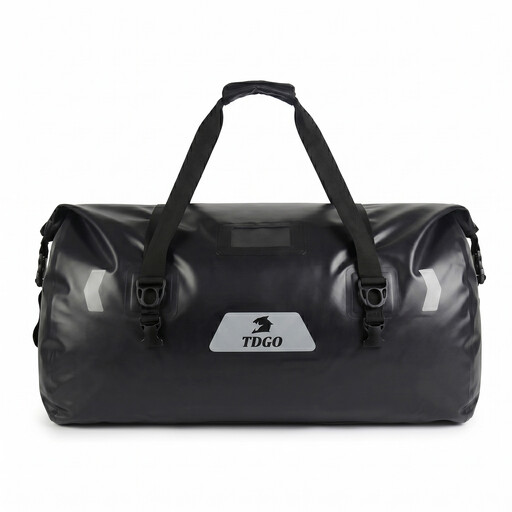
Why This Fits Their Persona: At 36 litres, this bag hits the sweet spot for a weekend trip, offering enough room for a couple of days' worth of clothes and gear. It's a versatile piece of motorcycle luggage for tours that don't require a full set of panniers.
This bag is made from high-strength PVC mesh fabric, a material known for its abrasion resistance. It avoids the pitfall of flimsy construction, ensuring it can handle the weight of a full load and resist wear and tear.
It includes quick-release straps for fast installation and removal, plus reflective elements to enhance visibility for safer riding in low-light conditions.
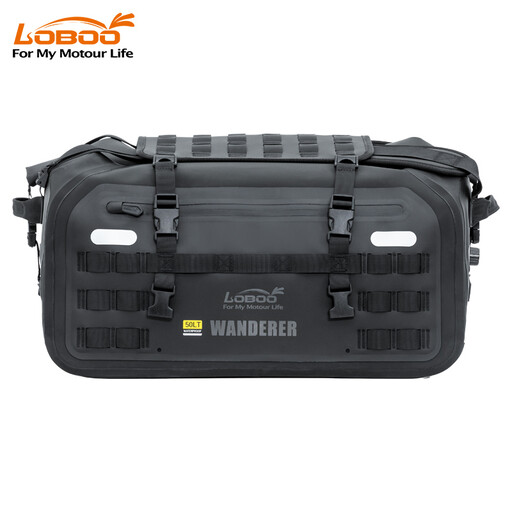
Why This Fits Their Persona: A 50-litre capacity provides ample space for multi-day tours or adventure riding where you need to carry camping gear, tools and extra layers. This is serious luggage for a serious trip.
Constructed from heavy-duty TPU, it offers superior abrasion and puncture resistance compared to standard PVC. The four adjustable buckle straps provide a rock-solid mounting system, eliminating the risk of bag-shift on demanding roads.
The use of TPU makes the bag more flexible in cold weather and more durable over the long term. It also includes backpack straps for easier carrying off the bike.
We have compiled a complete, real-time list of products that fully satisfy these strict selection criteria and UK safety regulations.
Always use at least four opposing anchor points. Criss-cross the straps under the pillion seat or attach them to solid points on the subframe or luggage rack. Pull each strap tight, one after the other, until the bag is completely immovable. Before every ride, push and pull the bag firmly to ensure nothing has loosened. Never attach straps to moving parts like the swingarm or to cosmetic plastic panels.
Both are excellent waterproof materials. PVC is a highly effective, robust and cost-efficient material commonly used in heavy-duty dry bags. TPU is a more modern polymer that is generally more abrasion-resistant, remains more flexible in cold temperatures (preventing cracking) and is often considered a more environmentally neutral material. For most riders, a high-quality PVC bag is more than adequate, while TPU is a premium option for those undertaking extreme or long-distance adventures.
With proper care, a well-made pvc waterproof bag or TPU bag should last for many years. The lifespan depends on usage frequency and care. To maximise its life, keep the bag clean, store it in a dry place away from direct sunlight when not in use and avoid dragging it on abrasive surfaces like concrete. Regularly check the straps and buckles for any signs of wear and tear.