
24/7 Customer Support

Free returns

Same-day & Next-day Delivery

Quality Guaranteed

Unlock Your Welcome Offers: FREE Delivery | Up to 80% OFF | Free 30-day JoyPlus trial
Download the APP
A waterproof outdoor jacket needs to cope with more than a short shower. UK conditions can shift from drizzle to heavy rain, strong wind and cold temperatures within the same walk. Whether you are planning a weekend hike, camping trip, mountain activity or daily commute, choosing by appearance alone can lead to discomfort and wasted money.
The most useful approach is to compare the construction, measurable specifications and intended use before buying.
A jacket may have a water-repellent outer treatment that helps rain bead on the surface, but this is not the same as a waterproof membrane and sealed seams. Surface treatments can also need reapplication over time, particularly after repeated washing.
For exposed hills, prolonged rain or camping, check for a stated hydrostatic head rating, a waterproof membrane and seam taping. These features provide more useful information than phrases such as “rain-ready” or “weather resistant”.
A completely enclosed jacket can keep rain out but leave you feeling damp from perspiration during a climb or fast commute. This moisture can make you feel colder once activity slows.
Look for a stated MVTR (Moisture Vapour Transmission Rate), usually shown in grams per square metre over 24 hours. A breathable hiking jacket with ventilation zips can be more comfortable during high-output activities than a basic shell with no airflow features.
A waterproof shell worn over a base layer and fleece needs more room across the chest, shoulders and arms. A restrictive fit can limit movement and make the jacket less practical for trekking, climbing or cycling.
Before ordering, compare your measurements with the product’s size chart. Check sleeve length, hem adjustment and hood design as well as chest measurement. A women’s waterproof jacket and men’s waterproof jacket may use different proportions, while unisex styles often provide extra shoulder room.
Hydrostatic head is a laboratory measurement of how much water pressure fabric can withstand before leakage. A higher number generally indicates greater resistance to sustained or forceful rain, but performance also depends on zips, cuffs, hood adjustment and seams.
For example, the women’s fleece-lined jacket listed below specifies a 35,900mm H₂O hydrostatic head under JIS measurement. Its description also lists high-density seam protection. Treat these figures as product specifications rather than a guarantee for every weather situation.
A hard shell jacket can provide a useful outer barrier for wet and windy conditions, but breathability varies between fabrics and designs. The women’s model states an MVTR of 16,000g/m²/24h under JIS measurement, while the unisex outdoor jacket includes extended underarm vents to help regulate airflow.
For hill walking or strenuous trekking, prioritise:
A durable trekking jacket should suit the surfaces and activities you expect. Abrasion-resistant fabric is useful around rock, branches, rucksacks and campsite equipment. One listed women’s jacket specifies 40,000+ abrasion cycles, while the men’s 3-in-1 design describes a scratch-resistant shell.
A 3-in-1 jacket can offer more flexibility than a single-layer shell because the outer and inner layers can be worn separately or together. This makes it suitable for different seasons, although the combined garment may be warmer and bulkier than a lightweight summer shell.
Always follow the care label. The supplied jackets advise cold machine washing on a gentle cycle, closing zips before washing, avoiding bleach and not using a tumble dryer. The Ochama stretch jacket additionally advises against fabric softener and recommends reapplying DWR treatment as needed.
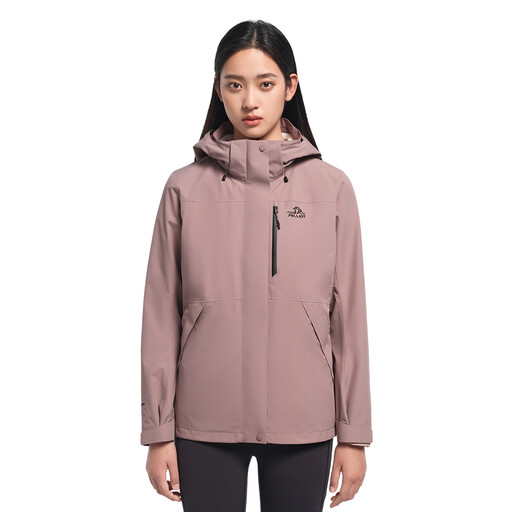
Why This Fits Their Persona: A practical option for someone starting with countryside walks, camping and everyday rainy commutes who wants an outer layer and warmth in one garment.
It provides stated waterproof and breathability figures rather than relying only on general weatherproof wording, with a separate thermal liner for colder conditions.
Listed features include a 35,900mm H₂O hydrostatic head, 16,000g/m²/24h MVTR and shell, liner or combined wear options.
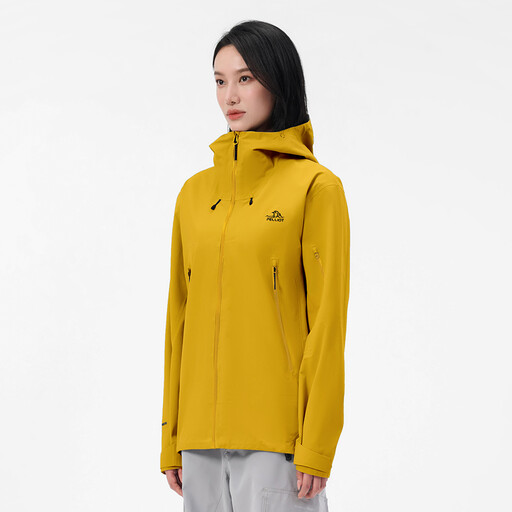
Why This Fits Their Persona: Suits users who move between demanding outdoor environments and urban travel, including mountain routes, ski areas and wet-weather commuting.
The design includes extended underarm vents, addressing the common problem of heat and moisture build-up during high-output activity.
The listed construction combines lighter elastic fabric, a breathable mesh lining, wind resistance, abrasion resistance and a RECCO avalanche rescue reflector.
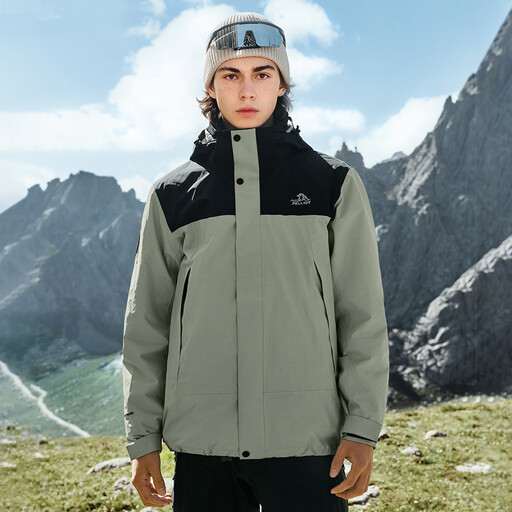
Why This Fits Their Persona: Designed for campers, trekkers and outdoor users who need adaptable protection across cool, wet and windy conditions.
Its 3-in-1 format avoids forcing one heavy layer to perform in every season: the shell, liner and combined jacket can be used separately.
The listed features include a microporous waterproof breathable membrane, high-density seam taping, a thermal liner and a scratch-resistant shell.
We have compiled a complete, real-time list of products that fully satisfy these strict selection criteria and UK safety regulations.
Before placing an order, consider:
For a lightweight single-layer option, the Ochama Pangolin 500 Series Stretch Jacket lists a T800 stretch windproof outer layer, a waterproof moisture-permeable membrane and care instructions that include DWR reapplication when needed.
Yes, provided its weight, fit and ventilation suit your journey. A lighter hard shell jacket may be more convenient for public transport and packing, while a fleece-lined or 3-in-1 jacket is more practical for cold, exposed walks. Check that the hood does not obstruct peripheral vision and that pockets remain usable with a bag.
Lifespan depends on frequency of use, abrasion, washing and storage. Avoid fabric softener unless the care label permits it, wash on the recommended cycle and allow the garment to dry naturally. If rain stops beading on the outer fabric, a suitable DWR treatment may help restore surface water repellency, but it does not replace a damaged membrane or failed seam tape.
Not necessarily. A high rating can be useful for prolonged heavy rain, but comfort also depends on breathability, ventilation, layering and fit. For occasional city use, a lighter waterproof travel jacket may be sufficient. For camping, mountain trekking or exposed coastal routes, prioritise waterproof construction alongside wind protection and durability.