
24/7 Customer Support

Free returns

Same-day & Next-day Delivery

Quality Guaranteed

Unlock Your Welcome Offers: FREE Delivery | Up to 80% OFF | Free 30-day JoyPlus trial
Download the APP
A football that becomes heavy after rain, a basketball that loses pressure overnight or a children’s ball that is the wrong size can quickly turn an affordable purchase into wasted money. For families, schools, clubs and recreational players in the UK, waterproof rubber sports balls need to cope with damp grass, muddy parks, concrete courts and changing storage conditions.
Before buying, look beyond phrases such as “all-weather” or “professional quality”. The useful questions are more specific: Is the outer material genuinely water-resistant? Which size suits the player? How is air retention managed? Does the package include the pump and accessories needed for immediate use?
Some balls may tolerate light moisture but still absorb water through stitched panels, seams or fabric-backed surfaces. Once water enters the shell, the ball can feel heavier and behave differently during passing, shooting or bouncing.
A seamless foam rubber or rubber composite shell is worth considering for regular wet-weather play. It reduces exposed stitching and is easier to wipe clean after use. However, waterproof construction does not mean the ball should be left submerged or stored wet for long periods.
A ball labelled “youth” is not automatically suitable for every child. Football and basketball sizing varies, and an unsuitable circumference can make basic skills more difficult.
For football, a size 4 football is commonly associated with youth players aged around 8–12, while a size 5 football is the standard full-size option for older youths and adults. For basketball, a size 5 basketball has a circumference of approximately 27.5 inches and is commonly used by junior players aged around 9–12.
Age guidance is only a starting point. Check the requirements of the child’s club, school or league before ordering.
Many sports balls arrive deflated for safer, more compact transport. A pump is useful only if the package also contains the correct inflation needles and the valve is handled carefully. Forcing a dry needle into the valve can damage it.
A set described as a sports ball with pump and bag can reduce the need for separate purchases. Even so, check exactly what is included and keep spare needles available if the ball will be used by a school or club.
For outdoor football, a rubber football or foam rubber composite can provide a softer touch than a hard plastic shell while remaining suitable for grass, artificial turf and casual beach play. Textured rubber is also practical for an outdoor basketball, particularly on asphalt or concrete, where grip and scuff resistance are important.
A seamless design can simplify cleaning and reduce the number of areas where moisture may enter. After use, wipe the surface with a damp cloth and allow it to dry before placing it in storage.
Air retention affects how often a ball needs attention. Product specifications may refer to a butyl or latex bladder, a reinforced liner or a double-layer valve. These features can help maintain pressure, but the ball should still be checked before each session.
Do not rely on a single advertised leakage figure as a guarantee of lifetime performance. Temperature, playing surface, inflation pressure and valve handling all influence air loss. Use a pressure gauge where possible and follow the pressure range supplied with the product.
The main football sizes in these listings are:
For the listed size 5 football, the suggested pressure range is approximately 8.7–11.6 PSI. The listed size 4 football is specified at approximately 7–9 PSI. Always check the product instructions rather than inflating by feel alone.
The featured basketball has a 27.5-inch circumference and is supplied as a size 5 junior ball. It is listed for indoor courts and outdoor surfaces including asphalt, concrete, grass and beach areas. Indoor and outdoor use can be convenient, but abrasive surfaces will generally cause more visible wear than a smooth court.
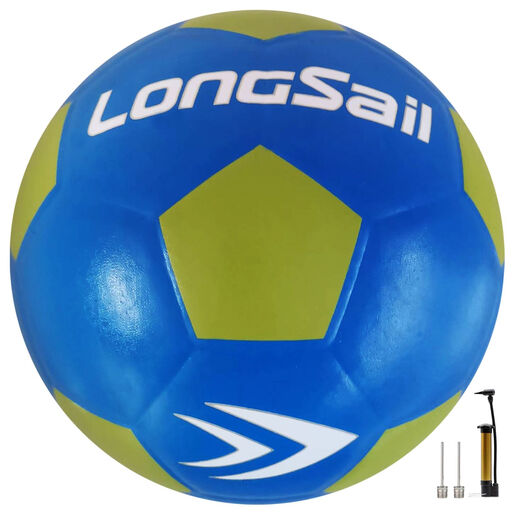
Why This Fits Their Persona: The size 4 format suits youth players and beginners who need a manageable football for parks, gardens and casual training in changeable UK weather.
Its listed seamless foam rubber shell is designed for waterproof use, avoiding exposed stitched panels that may retain moisture. The set includes an air pump, inflation pin and drawstring mesh bag.
Youth-oriented size 4 circumference; wipe-clean construction; inflation accessories included.
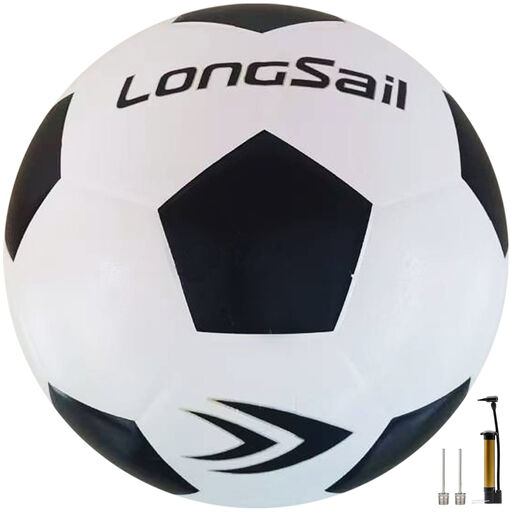
Why This Fits Their Persona: A full-size option for older youths, adults and players who want a training ball that can move between grass, turf and casual wet-weather sessions.
The product listing identifies a seamless waterproof foam rubber shell and a double-layer valve intended to reduce air leakage. It also arrives with a pump, needle and storage bag.
Full-size 5 circumference; stated pressure guidance of 8.7–11.6 PSI; suitable for several outdoor surfaces.
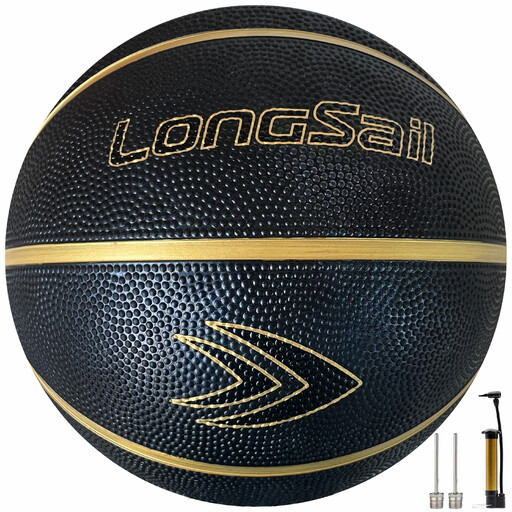
Why This Fits Their Persona: Suitable for families, schools and recreational players needing an all-weather basketball for driveways, parks, courts and occasional pool or beach play.
Its textured rubber surface is listed for wet conditions and outdoor use, while the butyl liner is specified for air retention. The included pump, two needles and carry bag address setup and storage needs.
27.5-inch size 5 format; dimpled grip and deep grooves; stated suitability for indoor and outdoor surfaces.
A waterproof football or basketball still has a finite service life. Frequent high-impact use, overinflation and abrasive surfaces can shorten it. For clubs and schools, rotating several durable training balls may help reduce wear on individual balls and make maintenance easier.
We have compiled a complete, real-time list of products that fully satisfy these strict selection criteria and UK safety regulations.
They can be suitable for damp grass, wet courts and light rain when the product is specifically described as waterproof or all-weather. Dry the ball after use and avoid leaving it submerged. Wet conditions may also affect grip, visibility and the playing surface itself.
Check pressure before each session rather than following a fixed timetable. A ball used frequently outdoors may need more regular adjustment. Persistent air loss can indicate valve or bladder damage, so replacing the ball may be more practical than repeatedly inflating it.
Not necessarily. Size 4 is commonly associated with youth players aged around 8–12, but local clubs and schools may specify different equipment. For younger children, a size 3 may be easier to control; older youths and adults generally use size 5.