Precision end-tidiers
If you like your natural waves but want to smooth or bend only the last few centimetres, a manageable plate format matters more to your choice than broad coverage.


For occasional tidying of wavy ends, look for selectable heat and a plate format you can position around a small section; choose a rounded styling tool if making a turn or loose wave is equally important. A high maximum temperature or coating claim does not establish a better result, and Gloucestershire Hospitals NHS Foundation Trust warns that repeated extreme heat can weaken hair.
If you like your natural waves but want to smooth or bend only the last few centimetres, a manageable plate format matters more to your choice than broad coverage.
If your hair is dry or fragile, or you already style it frequently, selectable temperature gives you control over the setting. It does not make heat styling damage-free.
If you want to smooth your ends on one occasion and make a soft turn or wave on another, consider a rounded styling tool. Its heated exterior needs careful handling.
For a few wavy ends, decide whether controlling heat, positioning the tool precisely or shaping a bend is your priority; check electrical safety and seller details before purchase.
| Concern | What to check | Who this matters to |
|---|---|---|
| Heat control | Check the exact model's selectable settings and temperature range; a high maximum alone says little about the setting you will use. | If my hair is dry, fragile or already heat-styled often, I want control over the temperature rather than relying on a fixed maximum. Around 36% of consumers could put heat control first. |
| Handling small sections | Compare the plate format and dimensions for the exact model, particularly if you will work on only the last few centimetres. | When I want to keep the rest of my waves, I need to position the tool on a small end section without repeatedly reworking it; precise handling could come first for around 29% of consumers. |
| Shaping a bend | If you want a turn, flick or loose wave, check whether the tool has a rounded housing intended for that use. | I want to change the shape of my ends as well as smooth them, so a tool designed for bends matters to me. Around 21% of consumers could prioritise that versatility. |
| Safety and ownership | For a mains tool, check its UK plug and fuse, cooling arrangements, seller and exact guarantee terms. | If the tool will be kept in a shared space, I want to be confident about safe use and where I am buying it; those checks could be the primary concern for around 14% of consumers. |
A higher maximum temperature does not establish a better result on wavy ends. Gloucestershire Hospitals NHS Foundation Trust notes that straighteners expose hair to extreme heat, which can weaken it.
Compare usable settings and avoid unnecessary repeat passes when tidying the ends.
Auto shut-off does not remove the heat and electrical risks of a straightener.
Unplug it after use, let it cool on a heat-resistant surface and keep it away from water and children. Wait until it has cooled before putting it in a pouch.
Electrical Safety First recommends using a reputable retailer, while ghd warns that counterfeit sites can supply fake products or nothing at all.
Check the seller, retain proof of purchase and use the brand's retailer checker where one is available.
Smoothing and reduced-damage claims attached to particular models are not proof that heat styling cannot weaken hair.
Compare the temperature controls, plate format and safety features you will actually use instead of relying on a coating claim alone.
Remington UK lists slim, standard and extra-wide straightener formats relevant to different styling scopes.
The Black Onyx Styler ST484U is relevant when smoothing wavy ends also means creating a turn, flick or loose wave.
ghd lists mini, standard and max straightener formats that may be worth comparing for handling.
These choices cover compact plates, a cordless straightening brush and a narrow curved clamp. Their different formats make it worth checking how each would handle the small sections you intend to style.
 No image available
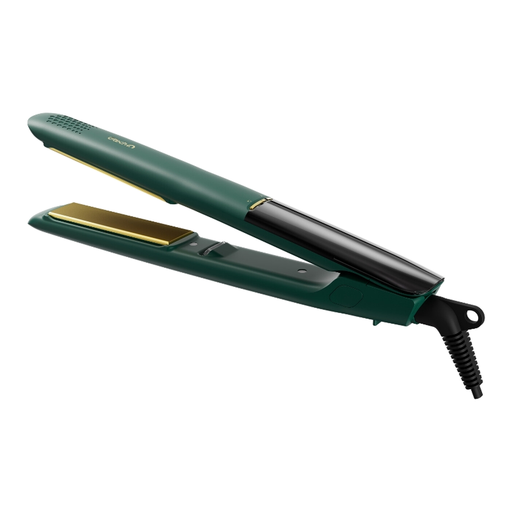
Consider this compact straightener if selecting a heat setting is important for occasional end touch-ups.
The title specifies 10 temperature settings and tourmaline ceramic plates. Check the plate dimensions for your end sections and the plug and fuse details before buying.
 No image available
Consider the brush format if you want a cordless straightening tool, but check whether its head will let you work on only the ends.
The title specifies six settings from 130°C to 200°C and a lithium-battery design. Use it on dry hair unless the product instructions clearly establish when another condition is safe; confirm the guarantee terms before purchase.
 No image available
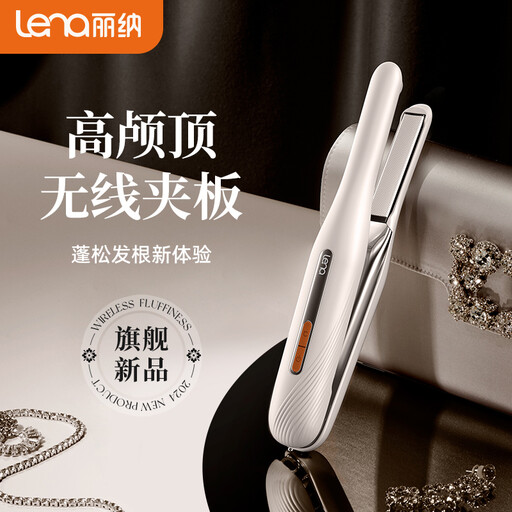
The narrow curved-plate format is worth considering if positioning a small tool around the ends is your priority.
The title specifies 12 mm curved plates, MCH heating technology and a weight of 150 g. Check its temperature controls, charging requirements, safety features and guarantee terms before choosing it.
No: a high maximum temperature is not, by itself, a reason to choose a straightener for end-tidying. Compare the selectable settings on the exact model and avoid unnecessary repeat styling; Gloucestershire Hospitals NHS Foundation Trust warns that extreme heat can weaken hair.
Choose a rounded straightener if you want to turn ends under, make an outward flick or form a loose wave as well as smooth them. BaByliss describes the Black Onyx Styler's rounded housing as a heated surface for curls and waves, so account for the hot exterior when handling and cooling it.
Do not use a mains straightener with wet hands, on wet hair or near a sink full of water. Electrical Safety First advises unplugging hair straighteners when they are not in use; let the tool cool on a heat-resistant surface after styling.
Compare the guarantee for the exact model, any registration condition and the retailer's returns process before purchase. Remington states a five-year guarantee plus an extra year with registration for AIRvive Slim, while BaByliss states a five-year guarantee for the Black Onyx Styler; check the current terms for the product you choose.