
24/7 Customer Support

Free returns

Same-day & Next-day Delivery

Quality Guaranteed

Unlock Your Welcome Offers: FREE Delivery | Up to 80% OFF | Free 30-day JoyPlus trial
Download the APP
Waxy corn on the cob is increasingly popular with UK shoppers looking for a filling breakfast, portable corn snack or quick side dish. Unlike standard sweetcorn, it is valued for its soft, sticky and chewy texture, while some varieties also offer noticeable sweetness.
However, product descriptions can make comparison difficult. “Ready to eat”, “pre-cooked” and “vacuum-packed” do not always mean the same thing, and pack sizes can be misleading when products are sold by total weight rather than by the number of ears. Before buying, check the preparation method, storage instructions and nutrition panel rather than relying on front-of-pack wording.
Sweet corn usually has a juicier, more tender bite and a more noticeable sugar taste. Glutinous corn, also called sticky corn or waxy corn, contains more of the starch associated with its characteristic chewy texture. Some products combine both qualities and are described as sweet waxy corn.
If you prefer a soft, chewy mouthfeel, look for “waxy”, “glutinous” or “sticky” in the product name. If you want a lighter, juicier corn snack, conventional sweetcorn may be more suitable.
Vacuum packaging helps protect the product from exposure to air, but it does not by itself confirm that the corn can be eaten cold. Some packs are fully cooked and only need reheating, while others require boiling, steaming, grilling or microwaving before serving.
For example, some pre-cooked corn products give instructions for heating an unopened bag in boiling water. Other varieties clearly state that cooking is required. Always follow the instructions printed on the packaging, including whether the inner pouch should be opened or removed before microwaving.
A bulk waxy corn pack may offer practical value for families, meal preparation or regular snack consumption. But products with different storage requirements should not be treated alike. Some shelf-stable packs can be stored in a cool, dry cupboard before opening, while others recommend refrigeration at 0–4°C.
Check the number of ears, total weight, best-before date and post-opening instructions. A ten-ear pack may be convenient, but it needs suitable cupboard or fridge capacity and a realistic plan for consumption.
The exact eating experience depends on the variety and cooking method. Steaming can help retain a plump texture, while grilling adds surface browning and a roasted flavour.
Look for one of these descriptions:
Microwave times vary according to wattage and pack instructions. Do not microwave sealed packaging unless the label specifically permits it. For boiling, check whether the bag can remain unopened and whether excess liquid should be drained before serving.
A short ingredients list makes comparison easier. Several products listed here contain mainly corn, water and a small amount of salt. Check the ingredient list, allergen statement and nutrition information per 100g, as pack sizes differ.
For reference, the N47° Aroma Waxy Corn 200 g ×2 lists, per 100g, 165 kcal, 30g carbohydrate, 4.5g protein and 0g salt. JING NONG Golden Waxy Corn on the Cob 200g lists 143 kcal and 0.008g salt per 100g. These figures are product-specific and should not be generalised to every waxy corn variety.
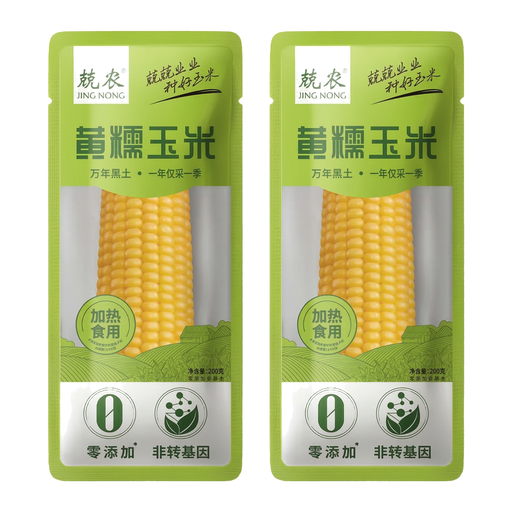
Why This Fits Their Persona: A two-ear pack provides a straightforward way to try yellow waxy corn without committing to a large quantity, making it suitable for students, couples or occasional snack buyers in the UK.
The listing identifies it as fully cooked and vacuum-packed, while also providing heating and storage guidance. This helps distinguish it from corn that requires full cooking.
Two 200g portions; per 100g, the listing states 143 kcal and 0.008g salt.

Why This Fits Their Persona: Suitable for shoppers who want a white sweet-waxy variety with a short ingredients list and flexible serving options for breakfast or a side dish.
The product specifies 97.73% corn, water and salt, and clearly gives separate boiling and microwave instructions.
Vacuum-packed and pre-cooked; 220g net quantity; 0.08g salt per 100g listed.
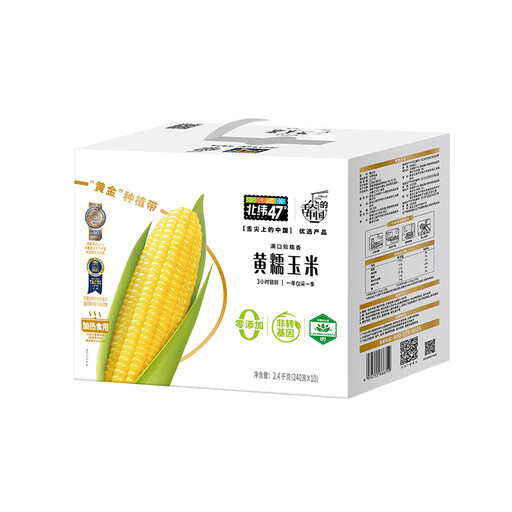
Why This Fits Their Persona: A ten-pack totalling 2.4kg suits families, shared households, catering-style meal preparation and regular Chinese corn on the cob consumers.
The listing states that individual packs can be steamed, boiled or microwaved and recommends refrigeration, making the storage requirement visible before purchase.
Ten 240g portions; 0g salt and 184 kcal per 100g according to the listing.
For ready-to-heat products, use a microwave-safe dish where required and heat until thoroughly hot. For products marked “cooking required”, remove packaging according to the label and boil or steam for the stated time. Grilling can add flavour, but monitor the corn closely to avoid drying the kernels.
Before opening, follow the stated cupboard or refrigeration instructions. After opening, transfer leftovers to a sealed container, refrigerate promptly and consume within the period shown on the packaging. Do not use a pack if it is swollen, leaking or damaged.
We have compiled a complete, real-time list of products that fully satisfy these strict selection criteria and UK safety regulations.
Some products are fully cooked and can be eaten after opening, although heating is often recommended. Others require cooking. Check the product’s usage instructions rather than assuming that vacuum-packed means ready to eat.
The unopened shelf life depends on the specific product and storage condition. Use the best-before information on the packaging. Once opened, refrigerate leftovers and consume promptly, following the product instructions.
It can be served as a standalone corn snack, breakfast accompaniment or side dish. Portion size and nutrition vary, so compare the per-100g information and consider adding protein or other foods for a more balanced meal.