
24/7 Customer Support

Free returns

Same-day & Next-day Delivery

Quality Guaranteed

Unlock Your Welcome Offers: FREE Delivery | Up to 80% OFF | Free 30-day JoyPlus trial
Download the APP
For new and expectant mothers, the promise of a wearable breast pump is one of freedom. The ability to express milk while typing an email, preparing a meal or simply enjoying a cup of tea untethered from a wall socket is a modern marvel. However, the market is filled with options, and it's easy to fall into common traps that lead to discomfort, frustration and a device that gathers dust in a cupboard.
As the Joybuy Product Recommendation Officer, my role is to help you navigate these choices with clarity. Before you invest, let's look at the frequent pitfalls that many UK parents encounter and how to sidestep them.
discreet breast pump for work can be shattered by a motor that hums, buzzes or clicks louder than advertised. While no motorised pump is completely silent, some are far more disruptive than others, turning a discreet session into a source of self-consciousness.To ensure you choose a hands-free breast pump that genuinely supports your lifestyle, focus on these non-negotiable parameters.
This is the most critical factor for comfort and efficiency. Your pump's flange (the part that fits over your nipple and areola) must be the correct size.
A quality portable electric breast pump should work with your body, not against it. This is achieved through customisable settings that mimic a baby's natural nursing rhythm.
A wireless breast pump should be lightweight and compact enough to sit inside a standard nursing bra without feeling bulky or heavy. Check the weight of the motor unit. Anything around 225-250 grams is considered lightweight. Furthermore, consider the battery. A USB-C rechargeable battery is the modern standard, offering convenience and compatibility with other device chargers. Check the specifications for how many 20-30 minute sessions you can expect from a single full charge.
Instead of a generic list, we've matched our recommendations to specific user needs.
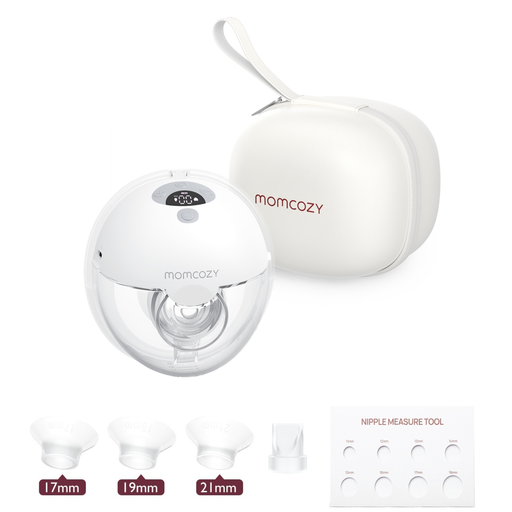
Why This Fits Their Persona: For mums who primarily breastfeed but want the flexibility to pump a bottle for a partner to help with a feed, build a small freezer stash or relieve engorgement. A single pump is a cost-effective entry into the world of wearable pumping without committing to a full double set.
It directly tackles the "one-size-fits-all" myth by including four different flange sizes (17, 19, 21 and 24mm) in the box, ensuring most users can find a comfortable and effective fit from day one.
Features 3 modes (Stimulation, Expression and Mixed) and 9 suction levels for complete personalisation. The lightweight 225g motor unit is discreet and easy to wear.
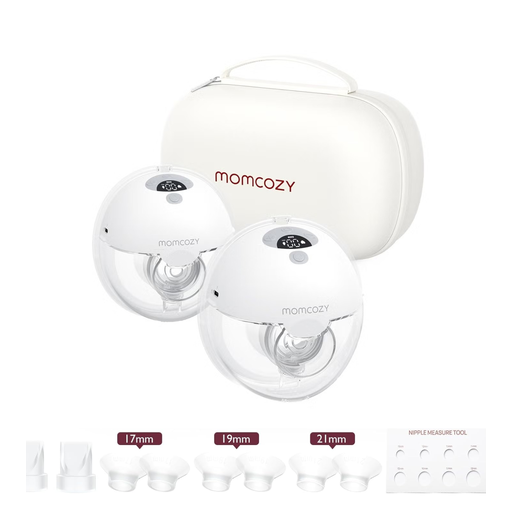
Why This Fits Their Persona: Time is the most valuable resource for exclusive pumpers or mums returning to the office. A double pump set cuts pumping time in half. This allows for efficient, simultaneous pumping, which is essential for maintaining supply and fitting sessions into a busy workday.
The design features a low number of parts (typically 5 per pump) that are intuitive to assemble and straightforward to clean, avoiding the "hidden time cost" trap of overly complex devices.
The double set maximises efficiency. According to Momcozy, its motor is designed for quiet operation, making it a more discreet option for office or public use compared to louder, bulkier models.
Why This Fits Their Persona: Searching for practical `gifts for new mums` can be difficult. This 2-pack is a high-value, genuinely useful gift that gives a new parent the invaluable resource of time and freedom. It's a premium item that shows true consideration for the challenges of the fourth trimester.
Gifting a pump with multiple flange sizes and customisable settings removes the guesswork. You're giving a complete, adaptable system rather than a product that might not work for the recipient.
This is a complete, ready-to-use solution. The inclusion of two pumps, multiple flanges and a stylish storage case makes for an impressive and thoughtful baby shower or new-parent gift.
Once you have expressed milk, safe storage is the next critical step. To preserve nutrients and prevent contamination, milk should be stored in containers that provide a completely airtight seal. This is where products with a hermetic seal become essential for keeping your liquid gold fresh in the fridge or freezer.
We have compiled a complete, real-time list of products that fully satisfy these strict selection criteria and UK safety regulations.
1. How do I find the right flange size for a wearable breast pump? The most accurate way is to measure your nipple diameter (the base only, not the areola) after a pumping or feeding session. You can use a ruler or a printable sizing tool, which many pump manufacturers provide online. The flange tunnel diameter should be 2-4mm larger than your nipple measurement. Choosing a pump that includes multiple sizes allows you to experiment and find the perfect fit.
2. Can you wear a hands-free breast pump under normal clothes at work? Yes, but with some considerations. Modern wearable pumps are designed to fit inside a supportive, stretchy nursing bra. While they are far more discreet than traditional pumps, they will add volume to your bust. Wearing them under loose-fitting tops, blouses or jumpers is usually effective for a discreet breast pump for work experience. Tight-fitting tops will likely show the outline of the pumps.
3. How often do I need to replace parts on a wireless breast pump? This depends on usage frequency, but there are general guidelines. Silicone parts like flanges, valves and diaphragms wear out over time, which can reduce suction. For exclusive pumpers, it's often recommended to replace valves every 1-2 months and other silicone parts every 3-6 months. Always check the manufacturer's specific recommendations and inspect parts for wear, tear or warping before each use.