
24/7 Customer Support

Free returns

Same-day & Next-day Delivery

Quality Guaranteed

Unlock Your Welcome Offers: FREE Delivery | Up to 80% OFF | Free 30-day JoyPlus trial
Download the APP
For new and expectant mothers in the UK, the promise of a wearable breast pump is one of freedom. The ability to express milk while typing an email, preparing a meal or simply enjoying a cup of tea is a significant step up from traditional pumps. However, the market is filled with options, and it's easy to fall into common purchasing traps that lead to discomfort, wasted money and frustration.
As a Joybuy Product Recommendation Officer, my role is to help you navigate these choices by highlighting what truly matters. Before you buy, be aware of these frequent pitfalls:
quiet breast pump, the reality can be a disruptive buzzing sound, especially in a quiet office or during a late-night session. Without a clear decibel rating, this claim is often subjective and can lead to disappointment.To make an informed decision, focus on the functional specifications rather than the marketing hype. Here are the three most important factors to analyse.
The breast shield, or flange, is the cone-shaped part that fits over your breast. Getting the size right is crucial for both comfort and milk expression.
A quality electric breast pump should adapt to your body, not the other way around. This is achieved through customisable settings.
double electric breast pump that allows independent control for each side can also be beneficial.The main appeal of a wearable breast pump is its portability. Pay close attention to the details that enable true hands-free convenience.
rechargeable breast pump is standard. Check the charging method—USB-C is becoming more common and offers faster, more convenient charging.in-bra breast pump should be lightweight and discreet enough to fit inside a standard nursing bra without being overly bulky or heavy. Consider the total weight and the profile of the collection cups.Based on these practical criteria, here are a few options matched to different user needs and lifestyles.

Why This Fits Their Persona: This pump is designed for maximum discretion and mobility. The motor is a separate, pocket-sized unit, meaning the in-bra collection cups are extremely lightweight (76g each). This makes it ideal for wearing in an office or during a commute without feeling weighed down.
The anatomically shaped collection cups are based on extensive research to avoid compression and maximise milk flow, directly addressing the poor-fit pitfall. The transparent design also allows for easy nipple alignment.
The separate motor unit keeps bulk and weight out of your bra. It also features app connectivity for automatic tracking of your pumping sessions.

Why This Fits Their Persona: This set provides a complete, all-in-one double pumping solution at a very accessible price point. It's an excellent starting point for mothers who want the convenience of a `hands-free breast pump` without a large initial investment.
It directly tackles the "one-size-fits-all" flange trap by including multiple flange inserts (17mm, 19mm, 21mm) along with the standard 24mm flange, allowing users to find a comfortable fit straight out of the box.
Offers great value by providing two complete pump units for simultaneous double pumping. It features 3 modes and 9 suction levels for customisation.
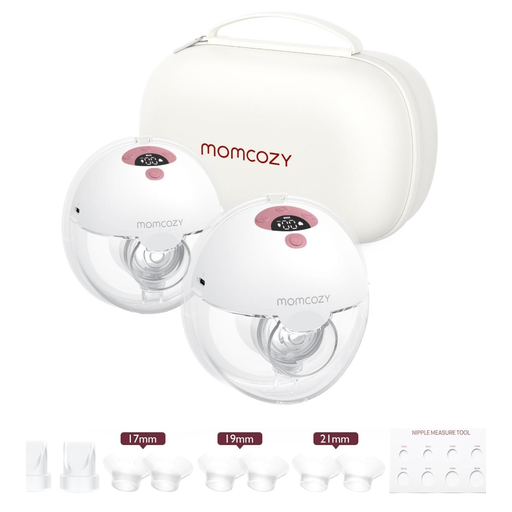
Why This Fits Their Persona: This model appeals to users interested in the latest technology. It features a "Baby Mouth" suction design and micro-vibration technology, which are engineered to mimic a baby's natural feeding pattern to help stimulate milk flow more effectively.
The ergonomic 105° double-sealed flange and inclusion of four different flange sizes (17/19/21/24mm) provide a comprehensive solution to the fit and leakage problems common with less advanced designs.
It is very lightweight (225g) for an all-in-one unit and offers 3 modes with 9 levels for a highly customisable experience. Some versions also offer app control.
We have compiled a complete, real-time list of products that fully satisfy these strict selection criteria and UK safety regulations.
This depends on usage frequency, but a general guideline is to replace silicone parts like valves and diaphragms every 1 to 3 months. These parts are critical for maintaining proper suction. Worn-out parts are a common cause of a pump losing its effectiveness. Always check the manufacturer's specific recommendations.
No, it is not recommended to use any wearable pump while sleeping or lying down. This can lead to milk leakage, potential damage to the pump motor and may increase the risk of developing blocked ducts due to prolonged, uneven pressure on the breast.
The most reliable way is to measure your nipple diameter after a pumping session or after stimulating it. Use a ruler or a printable sizing tool (often available on the manufacturer's website). The flange tunnel should be 2-4mm larger than your nipple's diameter. If a pump includes multiple sizes, you can test them to see which one allows your nipple to move freely without pulling too much of the areola into the tunnel.