
24/7 Customer Support

Free returns

Same-day & Next-day Delivery

Quality Guaranteed

Unlock Your Welcome Offers: FREE Delivery | Up to 80% OFF | Free 30-day JoyPlus trial
Download the APP
For many UK cat owners, Webbox Lick-e-Lix cat treats are appealing because they are creamy, portioned and easy to serve. They can be offered directly from the sachet or added to ordinary biscuits when a cat needs encouragement to eat. However, attractive packaging and phrases such as “functional”, “natural” or “low calorie” do not tell you everything you need to know.
The right choice depends on your cat’s age, daily diet, eating habits and any specific requirement, such as hairball management or dental care. Here are the main buying pitfalls to avoid.
Most lickable cat treats are complementary pet food, not a complete diet. They are designed to add taste or variety rather than replace nutritionally balanced cat food. Feeding too many can also increase daily calorie intake, even when each portion appears small.
Use the feeding guidance on the packaging and keep treats within the recommended proportion of your cat’s daily calories. A topper should be added to a measured meal rather than poured freely over every serving.
Age suitability varies between recipes. For example, Webbox Lick-e-Lix with Chicken is listed for cats and kittens from 12 weeks, while the Liver Sausage & Cat Grass version is suitable from 3 months. The Salmon version is intended for adult cats aged 1 year and over.
This matters if you have a young kitten, a senior cat with a reduced appetite or more than one cat sharing the same cupboard. Always check the current label before serving.
“Yoghurty”, “creamy” and “lickable” describe texture, but they do not indicate whether the product is suitable for your cat’s calorie budget or dietary needs. Similarly, a product described as a dental treat should not automatically replace brushing or veterinary dental advice.
Look for practical details: calories per sachet, pack size, composition, age guidance, storage instructions and feeding limits. These are more useful than broad promotional wording.
A 15g sachet is convenient because it provides a defined portion. Several Webbox Lick-e-Lix recipes listed here contain 8.5 kcal per sachet, including the Liver Sausage & Cat Grass and Chicken varieties. That makes them easier to budget than treats that require weighing or breaking into pieces.
The Cheese & Taurine recipe states that treats should not exceed 10% of the animal’s total daily calorie intake. This is particularly important for indoor cats, neutered cats or cats already receiving several rewards throughout the day.
Lickable cat treats can be served in three common ways:
Creamy cat treats may be easier for some senior cats to consume than hard biscuits, but they still need to be served under supervision. Do not allow a cat to chew or swallow the sachet material.
Compare the composition rather than relying only on the flavour name. The Chicken version lists 30% meat and animal derivatives, including 4% chicken, while the Cheese version lists 4% cheese within milk and milk derivatives. The Liver Sausage recipe combines liver sausage, cat grass and dairy products.
If your cat has a known food sensitivity, check the full ingredient list and contact a veterinary professional before changing their diet. Fresh drinking water should always be available.
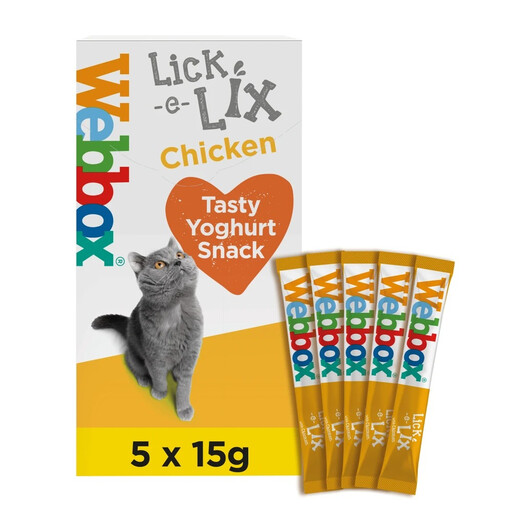
Why This Fits Their Persona: A straightforward option for households wanting individual cat treat sachets that can also top dry biscuits. It is listed for cats and kittens from 12 weeks.
The 15g single-serve format helps limit accidental over-pouring, while the age guidance makes selection clearer for younger cats.
Contains 4% chicken; each sachet contains 8.5 kcal and can be served as a treat or topper.
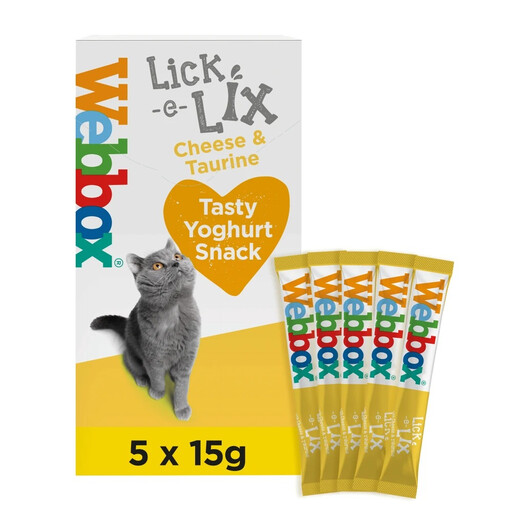
Why This Fits Their Persona: Suitable for owners who want a creamy texture with a clearly listed cheese component and taurine in the formulation.
Its stated 10% calorie guidance discourages treating a complementary snack as a substitute for a complete meal.
Five 15g sachets; suitable as a treat or topper for dry food.

Why This Fits Their Persona: A dry cat food option for owners specifically comparing cat hairball food rather than simply adding more snacks to the diet.
It is fed as a measured daily food, helping owners avoid relying on treats for ongoing hairball-related dietary management.
Lists chicken as the first named ingredient and contains 6% crude fibre; the stated adult feeding guide is 40–60g daily.
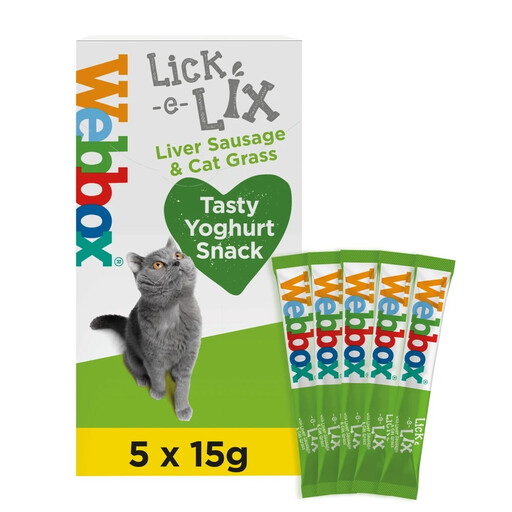
Why This Fits Their Persona: The smooth texture and savoury liver sausage flavour may suit fussy adult cats or owners wanting a small hand-feeding reward.
The stated 8.5 kcal per sachet makes daily portion planning more transparent than unmeasured treats.
Contains liver sausage and cat grass; can be served directly or used as a food topper.
We have compiled a complete, real-time list of products that fully satisfy these strict selection criteria and UK safety regulations.
Some are, but not all. The Chicken recipe is listed for kittens from 12 weeks, while the Liver Sausage & Cat Grass recipe is suitable from 3 months. The Salmon recipe is for adult cats aged 1 year and over. Check the pack before serving.
Follow the product label. The Liver Sausage recipe advises discarding uneaten portions after 24 hours, while the Chicken description advises refrigeration and use within 48 hours after opening. Do not leave opened creamy treats at room temperature longer than instructed.
No. Lickable treats are complementary snacks. They can add moisture and interest to a meal, but they should not replace a complete diet, tooth-care routine or specific cat hairball food. For ongoing dental, digestive or hairball concerns, seek advice from a veterinary professional.