Routine home-meeting upgrader
Your laptop camera falls short for one-person calls from a desk, but you do not need a broadcast setup. An external camera is a more focused change to assess before replacing the computer.


For routine one-person work meetings, start by looking for a USB webcam that supports your computer and calling platform, and check whether its mount and field of view suit your desk. Treat audio as a separate choice if calls take place in a noisy room or you already rely on a headset. A compatible Mac and iPhone may offer another camera route; consider replacing the laptop when its wider limitations, rather than just its built-in camera, prevent useful meetings.
Your laptop camera falls short for one-person calls from a desk, but you do not need a broadcast setup. An external camera is a more focused change to assess before replacing the computer.
You make frequent calls from a shared or noisy room, or being heard clearly matters more to you than increasing camera resolution. Choosing a microphone independently may make sense.
You already have compatible Apple devices and can keep the iPhone mounted, stable and available during calls. Apple’s Continuity Camera offers a route to check before choosing a separate webcam.
Decide whether the laptop needs only an external camera, a camera plus separate audio, or a wider change to the meeting setup. Then check the requirements of the route you would actually use.
Consider it: For routine individual calls when one camera-and-microphone device suits your desk.
Trade-off: A built-in microphone’s suitability still depends on the model and your room.
Consider it: When voice clarity is a priority in a shared room, or you already use a headset that works for your calls.
Trade-off: You need to manage another device and select the intended microphone in the meeting app.
Consider it: If your Mac and iPhone meet Apple’s Continuity Camera requirements and the phone can stay mounted during meetings.
Trade-off: The phone is occupied during calls and may need charging during longer meetings.
Consider it: If the existing computer’s operating system, ports or meeting-app performance remain a problem beyond its camera.
Trade-off: A different laptop does not, by itself, resolve room lighting, camera placement or audio needs.
| Concern | What to check | Who this matters to |
|---|---|---|
| Computer and meeting-app compatibility | Match the webcam’s stated operating systems and connector to your laptop; check camera permissions and device selection in your meeting app. | If my older laptop cannot recognise or select the camera, the upgrade will not help my calls. Around 36% of consumers put compatibility and setup first. |
| Framing, placement and privacy | Check field of view at your seating distance and whether the mount fits your screen; look for a physical shutter if you want to cover the lens between calls. | I want my face framed at my desk without showing more of the room than intended. Around 27% of consumers prioritise framing, placement or physical privacy. |
| Voice pickup | Consider the room’s background noise and whether you would use the webcam microphone or select a separate headset or microphone. | When other people are nearby, being heard clearly matters more to me than a higher camera resolution. Roughly 19% of consumers make audio their primary concern. |
| Using equipment already owned | Check whether your current headset meets your audio needs or, for a compatible Mac and iPhone, whether Continuity Camera fits your mounting and charging arrangements. | If my existing devices can handle meetings, I would rather use them than add another camera to the desk. Approximately 18% of consumers put using existing equipment first. |
A connected camera may still be unavailable to a meeting app. Microsoft explains that Windows desktop apps need desktop-camera access, while meetings in a browser also depend on browser permissions.
Check the connector and operating-system support before choosing a model. During setup, select the camera in Teams device settings and make a test call where available; allow browser camera access if you meet through the web app.
A mismatched connector may call for an adapter, while a managed computer may require time with your IT team to resolve permissions.
More capture-resolution options do not tell you whether the camera will frame one person well at your desk. Field of view and mounting position also affect how much background appears.
Check the stated field of view, monitor mount and seating position. If you want to cover the lens between calls, check for a physical shutter on the exact model.
An integrated microphone makes setup simpler, but its presence does not establish how clearly people will hear you in your room. Manufacturer noise-reduction descriptions are model-specific claims.
If background noise is predictable, consider retaining a headset or choosing a separate microphone. Microsoft Teams allows the camera and microphone to be selected independently.
Apple’s Continuity Camera depends on a compatible Mac-and-iPhone setup. The phone also needs a stable position with its rear cameras unobstructed.
Check Apple’s device requirements and try the arrangement in your meeting app before relying on it for work calls.
A suitable mount and a way to charge the phone may be needed for longer calls.
Logitech’s Brio 100 and Brio 4K illustrate different levels of camera specification for desk meetings, rather than a requirement to choose the higher-resolution model.
The PowerConf C200 is relevant to consumers who want to adjust how much of the room appears in a USB webcam’s view.
Microsoft’s Modern Webcam is a reference point for Teams-centred Windows setups; Microsoft describes it as Teams-certified.
These USB webcam choices address the external-camera route for work meetings. Compare their stated focus, framing and microphone features against your desk setup, and check compatibility with your computer and calling app.
 No image available
Consider this for desk meetings where autofocus is useful to your camera setup. Confirm the capture resolution before choosing it: the title says 2K, while the technical specifications state Full HD 1080p.
 No image available
Consider this if a wider conference view and built-in audio suit your meetings. The title specifies fixed focus, a four-microphone array and dual speakers; check whether the focus distance and adjustable view work for a one-person desk call. Confirm the connector and meeting-app compatibility for your laptop.
 No image available
Consider this for work calls if switching between automatic and manual focus would help at your usual seating distance. The title identifies it as an HD webcam; check the stated video resolution and whether its connection matches your laptop.
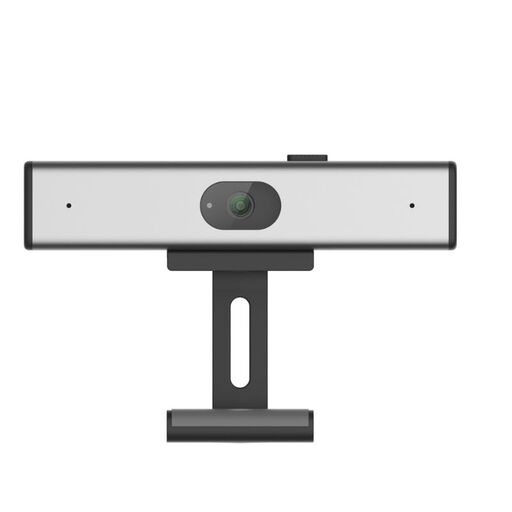 No image available
Consider this for a PC video-call setup where a clip-on camera and integrated microphone suit your desk. The title describes a noise-reduction microphone; assess audio in your own room, and check the connector, operating-system support and framing before choosing it.
Check the exact webcam’s stated operating-system support and connector against your computer, then confirm that the meeting app can access a camera. Microsoft explains that Teams on Windows needs desktop-app camera access; Teams in a browser also needs browser permission. In Teams, select the intended camera under device settings and make a test call where available.
Consider separate audio when calls take place in a noisy or shared room, or when you already have a headset that meets your needs. A webcam’s microphone features do not establish how speech will sound in your room; Microsoft Teams lets you select a microphone separately from the camera.
An iPhone can provide a camera for a compatible Mac through Apple’s Continuity Camera, wired or wirelessly. Apple advises keeping the phone near the Mac, stable and mounted with its rear cameras unobstructed; check charging needs for longer calls and try the setup in your meeting app.
No: Citizens Advice explains in its guidance for England that warranties and guarantees add to legal rights rather than replace them. Check the seller’s process for dealing with a faulty webcam separately from its change-of-mind returns policy; use the advice applicable to your UK nation for your circumstances.