For one seated speaker, start with a webcam that frames a head-and-shoulders view without complicated controls. If the classroom shot must change between a speaker and a small group, consider an adjustable field of view; if people move during the talk, consider auto-framing. Whichever camera you choose, test speech from the planned positions and settle recording arrangements before the session.
Who is the webcam for?
Facilitators showing people and materials
If the shot changes between a speaker, a small group and historical materials, look beyond resolution to how easily the camera can change its framing. AnkerWork and Insta360 describe different approaches: a selectable field of view and auto-framing, respectively.
Individuals joining from a classroom computer
For a seated attendee, a straightforward head-and-shoulders view may be enough. Check the computer connection, the position of the screen and whether a physical lens cover matters when the camera stays attached between talks.
Organisers managing sound and recordings
Test voices from every planned speaking position rather than judging audio by the microphone count. Before participants join, establish whether the talk will be recorded and explain the arrangements that apply to the event.
What matters when choosing?
Decide what the camera must show, then test audio and the classroom computer before considering extra features. The concerns below distinguish consumers by the need that matters most to their choice.
| Concern |
What to check |
Who this matters to |
| Changing the shot |
Check whether the field of view is fixed or adjustable, and whether moving people can be framed automatically. |
If I need to show both a speaker and historical materials, I want to change the shot without repeatedly moving the computer. Around 40% of consumers put framing flexibility first. |
| Understandable speech |
Test the microphone through the intended call platform from each speaking position, with normal room noise. |
When people speak from different parts of the classroom, I need remote attendees to understand them. For around 30% of consumers, speech clarity is the primary concern. |
| Computer setup |
Confirm the exact camera's connection and compatibility with the classroom computer, then select it in the call platform. |
I may have little time before the talk, so I need the camera to work with the computer already in the room. Around 20% of consumers chiefly prioritise straightforward setup. |
| Privacy and recording |
Check for a lens cover if needed; separately establish who may be recorded and how the organiser will handle the recording. |
If attendees might appear or speak on a recording, I want the arrangements clear before the talk begins. Recording and privacy are the main concern for around 10% of consumers. |
Mistakes to avoid
-
Choosing by resolution alone
A resolution specification does not tell you whether a moving speaker, group or document will fit in the shot.
Work out the widest subject you need to show, then check the field of view and any framing controls. Try the planned shot in the classroom.
-
Expecting built-in microphones to cover the room
Microphone features alone cannot establish how clearly a distant speaker will be heard. Insta360 specifies optimum built-in audio quality within 1.5 metres for the Link 2 and Link 2C.
Make a test call from each speaking position. If speech is unclear, assess a separate microphone or speakerphone.
-
Deciding about recording at the last minute
A lens cover controls the camera when it is closed; it does not settle how a recording of attendees' images or voices will be handled.
Ask the organiser whether the talk will be recorded, who may be captured and where the recording will be shared. The Information Commissioner's Office says it notifies attendees in advance when its own events are recorded.
-
Overlooking camera position and lighting
A camera aimed from an awkward position may not show the intended speaker or material well, regardless of its stated resolution.
Try an eye-level position, check the frame and look for a bright background behind the speaker before changing camera settings. Logitech's setup guidance recommends eye-level placement.
Brands to consider for different camera setups
Logitech
The C920s illustrates a conventional webcam for a seated speaker. Logitech lists 1080p video at 30fps, a 78° field of view and dual microphones for this model.
- A moderate view suits a planned single-speaker shot.
- Check that the C920s view includes everyone you intend to show; its framing does not offer the selectable angles described for the AnkerWork PowerConf C200.
AnkerWork
The PowerConf C200 offers a way to change between a closer speaker shot and more classroom context. AnkerWork lists 65°, 78° and 95° field-of-view settings.
- The selectable angles give the organiser a choice of composition.
- Changing that setting requires AnkerWork software; check that it can be used on the classroom computer.
Insta360
Insta360 describes the Link 2C as automatically adjusting its framing for one person or a group, a relevant option when people move during the talk.
- Auto-framing can reduce the need to adjust a moving speaker's shot manually.
- Insta360 specifies optimum built-in audio quality within 1.5 metres for the Link 2 and Link 2C; test more distant speaking positions separately.
Joybuy webcam choices
These webcams offer different starting points for classroom video calls, from a straightforward focus switch to adjustable viewing angles and remote-controlled zoom. Compare the shot each can provide with the people and materials you plan to show.
 No image available
j5create JVCU435 4K USB Webcam with 5x Digital Zoom Remote Control, Black and Silver
Consider this if you want to adjust a speaker's shot using the listed remote-controlled zoom. Its title specifies 4K video and 5x digital zoom; confirm that its field of view includes a group or historical materials before relying on zoom to frame the talk.
View on Joybuy
 No image available
EMEET All-in-One 4K Webcam with Sony Sensor and 98° Adjustable Field of View
Consider this for a classroom shot that may need more or less background. The title lists a 98° adjustable field of view, fixed focus, a four-microphone array, dual AI speakers and plug-and-play USB; check how the view is adjusted and test speech from the planned positions.
View on Joybuy
 No image available
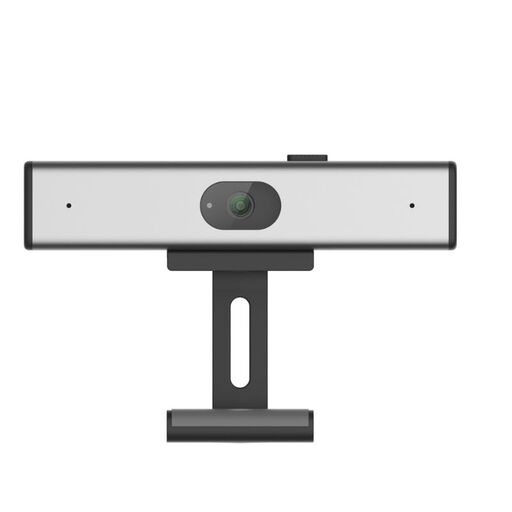
Philips SPL6308S/00 2K QHD PC Webcam, EU Version, Silver
Consider this for a monitor- or laptop-mounted call when a clip-on design suits the classroom computer. The title specifies 2K QHD and a noise-reduction microphone; confirm the connection and viewing angle, and test the microphone rather than assuming it will cover the room.
View on Joybuy
 No image available
j5create JVU250 HD Webcam with Auto and Manual Focus Switch, Black
Consider this for a straightforward seated-speaker call if switching between auto and manual focus is useful. A focus switch does not change how much of the classroom fits in frame, so check the viewing angle and test speech before the talk.
View on Joybuy
Common questions
What field of view should I choose for the talk?
Choose a view that contains the widest subject you actually need to show, without including unnecessary background. A moderate view can suit one seated speaker; AnkerWork lists selectable 65°, 78° and 95° settings for the PowerConf C200 if the composition needs to change. If people move, check whether the exact camera offers auto-framing.
Will a webcam's microphone pick up the whole classroom?
Do not assume that a built-in microphone will capture every classroom position clearly. Insta360 specifies pickup up to 3 metres for the Link 2 and Link 2C, with optimum sound quality within 1.5 metres. Test the intended positions through the call platform and consider separate audio equipment if speech is unclear.
What should I check on the classroom computer before the talk?
Confirm the exact webcam's connection and computer compatibility, then select its camera and microphone in the call platform and make a test call. Frame the intended speaker or material at the position where the webcam will be used; Logitech also recommends placing a webcam around eye level.
Is a privacy shutter enough if the talk is recorded?
No. A shutter can block the lens when the camera is not in use, but it does not determine how a recording should be managed. Ask the organiser who may be captured, whether participants will be notified and how the recording will be used and stored; the applicable obligations depend on the organiser's purpose and arrangements.


