What matters when choosing?
Set up a clear solo frame and test speech in the kitchen before deciding whether lessons also call for wider views, close-ups or specialised demonstration modes.
| Concern |
What to check |
Who this matters to |
| Facial clarity and eye contact |
Check the seated framing, lens position and light on your face. Compare capture resolution only alongside that setup. |
If I mainly teach face to face, learners need to see my expressions without a distracting view behind me. Around 42% of consumers would put that conversational presence first. |
| Sound and changing light |
Test the microphone during normal household activity and check the image at the times you teach. |
When kitchen noise or shifting daylight interrupts a lesson, I need speech that remains understandable and a usable view of my face. Roughly 33% of consumers would make sound and lighting their primary concern. |
| Materials and flexible framing |
Check focus at demonstration distance and whether framing controls work with your teaching computer. |
If I regularly show a worksheet, mouth close-up or second participant, I need room to change the view without showing more of the kitchen than intended. About 25% of consumers would prioritise that flexibility. |
Brands to consider
These examples show different model-specific approaches to seated teaching and demonstrations, rather than a judgement about every webcam made by each brand.
Logitech
The C920 HD Pro offers a fixed-view option; the Brio 500 adds automatic framing and light correction, according to Logitech's model information.
- The C920 HD Pro is specified at 1080p/30fps with autofocus, dual microphones and a fixed 78° field of view.
- A fixed view gives less in-camera framing flexibility when a lesson moves from conversation to tabletop materials.
AnkerWork
The PowerConf C200 is an option to examine when lessons alternate between a tight solo frame and a wider teaching area.
- AnkerWork specifies 65°, 78° and 95° field-of-view choices for the C200, along with autofocus and a privacy cover.
- Changing the field of view uses AnkerWork software, so check whether it runs on your teaching computer.
Insta360
Link 2 and Link 2C are worth examining for lessons that frequently change between conversation and demonstrations.
- Insta360 specifies 4K capture and phase-detection autofocus for both models; Link 2 adds a tracking gimbal, while Link 2C offers automatic framing, DeskView and whiteboard modes.
- The extra modes introduce controls to learn and may add little to a consistently seated, face-to-face lesson.
Webcams on Joybuy
These webcams offer options for seated conversation teaching and, in some cases, changing the view for materials or other people at the table. Check each model against your usual lesson position rather than treating resolution alone as a measure of suitability.
 No image available
Targus 2K Webcam with Auto Focus
Consider this for a seated lesson if focus needs to adjust when you bring teaching materials towards the camera. The title says 2K, while the technical table lists Full HD 1080p; confirm the capture resolution before choosing it for a particular video setting.
View on Joybuy
 No image available
j5create JVCU435 USB™ 4K Webcam with 5x Digital Zoom Remote
The remote-controlled digital zoom may suit lessons where you change the composition from your seat. The named model has 4K capture and 5x digital zoom; if you bring worksheets close to the lens, check focus at that distance before relying on it for demonstrations.
View on Joybuy
 No image available
EMEET All-in-One 4K Webcam with Sony Sensor, Fixed Focus and 98° View
A 98° view could include more of a shared table, but check how much kitchen background it shows from your seat. The product name also specifies a four-microphone array and fixed focus; test whether materials remain clear at the close-up distance you intend to use.
View on Joybuy
 No image available
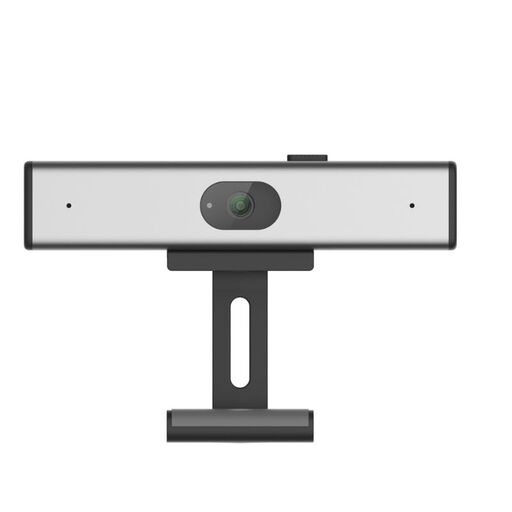
Philips SPL6308S/00 2K QHD PC Webcam, EU Version
The clip-on design may suit a lesson taught from a laptop or monitor at the kitchen table. The title identifies a 2K QHD webcam with a noise-reduction microphone; check the resulting solo frame and audio in your room, particularly if close-ups or uneven light matter to your lessons.
View on Joybuy
Common questions
Do I need a 4K webcam for conversation lessons?
No: for a seated conversation lesson, a well-positioned 1080p webcam can show facial cues when the framing, light and audio are right. Consider 4K capture alongside the framing and focus controls you need for frequent demonstrations, rather than expecting resolution to correct backlighting or poor placement.
How wide should the webcam view be at a kitchen table?
Use the narrowest view that includes the teaching area you intend learners to see. Widen it for an object, worksheet or second participant, then check the background; AnkerWork specifies 65°, 78° and 95° software-controlled choices for the PowerConf C200, while Logitech specifies a fixed 78° view for the C920 HD Pro.
Where should I put the webcam for conversational eye contact?
Place the lens near eye level and look towards it when addressing learners. British Council teaching guidance recommends looking into the lens rather than only at the screen; check your seated framing and keep a light source in front of you rather than directly behind you.
Should sound matter more than higher video resolution?
Prioritise intelligible speech before upgrading solely for higher resolution. Leeds Beckett University's video-teaching guidance notes that viewers are generally more tolerant of poor visuals than poor audio, so test the webcam microphone during ordinary kitchen activity and consider another audio arrangement if speech is hard to hear.
What should a school check before recording a lesson involving pupils?
A school should follow its data-protection and safeguarding procedures before recording or sharing identifiable pupil video. The Department for Education treats identifiable images as personal data in its schools guidance; its remote-education safeguarding guidance concerns schools and colleges in England. Consult the school's data-protection lead about the proposed recording and handling arrangements rather than treating a webcam privacy cover as sufficient.


