One-person caller
You usually join from a desk or laptop and want straightforward setup, a visible way to cover the lens afterwards and video suited to face-to-face calls. Logitech lists these features for its Brio 100.


For a family call with one person in view, start with a 1080p webcam that has a built-in microphone, automatic light correction and a physical privacy shutter, provided it works with your computer and calling service. If several people share the screen or move around, check the field of view, microphone arrangement and focusing or framing controls before choosing a more specialised model.
You usually join from a desk or laptop and want straightforward setup, a visible way to cover the lens afterwards and video suited to face-to-face calls. Logitech lists these features for its Brio 100.
Two or more family members may sit together. The camera's field of view and microphone arrangement matter alongside its resolution; Logitech specifies a fixed 78° view and dual microphones for the C920s.
You may sit near a bright window, call from a dim room or move to show something on camera. Check which light, focus or framing controls the particular model provides rather than assuming that a higher resolution addresses those conditions.
Start with the computer and calling service you use, then consider how many people need to fit in the picture and where they will sit.
| Concern | What to check | Who this matters to |
|---|---|---|
| Simple call setup | Check the stated operating-system and calling-service compatibility, computer port and mounting clip. | If I usually call alone, I want to join without changing my computer setup or managing camera controls; around 36% of consumers put straightforward calling first. |
| Shared-room framing and sound | Compare the stated field of view with your seating arrangement, and check the microphone arrangement. | When several relatives sit together, I need them to fit in view and be heard from their seats; for around 29% of consumers, that shared-room need comes first. |
| Lighting and movement | Identify whether the model offers light correction, autofocus or auto-framing; these are different functions. | A window behind me or people moving during the call makes a fixed setup harder to use; around 21% of consumers prioritise handling those conditions. |
| Privacy and connection | Check for a physical lens cover and confirm the supplied connector against your computer ports. | If the camera stays in a private room between calls, I want to cover its lens and know it will connect when needed; this is the primary concern for around 14% of consumers. |
4K capture does not, by itself, address a bright window behind the caller, the position of other people in the room or where the microphone sits.
Work out where everyone will sit and how the room is lit. Consider autofocus, a wider view or auto-framing only if those features address your calling setup.
Webcams can have different USB connector arrangements, so the camera you choose may not connect directly to your computer.
Check your computer's ports against the model's connector and the cable or adapter supplied.
A separate adapter may be needed if the supplied connector does not fit.
A listing labels Targus AVC045GL as 2K, while Targus specifies 1080p/30fps for AVC045GL on its UK product page. A matching model number does not resolve that specification conflict.
Check the full model number and core specifications on the product-detail page before ordering, especially when a listing title and the manufacturer's description differ.
Logitech's UK webcam range includes straightforward 1080p calling models and models with additional framing or capture features.
Targus lists AVC045GL for 1080p/30fps video calls, with autofocus, microphones, a privacy slider and an adjustable clip.
OBSBOT describes Meet 2 as a webcam with group auto-framing and autofocus for calls in which people move or share the picture.
These choices cover different family-call setups: a camera with zoom controls, a wide-view all-in-one model and a clip-on webcam for personal calls. Match each one to your computer and seating arrangement.
 No image available
Consider this model if you want to adjust framing during a family call rather than rely only on where the camera is mounted.
Its stated features include 4K capture, 5x digital zoom and remote control. Check how the camera mounts and what the remote requires before ordering.
 No image available
Consider this model when several people need to join from the same room and you want to assess a wider view and built-in audio together.
The product name specifies an adjustable 98° field of view, a four-microphone array, dual AI speakers, fixed focus and USB connection. Fixed focus is not autofocus; also confirm your computer connection, calling-service compatibility and preferred lens-covering arrangement.
 No image available
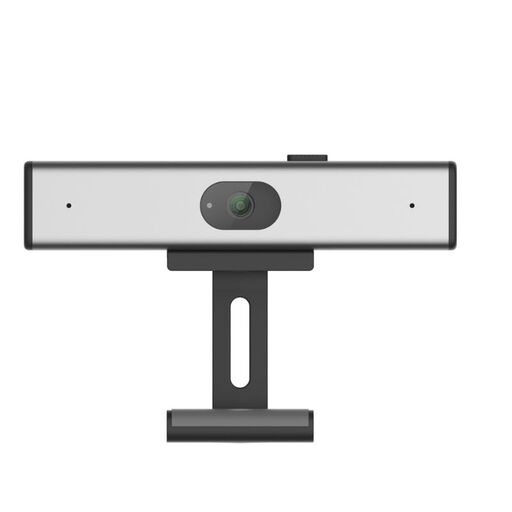
Consider this clip-on model for a personal family call from a monitor or laptop screen, provided its connection suits your computer.
The product name specifies 2K QHD video and a noise-reduction microphone. Confirm the connector, calling-service compatibility and whether a physical lens cover is included if those details matter to you.
A 1080p webcam is a sensible starting point for a face-to-face family call if its connection, microphone and framing suit your setup. Logitech specifies 1080p video for both Brio 100 and C920s; the latter adds a stated 78° field of view, autofocus and dual microphones for a different seating arrangement.
Check the webcam's connector and supplied cable against your computer ports, then confirm operating-system and calling-service compatibility for the exact model. For example, Logitech lists USB-C connectivity for Brio 300; do not assume another model uses the same connection.
A physical shutter matters if you want to cover the lens visibly between family calls. Logitech lists one for Brio 100 and C920s, while Targus describes a privacy slider for AVC045GL; you should still check the calling app's camera permissions.
The Information Commissioner's Office says its organisational video-surveillance guidance does not cover processing that is purely personal or household. That statement is about the scope of that guidance, not every possible use of a webcam; recording, publishing or organisational use calls for a separate privacy assessment.