Face-to-camera tutors
If you mainly explain slides or speak from a desk, concentrate on a clear, well-exposed image at your usual teaching position. Check whether autofocus matters when you lean towards the camera or hold something up.


For seated, face-to-camera tutorials, start with a 1080p webcam and check autofocus and light correction for your teaching position. If learners need to follow moving hands or desk work, camera placement and a suitable capture mode matter more. Consider 4K chiefly for recording or cropping footage: the video learners receive also depends on your platform, settings and connection.
If you mainly explain slides or speak from a desk, concentrate on a clear, well-exposed image at your usual teaching position. Check whether autofocus matters when you lean towards the camera or hold something up.
If lessons involve drawing, crafts, music or objects on a desk, learners need a view of the work as well as your face. Camera angle, mounting and the available resolution-and-frame-rate combination deserve particular attention.
If the webcam stays connected between lessons, consider a physical lens cover alongside your computer’s camera permissions. Check the connector and teaching application before relying on the camera for a class.
Start with what learners must see and hear, then check whether the camera can be positioned and connected for your particular lessons.
| Concern | What to check | Who this matters to |
|---|---|---|
| Clear, well-lit image | Check the stated 1080p mode, autofocus and light correction; assess the view at your usual teaching time. | If I teach from a desk, learners need to see my face clearly even when the light changes. Roughly 33% of consumers would put image clarity first. |
| Visible demonstrations | Check the resolution at 60fps, mounting options and whether the camera can point towards your work. | When I show sketches or moving hands, a face-level view may miss the detail learners need. Around 27% of consumers would prioritise demonstrations. |
| Intelligible speech | Check the microphone arrangement and make a test recording in your teaching room. | In a shared or noisy space, I need learners to understand my explanation without repeated questions. Approximately 20% of consumers would make voice clarity their primary concern. |
| Setup and privacy | Check ports, operating-system and app access, adapter contents and any physical lens cover. | If I use an existing computer and leave the webcam connected, I want lessons to start without connection trouble and the lens covered afterwards. About 20% of consumers would put setup and privacy first. |
Capture resolution is not necessarily meeting resolution. Zoom’s HD and Full HD delivery depends on conditions including account settings, hardware and bandwidth.
Check your teaching platform’s output requirements before choosing 4K for live lessons. Higher-resolution capture is more relevant if you record locally or crop footage later.
A higher pixel count does not resolve a strongly backlit teaching position. Logitech and Elgato describe light-correction features on specific webcams, not on every model they sell.
View your current camera image at the desk and time you normally teach. Consider the position of a bright window and check a prospective camera’s stated lighting features.
Logitech lists the C922 at 1080p30 or 720p60, whereas Elgato lists 1080p60 for Facecam Neo. The connector matters too: Elgato specifies a fixed USB-C connection for Facecam Neo and says a Type-A adapter is not included.
Compare the exact capture mode and port with the computer you will use, and check the box contents if you need an adapter.
A listed noise-reducing microphone does not establish how clearly learners will hear speech from your seating distance or with background noise.
Record a short explanation in your usual room. If speech is unclear, consider a separate microphone or headset rather than changing cameras solely for audio.
Its webcam range includes models relevant to seated lessons and desk demonstrations.
Facecam Neo is worth examining when moving demonstrations and flexible camera placement are priorities.
The HP 625 FHD Webcam is a reference point for a conventional face-to-camera setup with framing and privacy options.
These webcams offer different starting points for desk-based lessons, framing demonstrations and recorded tutorials. Compare each model’s stated capture mode, focus and connections with the way you teach.
 No image available
Consider this for desk-based teaching if changing focus is part of your lessons. The title states 2K and auto focus; check the exact video mode you intend to use, particularly if you need 1080p at a particular frame rate.
 No image available
Consider this if you record tutorials or want to adjust framing with a remote. Its title specifies 4K capture and 5x digital zoom. Check focus behaviour if you move towards the camera or present objects at different distances, and confirm what resolution your teaching platform can deliver.
 No image available
Consider this for a wider, meeting-style view if your teaching position stays at a consistent distance. The title specifies fixed focus, a four-microphone array, dual AI speakers and a 98° adjustable field of view. Check the focus distance for close-up demonstrations and the mounting and privacy arrangements you require.
 No image available
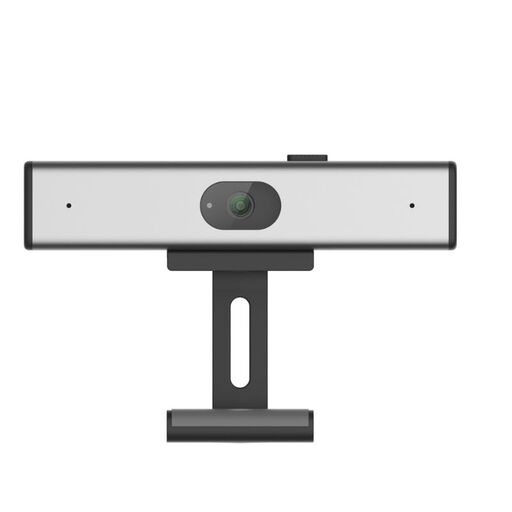
Consider this for a monitor or laptop setup if a clip-on camera meets your positioning needs. The title specifies a noise-reduction microphone and 2K QHD resolution. Confirm the capture mode, focus, connector and compatibility with your teaching application before choosing it.
Usually not for live, face-to-camera lessons: 1080p is a practical starting point. Zoom’s requirements show that delivered resolution depends on account settings, hardware and bandwidth as well as the camera. Consider 4K if you record locally or need to crop higher-resolution footage.
Look at 60fps capture when quick hand movements or other moving demonstrations are central to the lesson, while checking what your teaching platform can use. Elgato lists Facecam Neo at 1080p60; Logitech lists the C922 at 720p60 or 1080p30, so compare resolution and frame rate together.
Match its connector to an available computer port, check whether an adapter is included and test it in your teaching application before class. Elgato says Facecam Neo uses a fixed USB-C connection and does not include a Type-A adapter; Microsoft also provides Windows controls for camera and microphone access.
It is optional, but it gives you a visible way to cover the lens if the webcam remains connected between lessons. A cover does not replace checking application permissions; Microsoft provides separate controls for Windows camera and microphone access.
Treat recordings that identify learners as personal information and establish an appropriate lawful basis for handling it. The Information Commissioner’s Office says organisations need a valid lawful basis for processing personal information and advises using approved technology when working from home. If you teach through an organisation, follow its recording and data-protection procedures.