What to prioritise when choosing
Start with the problem you want to solve: camera position, framing, lighting, sound, privacy or call delivery. A higher-resolution camera is not automatically the right answer if the meeting app, computer or connection is the limiting factor.
| Priority |
What to check |
Your needs |
| Camera position |
Check the monitor or laptop clip, tilt adjustment and whether the camera can sit near eye level. Set screen height and viewing distance before relying on a new camera. |
I want to avoid a downward-looking angle when using an external monitor and keep a natural, steady frame during calls. |
| Lighting and image |
Look for stated light-correction features where room light changes. In a persistently dim room, test front-facing lighting and reduce glare as well. |
I need my face to remain visible when daylight changes or my workspace is darker than usual. |
| Audio |
Check the microphone arrangement and test it in your normal room. A headset or closer microphone can be more suitable where echo, household noise or confidentiality matters. |
I want straightforward sound for a quiet solo desk, without assuming integrated microphones will solve every noisy-room problem. |
| Privacy and framing |
Check for a physical shutter or cover, the available field of view and framing controls. Use the narrowest angle that includes the people or materials needed. |
I want a visible way to block the lens between meetings and avoid showing more of my home background than necessary. |
| Compatibility and delivery |
Confirm operating-system support for required companion software, then test the meeting platform, account and connection. Zoom notes that HD delivery depends on account, device, CPU and bandwidth conditions; Microsoft says Teams prioritises audio when bandwidth is insufficient. |
I want to know that useful controls will run on my work device and that a clearer camera will make a difference in the calls I actually make. |
Joybuy webcam options
Joybuy product options for monitor-based home meetings, changing solo framing and occasional small shared-workspace calls.
 No image available
Targus 2K Webcam with Auto Focus
A personal option for monitor-based solo calls where a physical privacy slider and adjustable clip are useful.
The technical specification states 1080p/30fps, a fixed 67° view, autofocus, auto lighting correction, dual microphones, a 360° monitor/laptop clip and a Spy Guard privacy slider. The title describes it as 2K, so confirm the seller specification before buying; the fixed view may not suit regular group calls.
Joybuy
 No image available
j5create JVCU435 USB 4K Webcam with 5× Zoom Remote
Consider this for presentations or changing solo and group framing where remote-controlled zoom and ePTZ controls are relevant.
It lists 4K video, 5× digital zoom, low-light enhancement, dual microphones, a privacy cover, clip/stand mounting, USB-C with USB-A adapter, and stated support for Windows 10+, macOS, ChromeOS, Teams, Zoom, Skype and Meet. The remote requires a battery that is not included; meeting platforms may limit delivered resolution.
Joybuy
 No image available
EMEET All-in-One 4K Webcam with Sony Sensor
An integrated option for a small shared home workspace where several nearby people need camera, microphone and speaker equipment.
The product details state 4K video, a 98° adjustable field of view, four microphones with noise reduction, dual speakers, fixed focus and USB plug-and-play operation. Confirm the exact privacy mechanism before purchase; fixed focus may be less suitable for frequent close-up document demonstrations.
Joybuy
 No image available
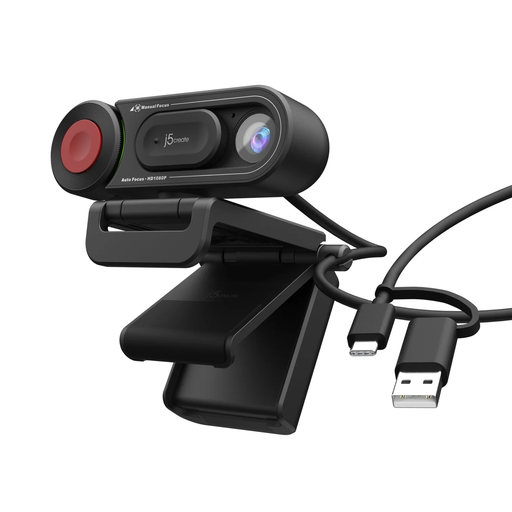
j5create JVU250 HD Webcam with Focus Switch
A straightforward USB webcam for routine laptop-plus-monitor calls and occasional close-up demonstrations.
It lists 720p video, a built-in microphone, an adjustable monitor/laptop clip, plug-and-play USB-A connection, Windows, macOS and ChromeOS support, and switchable auto or manual focus. Confirm the field of view, light correction and privacy provision if these matter to your setup.
Joybuy
 No image available
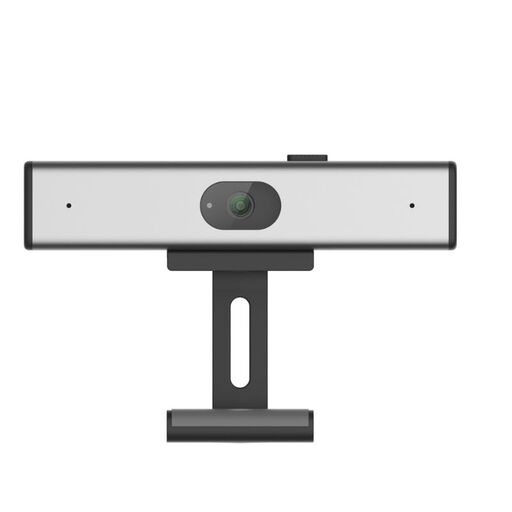
Philips 2K QHD PC Webcam SPL6308S/00
A clip-on desktop or laptop option for quiet home workspaces where a noise-reduction microphone is relevant.
The product name identifies a 2K QHD webcam, desktop/laptop clip and noise-reduction microphone. Confirm operating-system and meeting-platform support, field of view, focus type, low-light handling and privacy-cover provision before purchase; higher sensor resolution alone does not ensure higher meeting-call resolution.
Joybuy
Frequently asked questions
Should I buy an external webcam if I mainly use an external monitor?
Usually, yes, if the laptop camera sits materially below eye level or forces an awkward downward-looking angle. Position the monitor sensibly first, then choose a webcam mount that lets you centre and tilt the lens; HSE says the top of the screen should be at eye level and about an arm’s length away.
Will a 2K or 4K webcam automatically make Zoom meetings look sharper?
No. Zoom says group HD activates 720p active-speaker video, while 1080p depends on account, enablement, device, CPU and bandwidth prerequisites. Check what your organisation’s account and computer can send before paying extra mainly for resolution.
When should I add a light instead of replacing the webcam?
Try improving front-facing lighting and reducing glare first if the camera works acceptably in daylight but looks dark or grainy at certain times. Automatic light correction can help, but it cannot replace suitable lighting in a persistently dim workspace.
How can I tell whether poor video is a network or device problem rather than a webcam problem?
Test the existing camera and audio device in Teams before replacing hardware, then compare call quality on a stable connection. Microsoft provides a Teams device test for camera, microphone, speaker and network checks, and says Teams prioritises audio over video when bandwidth is insufficient.
Does a webcam with a privacy shutter remove all privacy and employer-policy concerns?
No. A shutter blocks the lens, but it does not govern recordings, meeting-platform data, workplace monitoring or confidential material visible in the background. For sensitive work calls, follow your employer’s approved conferencing service and security policy; the National Cyber Security Centre advises organisations to assess protection for calls and associated data.


