For a seated, one-person language class, start with a 1080p webcam that offers light correction and a physical privacy shutter, then check whether its framing keeps the right amount of your room in view. Autofocus or adjustable framing becomes more useful if you show exercises or need to control the background; 4K capture alone will not ensure that your tutor receives 4K video. Confirm the class platform, computer connection and camera permissions before buying.
Who needs which features?
Conversation-first home learners
If you stay seated and mainly practise speaking, prioritise a clear head-and-shoulders view over features for showing close-up materials. A 1080p webcam with light correction and a shutter is a sensible starting point; check its framing at your usual desk position.
Learners who show books and exercises
If you regularly hold up vocabulary cards, handwriting or objects, consider how the camera refocuses and whether you can frame both your face and the material. Those checks may matter more to your lesson than the headline resolution.
Privacy- and background-conscious learners
In a shared or cluttered home office, look at what the lens shows while a call is active as well as how to cover it afterwards. A shutter blocks the lens between classes; a suitable field of view helps you limit the visible background during them.
What should you check?
Decide what the tutor needs to see during your lessons, then check the light and background at your desk. Before settling on a camera, confirm its connection and test it on the class platform.
| Concern |
What to check |
Who this matters to |
| Clear conversation video |
Check the stated capture resolution and whether the camera frames your face well at your usual seating distance. Test the picture on your class platform. |
If I mainly speak to my tutor, I want my face to remain easy to see without managing camera settings throughout the lesson. Around 36% of consumers put straightforward face-to-face video first. |
| Difficult lighting |
Try lighting your face from the front; compare light-correction features on the exact models you are considering. |
A window behind my desk or changing daylight could leave my face poorly lit when class begins. For roughly 29% of consumers, handling difficult light is the primary concern. |
| Background and lens privacy |
Check the field of view at your desk and whether you want a physical shutter for use between lessons. |
If I share my workspace, I want to keep personal items out of the active picture and cover the lens afterwards. About 21% of consumers prioritise background and lens privacy. |
| Showing learning materials |
Check autofocus on the exact model and try framing a workbook at the distance you would use in class. |
When I hold up written work, I need the tutor to see it without losing the view of my face for long. That makes material detail and focus the main need for around 14% of consumers. |
Common buying mistakes
-
Assuming 4K capture means a 4K lesson
A webcam's capture setting is not necessarily the video your tutor receives. Zoom documents different connection requirements for 720p and 1080p video, and the meeting setup can affect delivered quality.
Ask which platform the class uses and try a call on your connection. Consider 4K for cropping or other uses that matter to you, rather than treating it as a requirement for conversation practice.
-
Using the widest view by default
A wide view may include more of a shared room than you intend. AnkerWork states that the PowerConf C200 offers 65°, 78° and 95° settings through its software, so the selected setting matters.
At your normal seating position, choose a view that includes your face and any materials you plan to show without unnecessarily exposing the background.
-
Skipping a test of the class software
Connecting a webcam does not by itself give a browser-based class access to it. Chrome requires site camera permission, and Google Meet advises checking that the intended camera is selected.
Join a test meeting, allow camera and microphone access where needed, select the right devices and close other apps using the camera.
-
Relying on light correction alone
Manufacturers describe automatic light correction on several webcams, but a bright window behind you or a very dark room can still make your face difficult to see.
Where possible, put a light in front of you and check the resulting image at the time of day you usually take class.
Brands to consider
Logitech
Logitech offers webcam models with different feature sets, from the Full HD Brio 100 to the 4K-capable MX Brio.
- Logitech lists 1080p capture, auto-light balance, a built-in microphone and a shutter for Brio 100. Its Brio 500 and MX Brio pages describe additional light, audio or image controls.
- Choose by the exact model and your class setup: a higher capture specification does not establish the resolution delivered through a meeting platform.
AnkerWork
The PowerConf C200 is worth considering if control over the visible background and switching attention between your face and materials are priorities.
- AnkerWork lists autofocus and 65°, 78° and 95° field-of-view settings for the PowerConf C200.
- Those framing settings use AnkerWork software, and a wider setting may reveal more of the room.
OBSBOT
OBSBOT Meet 2 is a feature-rich option to examine if your lessons also involve demonstrations or you use the webcam for recording.
- OBSBOT states that Meet 2 supports 4K at 30fps and 1080p at 60fps, alongside autofocus and automatic framing features.
- A seated conversation class may not call for those controls, and meeting-platform output can differ from the camera's capture setting.
Webcams on Joybuy
These webcams offer different ways to approach a home-office language class, from straightforward desk use to focus or framing controls for showing materials. Check the exact variant against your computer and lesson setup; the capture resolution in a listing is not necessarily what your tutor will receive.
 No image available
Targus 2K Webcam with Auto Focus
Consider this model if you want autofocus while alternating between speaking and showing materials. Confirm its maximum video resolution before buying: the 2K title and the Full HD 1080p description give different indications.
View on Joybuy
 No image available
j5create JVCU435 USB™ 4K Ultra HD Webcam with 5x Digital Zoom Remote Control, Black and Silver
The remote-controlled digital zoom may be useful if you change the framing while presenting materials. Check whether your class platform supports the video setting you intend to use; if you need the remote, note that its battery is described as not included.
View on Joybuy
 No image available
EMEET All-in-One 4K Webcam with Sony Sensor, 4-Mic Array, Dual AI Speakers, Fixed Focus and 98° Adjustable FOV
Consider its adjustable view if you need to fit more of your workspace into a lesson, but check how much of your room the available settings show. Its stated fixed focus also matters if you plan to move close-up exercises towards the lens; confirm the privacy feature if a physical lens cover is important to you.
View on Joybuy
 No image available
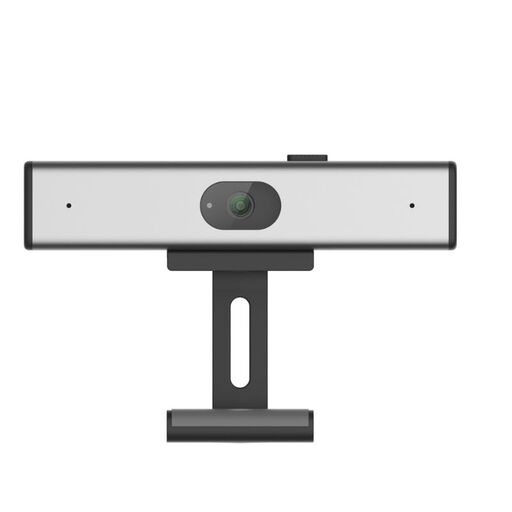
Philips 2K QHD PC Webcam with Noise Reduction Mic and Monitor Clip, EU Version, Silver, SPL6308S/00
The clip-on design is relevant if you want the camera above a desktop or laptop screen for seated lessons. Before choosing it for close-up workbook demonstrations or a shared room, check its focus behaviour, field of view, connection and privacy features.
View on Joybuy
 No image available
j5create JVU250 HD Webcam with Auto & Manual Focus Switch, Black
The focus switch may appeal if you want control when moving between your face and a workbook. If 1080p capture, light correction or a physical privacy cover is important to your setup, check those requirements against this exact model before choosing it.
View on Joybuy
Frequently asked questions
Do I need a 4K webcam for an online language class?
Usually not for a seated class centred on conversation: a 1080p webcam can be a sensible starting point if its framing and lighting suit your desk. Consider 4K if you also need cropping or detailed demonstrations, but do not assume the tutor will receive 4K video; the class platform and connection affect delivery.
Why can’t my browser-based class see my new webcam?
Check that the class site has camera permission and that the intended webcam is selected in the meeting settings. Chrome requires site permission for camera use, while Google Meet also advises checking device selection and closing other apps that may be using the camera.
Is a built-in webcam microphone enough for speaking practice?
It may be enough in a quiet room, but test your voice through the actual class platform before the lesson. If background noise or echo makes speech hard for the tutor to hear, consider a separate headset or microphone rather than changing camera resolution.
How can I protect my privacy if lessons are recorded?
Follow the class provider’s recording and privacy procedures, and move personal documents out of the camera’s view before joining. The Information Commissioner’s Office advises organisations handling personal data at home to use approved technology and consider confidentiality; that guidance does not establish a webcam-shutter requirement for every private learner.


